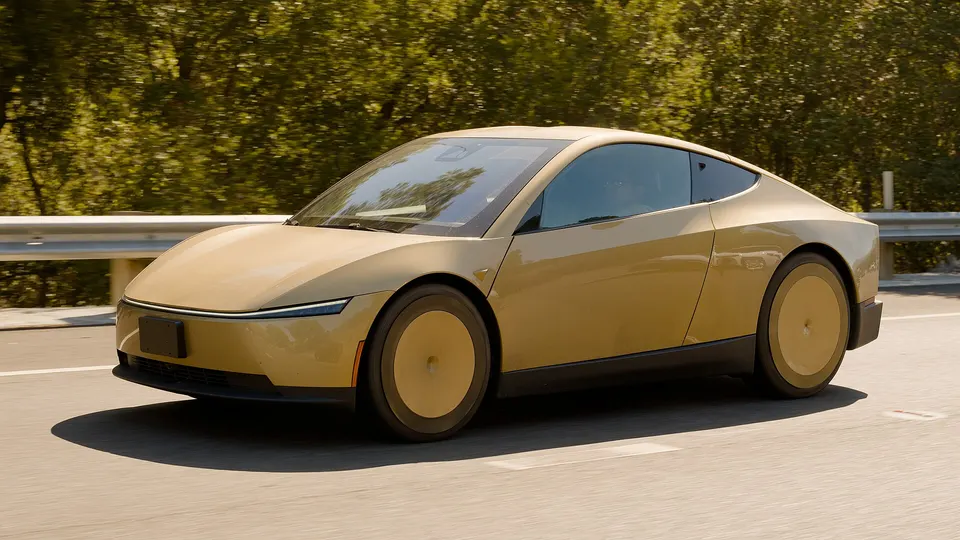

Milestones
- Unveiled at We, Robot10 Oct 2024Complete.
- Production begins at Giga Texas2026Complete.
- Cybercab launch event and Austin rollout3 Sep 2026Complete.
- Volume production rampTarget 2027Current milestone.
Most important updates
- 4 Sep 2026
- 3 Sep 2026
- Apr 2026
- 17 Feb 2026
- 10 Oct 2024
Upcoming
- 2027Volume production ramp (next)
Current obstacles
- Federal safety standardsCars without manual controls need federal exemptions or rule changes to deploy at scale; NHTSA opened an audit of Cybercab compliance.
Physics limits
- No human fallback at allWith no controls, every failure must be handled by the machine or remote help. The system must reach a far lower failure rate than a supervised car, because nobody can take over.
- Drag and rolling resistance set a floorAir drag grows with the square of speed and tyres always lose energy, so energy per mile rises at highway speeds and small cars near today's efficiency have little left to gain.
- Small battery, frequent chargingA 48 kWh pack weighs roughly 300 kg. More range means more mass and cost, so a small-battery robotaxi must recharge often, which takes it out of service.
How it works
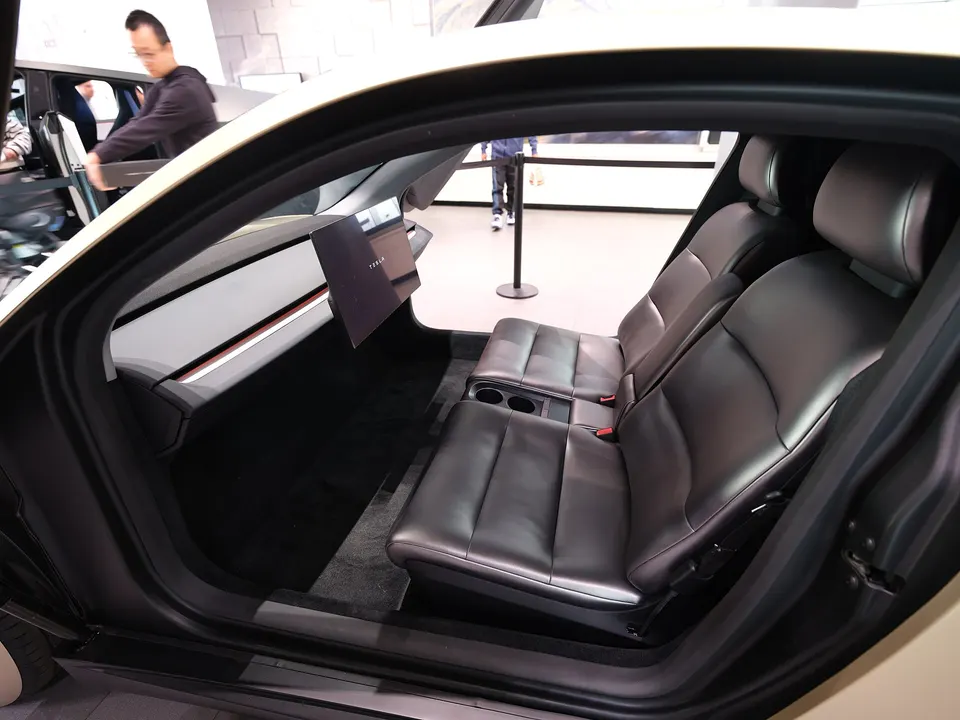
No wheel, no pedals
Two seats and butterfly doors; steering and braking are fully electronic, so the car must drive itself everywhere, including into service bays.
Built to sip energy
EPA filings list a ~48 kWh battery and about 165 Wh per mile, among the lowest of any EV, which cuts energy cost per mile.
No home plug
It has no AC charging port; Tesla plans wireless charging pads at depots plus DC fast charging, so no human needs to plug it in.
Robotaxi-only software
Cybercabs run FSD v15 (unsupervised) on an upgraded HW4 computer, neither yet offered on customer cars.
Spec sheet
| Spec | Cybercab |
|---|---|
| Seats | 2R (reported) |
| Manual controls | NoneR (reported) |
| Target price | Under $30,000R (reported) |
| Registered units | ~45 (Sep 2026)R (reported) |
R reported by the company
Peer comparison
| Spec | Cybercab | Zoox Zoox robotaxi |
|---|---|---|
| Seats | 2R (reported) | 4 (face-to-face)R (reported) |
| Manual controls | NoneR (reported) | NoneR (reported) |
R reported by the company
Papers & demos
- 10 Oct 2024demoWe, Robot event (opens youtube.com)Unveiled Cybercab and Robovan and gave rides in driverless prototypes on a studio lot.
Update log
Fri 4 Sep
- Major: PressRegulatory
Thu 3 Sep
- Major: PressCommercial
Mon 15 Jun
- Minor: PressRegulatory
Apr 2026
- Major: PressManufacturing
Tue 17 Feb
- Major: PressManufacturing
Thu 10 Oct 2024
- Major: LivestreamHardware
About Tesla
Tesla
EVs, FSD, Robotaxi, Cybercab, Optimus
Tesla makes electric cars and batteries and is betting on self-driving: camera-only Full Self-Driving software, a Robotaxi service with no safety monitors in several Texas and Florida cities, the two-seat Cybercab, and the Optimus humanoid robot.
- Robotaxi went from a supervised Austin pilot (June 2025) to rides with no safety monitor in six Texas and Florida cities by July 2026.
- Cybercab, with no steering wheel or pedals, began low-rate production in Texas and started rolling out in Austin on 3 Sept 2026.
- Fremont's Model S/X line ended in May 2026 and is being turned into the first Optimus production line.
- Founded
- 200323 yrs
- Headquarters
- United States
- Status
- Public
- Listed
- TSLA (opens google.com)NASDAQ
- Valuation
- public
- Coverage
- 4 programs · 29 updateslatest 4 Sep 2026checked 25 Sep
- Partners
- SpaceX
- People
- Elon Musk (opens en.wikipedia.org)CEOVaibhav Taneja (opens en.wikipedia.org)CFOAshok ElluswamyVP, AI Software