
Milestones
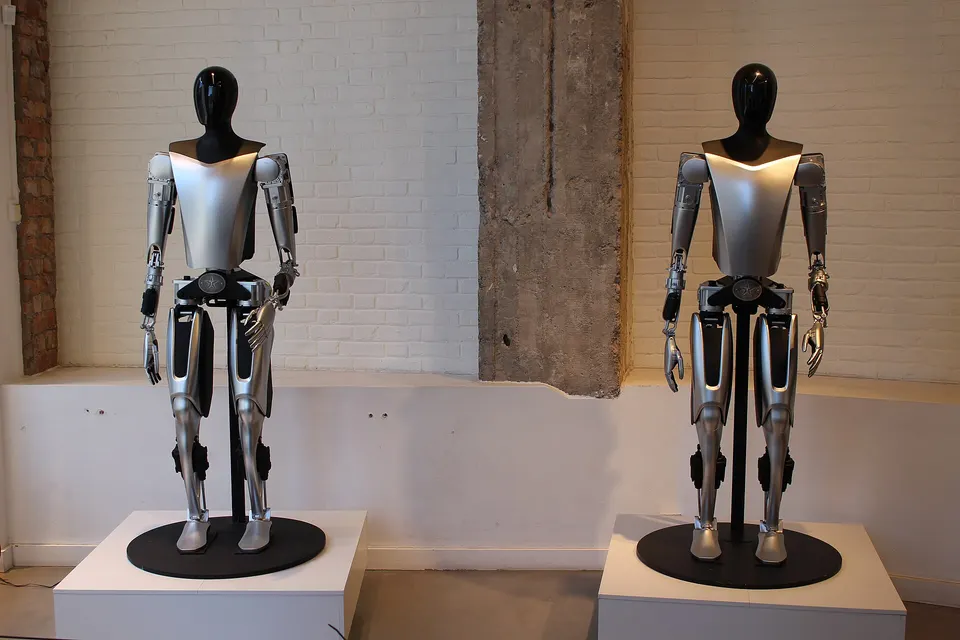
- Tesla Bot announced at AI Day19 Aug 2021Complete.
- First walking prototype shown30 Sep 2022Complete.
- Optimus Gen 2 revealedDec 2023Complete.
- Fremont Model S/X line ends; Optimus line installation beginsMay 2026Complete.
- Optimus V3 reveal and production startTarget 2026Current milestone.
- Second-generation Texas line (10M/yr long-term)Target 2027Not yet reached.
Most important updates
- 20 Aug 2026
- May 2026
- 22 Apr 2026
- 13 Dec 2023
- 30 Sep 2022
Upcoming
- 2026Optimus V3 reveal and production start (next)
- 2027Second-generation Texas line (10M/yr long-term)
- 2027First outside sales of Optimus, which Tesla says could start as early as the second half of 2027
Current obstacles
- Hands and actuators at costHumanlike hands with many joints are fragile and expensive; Tesla must make motors that are tough and cheap at scale.
- Useful autonomyDemos have partly relied on teleoperation; robots that handle objects on their own, for any task, are not solved yet.
Physics limits
- Motors can't match muscle yetElectric motors give high torque only through gearing, which adds weight, friction and stiffness. Matching muscle's strength-to-weight and gentle, back-drivable feel at once remains unsolved.
- Batteries limit shift lengthThe 2022 prototype carried a 2.3 kWh pack, a few hours of work. Li-ion stores about 50x less energy per kilogram than fuel, so full shifts need swaps or charging breaks.
- There is no fleet for hand dataDriving AI learns from millions of cars; no such fleet records hands grasping objects. Robots learn contact from limited teleoperation and simulation, which misses real friction.
How it works
Custom electric joints
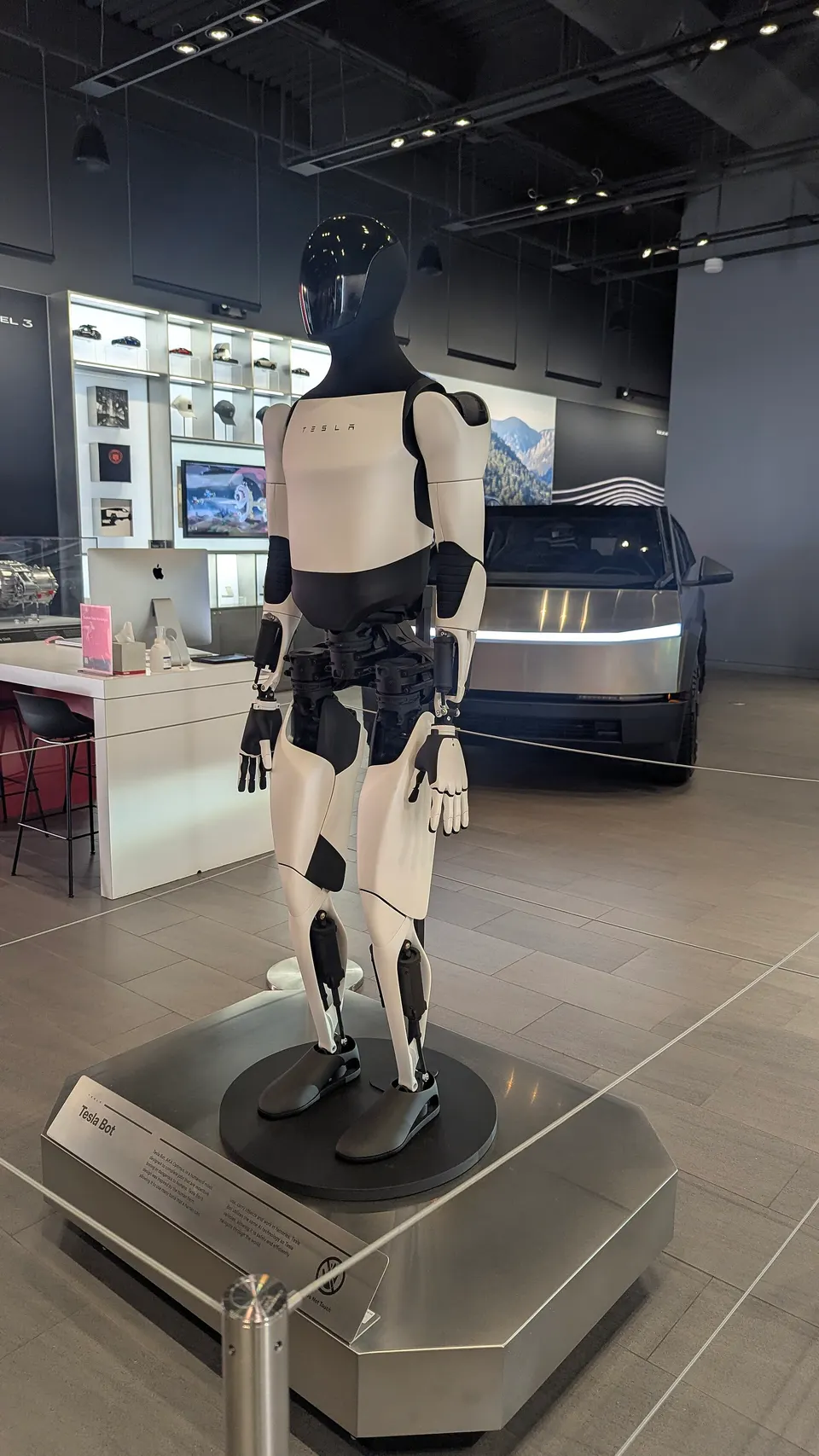
About 28 Tesla-designed rotary and linear actuators, motors with gearboxes or roller screws, move the body's joints.
Many-jointed hands
Gen 2 hands have 11 degrees of freedom; a 22-degree hand shown in late 2024 moves fingers with tendons from motors in the forearm.
FSD-style neural networks
Cameras in the head feed neural networks similar to FSD's, trained on video, teleoperation and simulation, running on a computer in the torso.
Constant feedback
Force sensors in the feet and an inertial unit let the controller adjust every joint many times a second to keep the robot upright.
Spec sheet
| Spec | Optimus |
|---|---|
| Fremont line design capacity | 1 million / yearR (reported) |
| Texas line long-term capacity | 10 million / yearR (reported) |
| Unique parts | ~10,000R (reported) |
R reported by the company
Papers & demos
- 30 Sep 2022talkTesla AI Day 2022 (opens youtube.com)Showed the first walking Optimus prototype and explained how Tesla maps space and labels driving data automatically.
Update log
Thu 20 Aug
- Minor: PressCommercial
May 2026
- Major: PressManufacturing
Wed 22 Apr
- Major: FilingManufacturing
Fri 6 Jun 2025
- Minor: PressPeople
Wed 13 Dec 2023
- Major: PressHardware
Fri 30 Sep 2022
- Major: LivestreamHardware
Thu 19 Aug 2021
- Major: LivestreamHardware
About Tesla
Tesla
EVs, FSD, Robotaxi, Cybercab, Optimus
Tesla makes electric cars and batteries and is betting on self-driving: camera-only Full Self-Driving software, a Robotaxi service with no safety monitors in several Texas and Florida cities, the two-seat Cybercab, and the Optimus humanoid robot.
- Robotaxi went from a supervised Austin pilot (June 2025) to rides with no safety monitor in six Texas and Florida cities by July 2026.
- Cybercab, with no steering wheel or pedals, began low-rate production in Texas and started rolling out in Austin on 3 Sept 2026.
- Fremont's Model S/X line ended in May 2026 and is being turned into the first Optimus production line.
- Founded
- 200323 yrs
- Headquarters
- United States
- Status
- Public
- Listed
- TSLA (opens google.com)NASDAQ
- Valuation
- public
- Coverage
- 4 programs · 29 updateslatest 4 Sep 2026checked 25 Sep
- Partners
- SpaceX
- People
- Elon Musk (opens en.wikipedia.org)CEOVaibhav Taneja (opens en.wikipedia.org)CFOAshok ElluswamyVP, AI Software