

Milestones
- Mouse lifespan study publishedJan 2024Complete.
- Big-animal and disease studiesNowCurrent milestone.
Most important updates
Current obstacles
- Small study, one labThe mouse result came from a small study and hasn't been repeated by another lab.
Physics limits
- Viral carriers are one-shot and smallAAV, the harmless virus used as a carrier, holds only about 4.7 kilobases of DNA. The immune system then makes antibodies to its shell, so a second dose usually fails, and many people already carry such antibodies.
- Leaky switches raise tumour riskDrug-controlled gene switches are never perfectly off. Low-level factor activity over years could push some cells toward tumour-forming stem cells.
- Not all aging is written in the marksA reset of gene marks leaves mutations, cross-linked proteins and lost cells untouched, so it cannot reverse every part of aging.
How it works
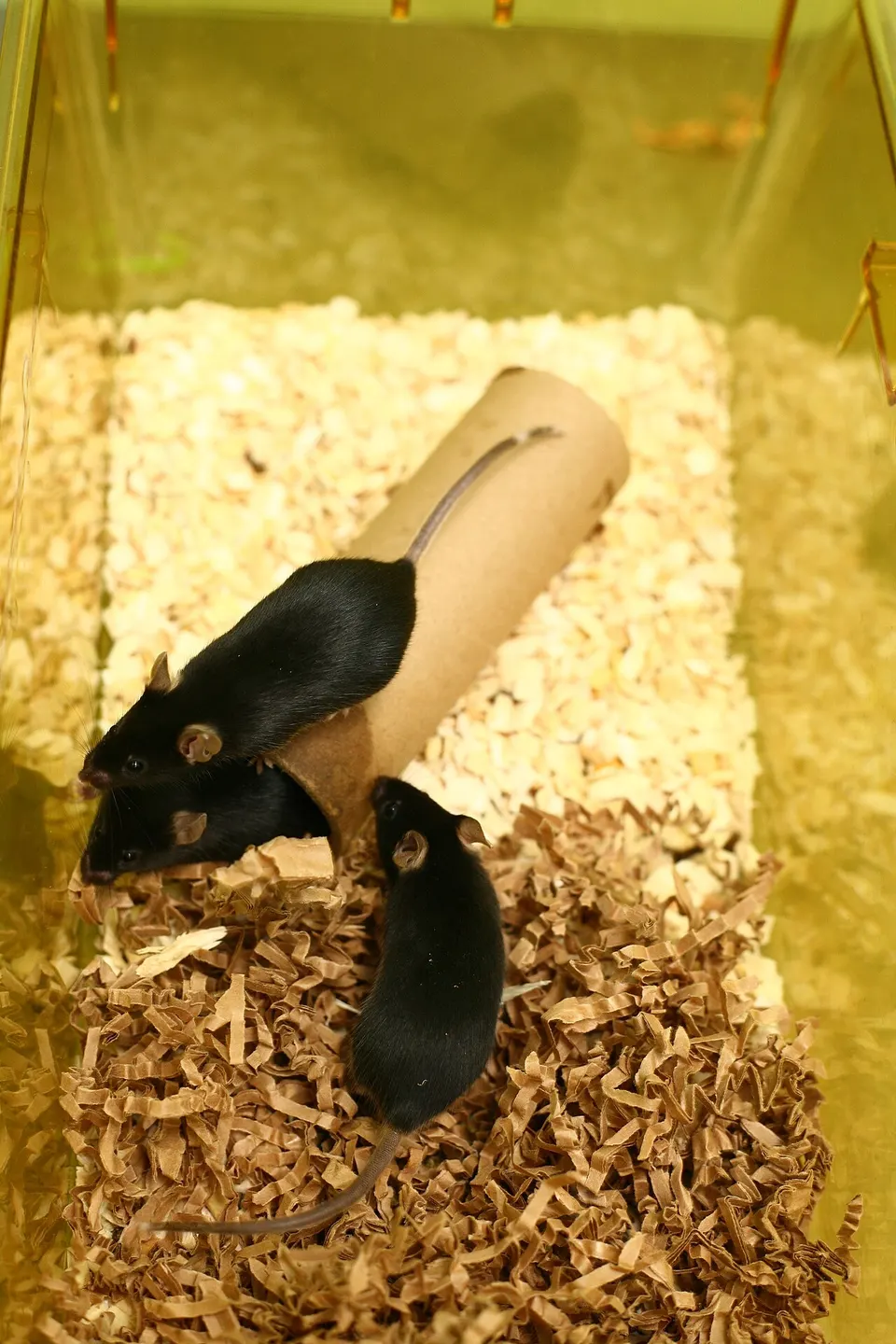
Two harmless viruses carry the genes
One AAV virus carries three Yamanaka factors (Oct4, Sox2, Klf4); a second carries the switch that lets the antibiotic doxycycline turn them on.
Antibiotic on, antibiotic off
Giving doxycycline on and off switches the factors in short bursts, partly resetting age marks without turning cells into stem cells.
Longer life in very old mice
Mice treated at 124 weeks (about 77 in human years) lived on average 109% longer from that point than untreated mice.
Papers & demos
- Jan 2024paperGene therapy-mediated partial reprogramming extends lifespan in aged mice (Cellular Reprogramming) (opens doi.org)Switching on three Yamanaka factors in very old mice roughly doubled their remaining lifespan.
Update log
Jan 2024
Thu 5 Jan 2023
About Rejuvenate Bio
Rejuvenate Bio
Gene therapy, reprogramming in mice, dog hearts
San Diego gene-therapy company co-founded by George Church, working on diseases of aging in animals and people. It's testing a gene therapy for a heart-valve disease in dogs, and reported that reprogramming genes extended the remaining life of very old mice.
rejuvenatebio.com (opens rejuvenatebio.com)Company profile →
- Headquarters
- United States
- Status
- Private
- Valuation
- private
- Works in
- LongevityCellular reprogramming
- Coverage
- 2 programs · 6 updateslatest 8 Jun 2026checked 25 Sep
- People
- George Church (opens en.wikipedia.org)Co-founderNoah DavidsohnCo-founder and Chief Scientific Officer