

Milestones
- Dog program launched2019Complete.
- Vet study of whether it worksNowCurrent milestone.
Most important updates
- 22 Jun 2022
- Nov 2019
Physics limits
- Viral carriers are one-shot and smallAAV, the harmless virus used as a carrier, holds only about 4.7 kilobases of DNA. The immune system then makes antibodies to its shell, so a second dose usually fails, and many people already carry such antibodies.
- The valve itself isn't rebuiltThe therapy slows the heart's harmful response to a leaking valve; the worn valve leaflets stay as they are.
- Scar signals are also repair signalsThe signals that drive scarring also drive wound healing. Blocking them too strongly could impair repair elsewhere.
How it works
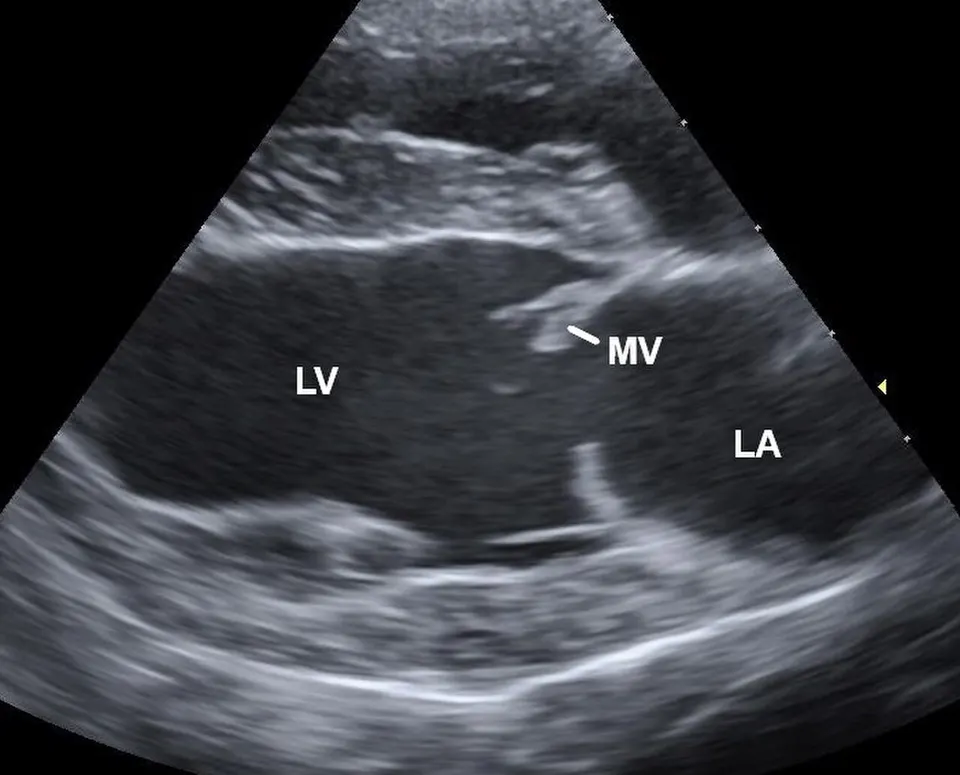
A leaky heart valve
In mitral valve disease the valve between two heart chambers thickens and leaks; the heart enlarges and scars until it fails.
One shot adds a protective gene
A harmless virus delivers DNA that makes cells produce a protein which curbs scar-tissue build-up. It doesn't edit the dog's own genes.
From mice to dogs
In mice with heart failure, the approach cut scarring by up to 85%; a first safety study in dogs was completed without side effects.
Update log
Wed 22 Jun 2022
- Minor: PressPartnership
Nov 2019
- Minor: PaperResearch
About Rejuvenate Bio
Rejuvenate Bio
Gene therapy, reprogramming in mice, dog hearts
San Diego gene-therapy company co-founded by George Church, working on diseases of aging in animals and people. It's testing a gene therapy for a heart-valve disease in dogs, and reported that reprogramming genes extended the remaining life of very old mice.
rejuvenatebio.com (opens rejuvenatebio.com)Company profile →
- Headquarters
- United States
- Status
- Private
- Valuation
- private
- Works in
- LongevityCellular reprogramming
- Coverage
- 2 programs · 6 updateslatest 8 Jun 2026checked 25 Sep
- People
- George Church (opens en.wikipedia.org)Co-founderNoah DavidsohnCo-founder and Chief Scientific Officer