
The brief
- Proved a record 20 tesla HTS fusion magnet in 2021, the key to a much smaller tokamak.
- Installing SPARC's 18 main magnets in 2026; first plasma targeted for 2027.
- Raised about $3B; Google and Eni have agreed to buy power from its planned ARC plant.
Technical approach
Superconducting tape magnets
Coils wound from REBCO tape stay superconducting at ~20 K in very strong fields. Fusion power rises steeply with field, so the machine can be far smaller.
No-insulation coils
The test coil had no insulation between turns, so current can reroute around a hot spot. That makes the magnet more robust.
Proven physics, new engineering
SPARC stays within well-tested tokamak physics, so the bet is on building the magnets, not on new science.
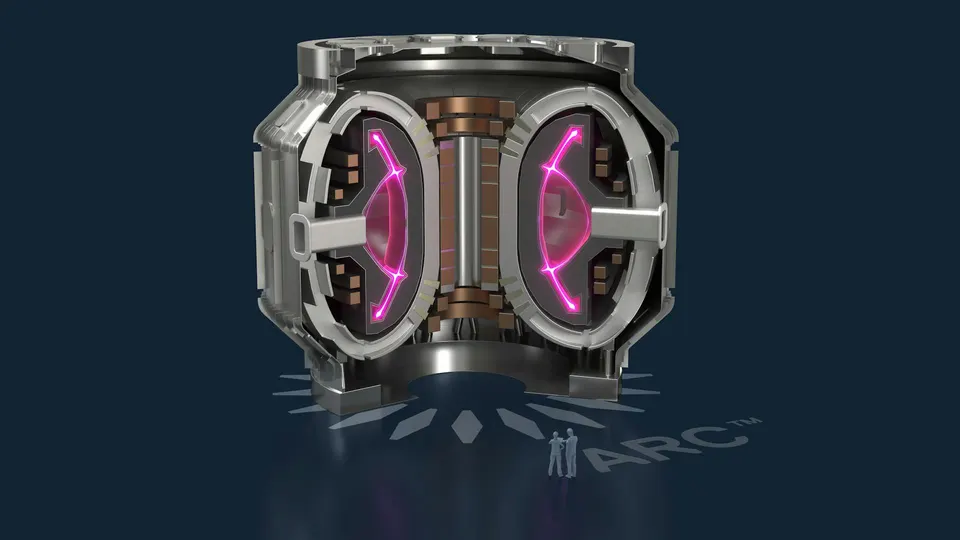
ARC: a molten-salt blanket
In ARC, molten salt (FLiBe) around the plasma soaks up neutrons, makes tritium fuel and carries heat to a turbine.
Commonwealth Fusion Systems, two programs
Updated 30 Jul 2026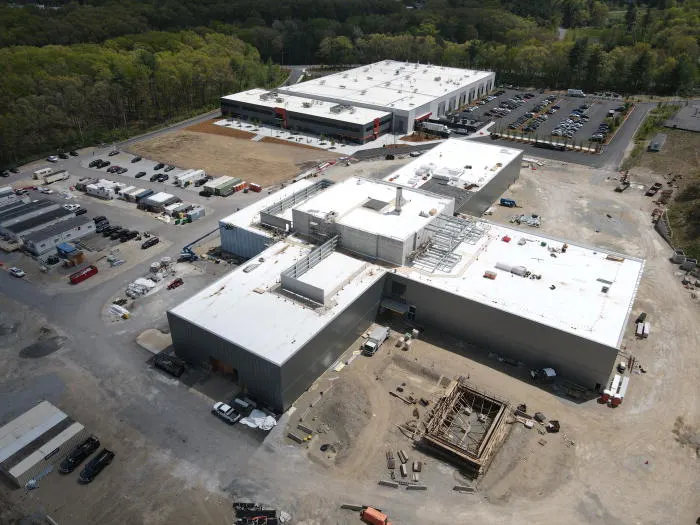
Research & demos
- Mar 2024paperCore performance predictions in projected SPARC first-campaign plasmas with nonlinear CGYRO (opens arxiv.org)SPARC
Detailed plasma simulations backing the prediction that SPARC's first campaign can reach Q>1.
- Aug 2023
Detailed engineering report on the magnet test, including how it behaved when it lost superconductivity.
- Sep 2021
First big HTS magnet at fusion-level field, removing the main risk of the compact approach.
- Sep 2020
Seven peer-reviewed papers on SPARC's design, predicting a fusion gain of ~11 using standard physics.
Open technical problems
- Materials under neutron bombardmentActive research
Fast fusion neutrons damage walls and magnet tape. Nobody has yet tested how they hold up over a power plant's life.
- Making its own tritium fuelOpen
ARC must breed more tritium than it burns and recover it. That full fuel cycle has never been shown at this scale.
- Sudden plasma crashesActive research
If the plasma suddenly collapses, it hits a small machine with huge forces and heat. SPARC must predict and soften these.
Upcoming catalysts
- 2027SPARC first plasmaSPARCby ~15 mo
- 2027First attempt at Q>1 in D-T plasmaSPARCby ~15 mo
Peers
Company & funding
- Raised
- $2.8Bdisclosed private rounds
- Last round
- Series B2Aug 2025
- HQ
- US
- Founded
- 2018
| Date | Round | Amount | Post-money | Lead |
|---|---|---|---|---|
| Aug 2025 | Series B2 | $863M | — | — |
| Dec 2021 | Series B | $1.8B | — | Tiger Global Management |
| Jun 2019 | Series A2 | $115M | — | — |
Partners & customers
- Partner
Co-designed the SPARC magnet program and physics basis
- Customer
Agreed in 2025 to buy 200 MW from ARC; also an investor
- Customer
Early investor; signed a >$1B power purchase agreement for ARC output in 2025
- Partner
Collaboration on siting ARC in Chesterfield County, Virginia
- Partner
Digital-twin collaboration with Siemens announced January 2026; NVentures invested in Series B2
- Investor
Led the 2021 Series B
People
- Bob MumgaardCo-founder & CEO
- Brandon SorbomCo-founder & Chief Science Officer
- Dennis Whyte (opens psfc.mit.edu)Co-founder; MIT professor of nuclear science