
Milestones
- ARC site selected in Chesterfield County, VirginiaDec 2024Complete.
- Google agrees to buy 200 MW of ARC outputJun 2025Complete.
- Eni signs >$1B power purchase agreementSep 2025Complete.
- ARC grid powerNot yet reached.
Most important updates
- 30 Jul 2026
- 28 Apr 2026
- Oct 2025
- 30 Jun 2025
- 17 Dec 2024
Current obstacles
- Licensing a first fusion power plantUS fusion rules are lighter than those for fission reactors, but they are new and untested for a plant holding lots of tritium.
Physics limits
- Tritium must be bred faster than it burnsTritium decays with a 12.3-year half-life, so almost none exists in nature. Each fusion burns one tritium and releases one neutron, which makes at most about one new tritium, so margins are thin.
- Fusion neutrons wear out the inner walls14 MeV neutrons knock every atom in nearby steel out of place many times over a plant's life, making it brittle and radioactive. No wall material is proven for full power-plant doses.
- A steam cycle wastes most of the heatLike any thermal plant, ARC turns only about 40% of its heat into electricity, and magnets, pumps and plasma heating consume part of that, so fusion output must far exceed sales.
How it works
A scaled-up SPARC
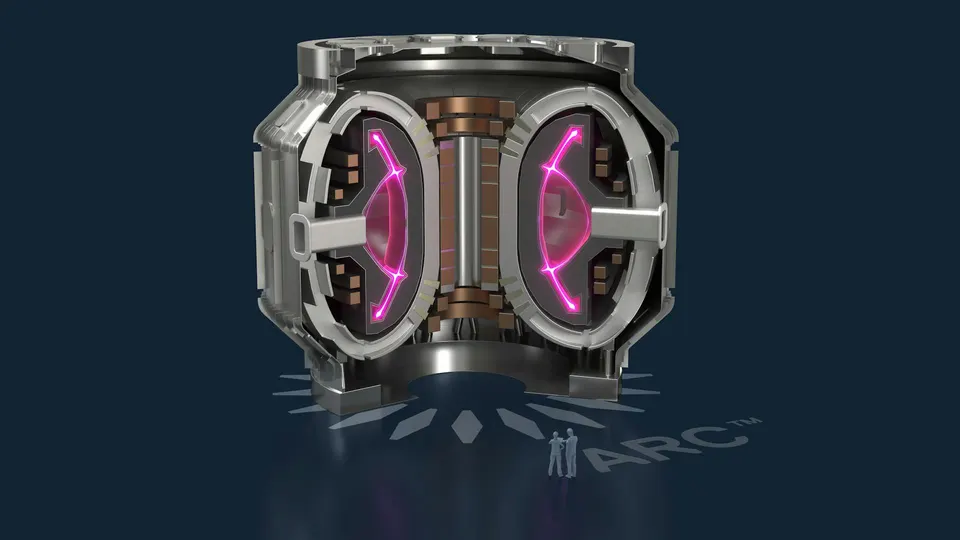
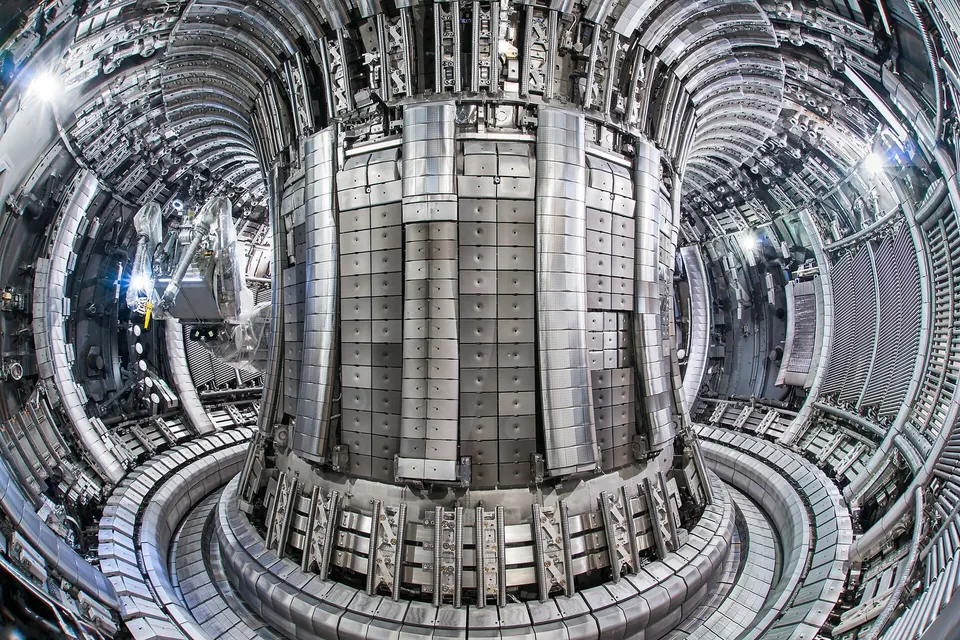
ARC uses SPARC's high-field superconducting tokamak design, sized up to run for long periods and make about 400 MW of electricity.
A tank of molten salt around the plasma
The plasma chamber sits in molten FLiBe salt. Fusion neutrons heat the salt and split its lithium into helium and new tritium fuel.
Salt heat drives a steam turbine
Hot salt runs through heat exchangers; the heat boils water and a conventional turbine makes electricity, as in any thermal plant.
Built to swap worn parts
Neutrons slowly damage the inner chamber, so ARC's design lets it be removed and replaced rather than rebuilding the machine.
Update log
Thu 30 Jul
- Major: PressFunding
Tue 28 Apr
- Major: PressRegulatory
Oct 2025
- Major: PressRegulatory
Sep 2025
- Minor: PressCommercial
Tue 19 Aug 2025
- Minor: PressRegulatory
Mon 30 Jun 2025
- Major: PressCommercial
Tue 17 Dec 2024
- Major: PressCommercial
About Commonwealth Fusion Systems
Commonwealth Fusion Systems
HTS magnets, SPARC tokamak, ARC power plant
MIT spinout building small, powerful tokamaks with high-temperature superconducting (HTS) magnets. SPARC in Massachusetts aims to make more fusion power than it takes in; ARC in Virginia aims to sell power in the early 2030s.
- Proved a record 20 tesla HTS fusion magnet in 2021, the key to a much smaller tokamak.
- Installing SPARC's 18 main magnets in 2026; first plasma targeted for 2027.
- Raised about $3B; Google and Eni have agreed to buy power from its planned ARC plant.
- Founded
- 20188 yrs
- Headquarters
- United States
- Status
- Private
- Valuation
- private
- Raised
- $2.8B3 rounds
- Last round
- Series B2 · $863MAug 2025
- Coverage
- 2 programs · 15 updateslatest 30 Jul 2026checked 25 Sep
- Lead investors
- Tiger Global Management
- Partners
- MIT Plasma Science and Fusion Center (opens psfc.mit.edu)Dominion Energy Virginia (opens dominionenergy.com)NVIDIA
- People
- Bob MumgaardCo-founder & CEOBrandon SorbomCo-founder & Chief Science OfficerDennis Whyte (opens psfc.mit.edu)Co-founder; MIT professor of nuclear science