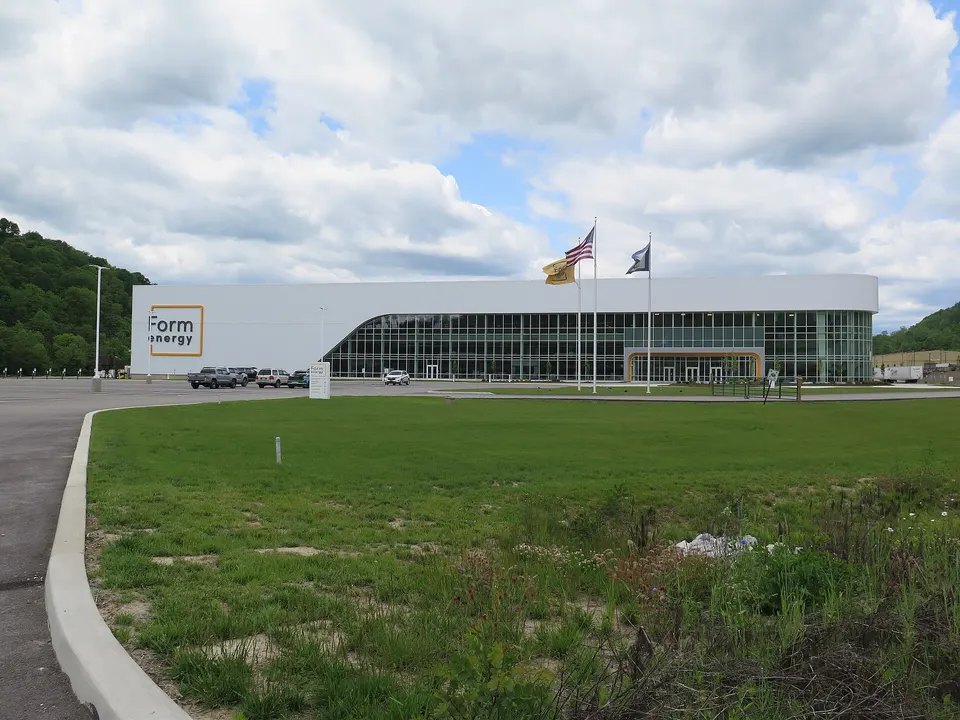

Milestones
- Weirton, WV factory site selectedDec 2022Complete.
- Groundbreaking at Great River Energy, Cambridge MNAug 2023Complete.
- First commercial batteries shipped to Great River Energy2025Complete.
- Xcel Energy and Georgia Power projects onlineTarget 2026Current milestone.
Most important updates
- Form Energy raises $750M Series G led by T. Rowe Price to scale iron-air manufacturing12 Aug 2026
- Crusoe agrees to buy 12 GWh of iron-air batteries for AI data centres, deliveries from 202724 Mar 2026
- Form Energy and FuturEnergy Ireland agree to build Ireland's first iron-air storage project17 Mar 2026
- Form ships its first commercial iron-air batteries to Great River EnergyOct 2025
- Form Energy publishes large-scale fire safety test results for its iron-air battery12 Dec 2024
Upcoming
- 2026Xcel Energy and Georgia Power projects online (next)
- 2026Great River Energy iron-air system in Minnesota expected online
- 2027Deliveries of iron-air batteries to Crusoe data centres begin
- 2029FuturEnergy Ireland 1 GWh iron-air project due online
Current obstacles
- Energy lost in storageIron-air gives back under ~50% of the energy stored vs ~85% for lithium-ion, so it must win on very low cost.
Physics limits
- Iron-air cells have low voltageAn iron-air cell runs at about 1 V, a third of lithium-ion's, so systems need many cells and much more mass and space per kWh.
- Charging also makes hydrogenIn alkaline water, iron electrodes split some water into hydrogen while charging, wasting current and slowly consuming electrolyte; this is built into the chemistry.
- Slow chemistry means low powerConverting solid iron to rust and back is slow, so power per cell is small; the design suits slow, long discharge, not fast bursts.
How it works
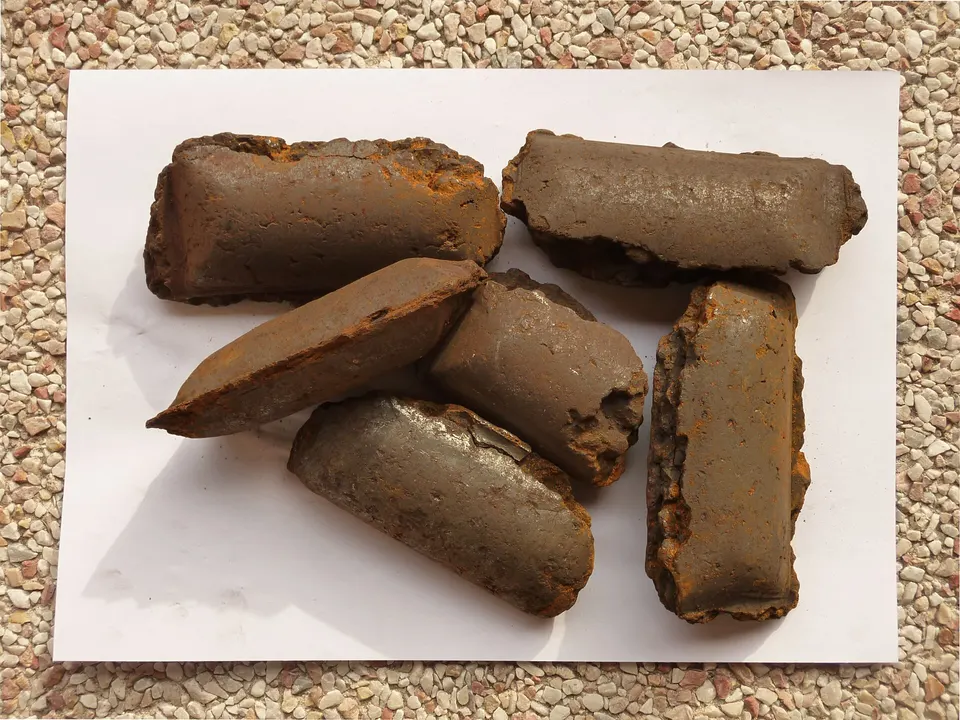
Rusting releases energy
Each cell holds many small iron pellets; while discharging, the iron takes oxygen from the air and turns into rust, releasing electrons.
Current reverses the rust
Charging drives the reaction backwards: electricity strips the oxygen off, turning rust back into iron and releasing oxygen.
Cheap, non-flammable ingredients
Iron, a water-based electrolyte and air: no lithium, cobalt or flammable solvent, so materials are cheap and cells can't burn like lithium-ion.
About 100 hours of output
Units discharge slowly for about 100 hours, covering multi-day lulls in wind and sun that 4-hour lithium batteries can't.
Spec sheet
| Spec | Iron-air multi-day battery |
|---|---|
| Discharge duration | ~100 hoursR (reported) |
| First project | 1.5 MW / 150 MWhR (reported) |
R reported by the company
Update log
Wed 12 Aug
Tue 24 Mar
Tue 17 Mar
Oct 2025
- Major: Form ships its first commercial iron-air batteries to Great River EnergyPressManufacturing
Thu 12 Dec 2024
Mon 14 Oct 2024
- Minor: Form Energy begins expanding Form Factory 1 in Weirton to raise iron-air outputPressManufacturing
Aug 2023
- Minor: Great River Energy and Form Energy break ground on the first iron-air storage projectPressCommercial
About Form Energy
Form Energy
Iron-air batteries, 100-hour grid storage
Makes iron-air batteries that store energy for about 100 hours by rusting and un-rusting iron. It builds them in Weirton, West Virginia; its first commercial system, delivered to Great River Energy in Minnesota, is due online in 2026.
- Iron, water and air are cheap and plentiful, aiming for multi-day storage far cheaper per kWh than lithium-ion.
- First 1.5 MW / 150 MWh system delivered to Great River Energy, Minnesota, in late 2025.
- Utility projects with Xcel Energy and Georgia Power follow in 2026.
- Founded
- 20179 yrs
- Headquarters
- United States
- Status
- Private
- Valuation
- private
- Works in
- EnergyGrid storage
- Coverage
- 1 program · 8 updateslatest 12 Aug 2026checked 25 Sep
- People
- Mateo Jaramillo (opens formenergy.com)Co-founder & CEOYet-Ming Chiang (opens formenergy.com)Co-founder; MIT professor