
Milestones
- First crewed flight, with Jeff Bezos aboard20 Jul 2021Complete.
- NS-23 booster failure; capsule escape system works12 Sep 2022Complete.
- Flights paused for at least two years30 Jan 2026Complete.
Most important updates
- 30 Jan 2026
- 14 Apr 2025
- 19 May 2024
- 13 Oct 2021
Physics limits
- Going up is easy; orbit takes about 60 times the energyNew Shepard peaks near 1 km/s. Orbit needs 7.8 km/s, and energy grows with speed squared, so a hop to space is a tiny fraction of an orbital launch and can't be stretched into one.
- Weightlessness lasts only minutes on a ballistic arcAnything thrown up and falling back is weightless only while it coasts. At New Shepard's speeds that is three to four minutes; longer needs going faster, which means orbit.
How it works
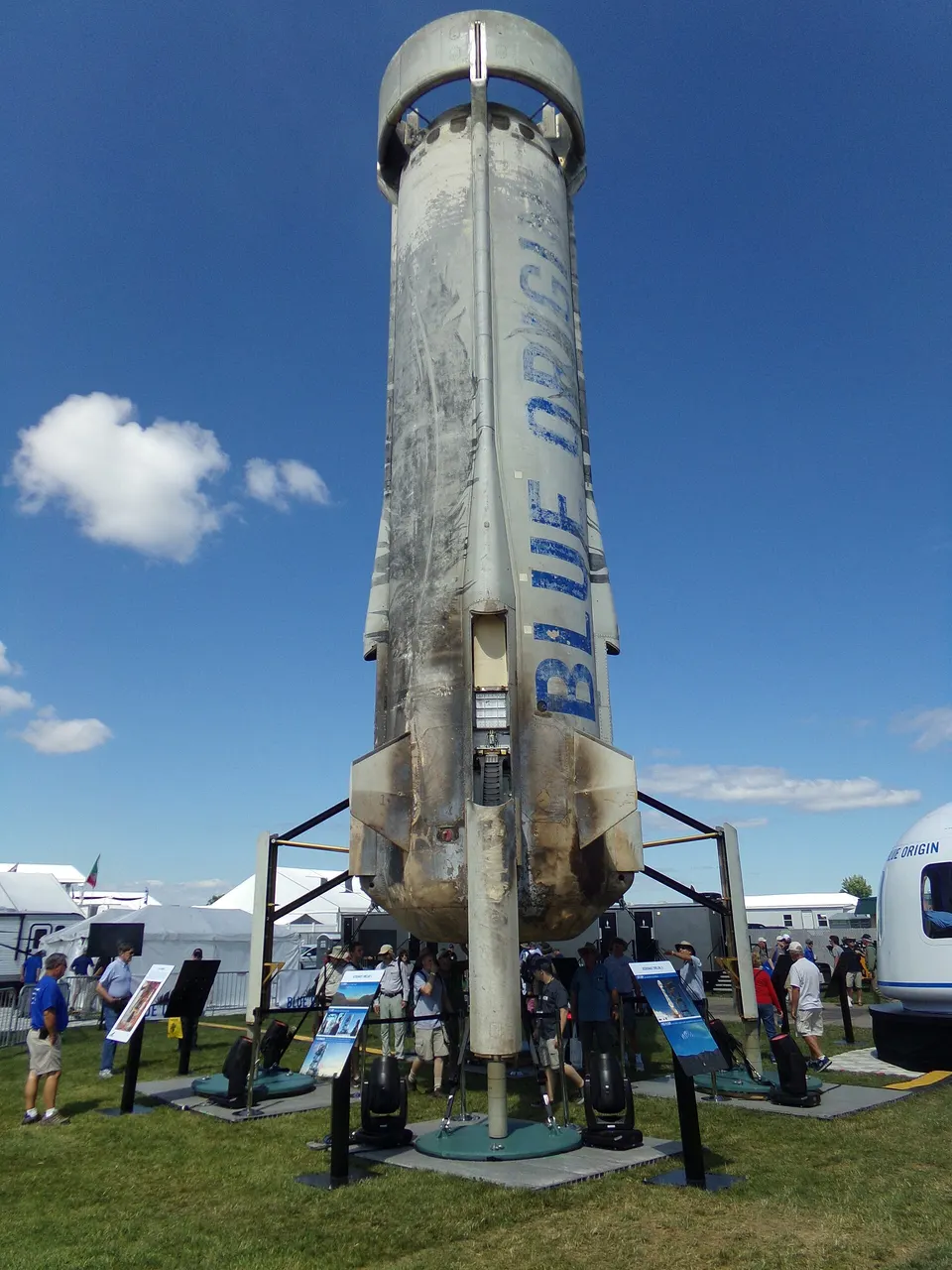
Climb
Straight up on one engine
A single BE-3PM hydrogen engine pushes the booster and capsule straight up to about 1 km/s, then shuts off.
Float
Coasting over 100 km
The capsule separates and coasts above 100 km, giving about three to four minutes of weightlessness before falling back.
Land
Booster lands, capsule parachutes
The booster relights and lands upright on a pad; the capsule descends under three parachutes and fires a small rocket just before touchdown.
Papers & demos
- 23 Nov 2015demoNew Shepard first powered vertical landing after flight to space (opens blueorigin.com)First booster to fly above 100 km and land upright, a month before Falcon 9's first landing.
Update log
Fri 30 Jan
- Major: BlogOther
Mon 14 Apr 2025
- Minor: PressCommercial
Sun 19 May 2024
- Major: PressTest
Wed 13 Oct 2021
- Minor: PressCommercial
About Blue Origin
Blue Origin
New Glenn, BE-4 engines, Blue Moon lander
Jeff Bezos's space company. It builds the New Glenn rocket, the BE-4 engine (also used by ULA), the Blue Moon landers and New Shepard. It has a NASA contract for a crewed Moon lander and paused New Shepard in 2026 to focus on the Moon.
- New Glenn landed its booster on only its second flight (Nov 2025), but NG-3 left a customer satellite in a useless orbit (Apr 2026).
- A May 2026 test-firing explosion destroyed a New Glenn and badly damaged LC-36, its only pad.
- New Shepard is paused for at least two years to focus on Blue Moon; Tory Bruno joined from ULA in early 2026.
- Founded
- 200026 yrs
- Headquarters
- United States
- Status
- Private
- Valuation
- private
- Works in
- SpaceflightLaunch
- Coverage
- 3 programs · 17 updateslatest 6 Aug 2026checked 25 Sep
- Partners
- Rocket Lab