
Milestones
- Selected as second Artemis crewed lander ($3.4B)19 May 2023Complete.
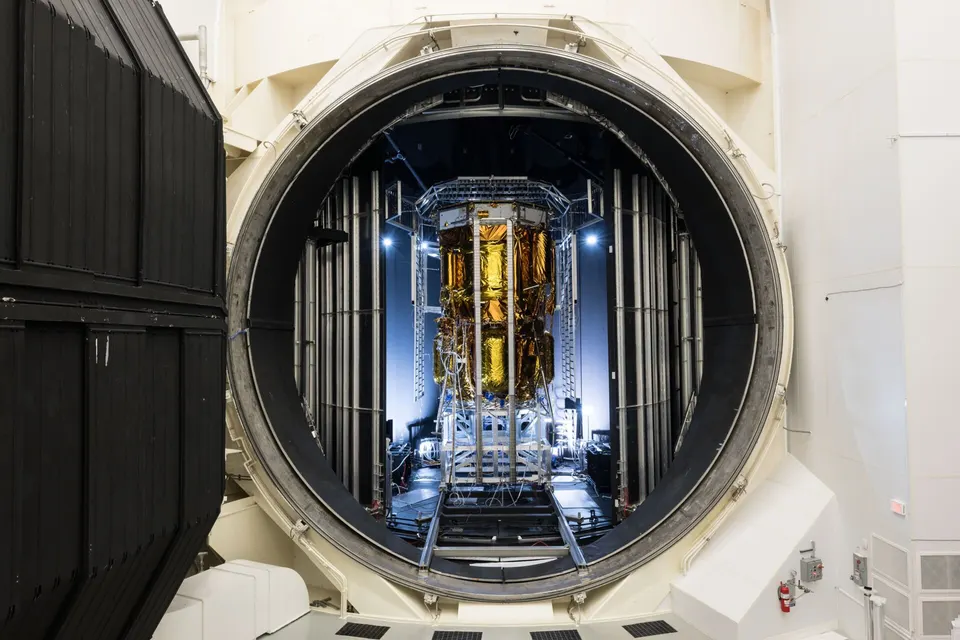
- MK1 pathfinder shipped to NASA Johnson for thermal-vacuum tests2026Complete.
- MK1 pathfinder lunar landingTarget Q1 2027Not yet reached.
- MK2 crewed landing (Artemis V)Not yet reached.
Most important updates
- 6 Aug 2026
- 15 Jul 2026
- 4 May 2026
- 28 Oct 2025
- 9 May 2019
Upcoming
- Q1 2027MK1 pathfinder lunar landing (next)
- 2027Artemis III: Orion crew to dock with a Blue Moon MK1 lander in Earth orbit
Current obstacles
- Keeping hydrogen from boiling offKeeping hydrogen liquid for a whole Moon mission needs active cooling and a refuelling plan not yet shown.
Physics limits
- Liquid hydrogen is hard to keep for longHydrogen boils at 20 K (−253 °C), and even small heat leaks from sunlight or the lunar surface boil it off. Storing it for weeks takes cryocoolers and shielding that add mass and power.
- No air: every metre per second of braking is fuelLanding from lunar orbit and flying back up takes about 4 km/s of speed change, all from the engine. Each extra tonne of cargo needs several tonnes more propellant.
- Lunar nights and dust are hostile to machinesNear the poles, sunlight is low and shadows are deep; elsewhere nights last 14 Earth days at about −170 °C. Sharp, clingy dust abrades seals and coats radiators and optics.
How it works
BE-7: a throttling hydrogen engine
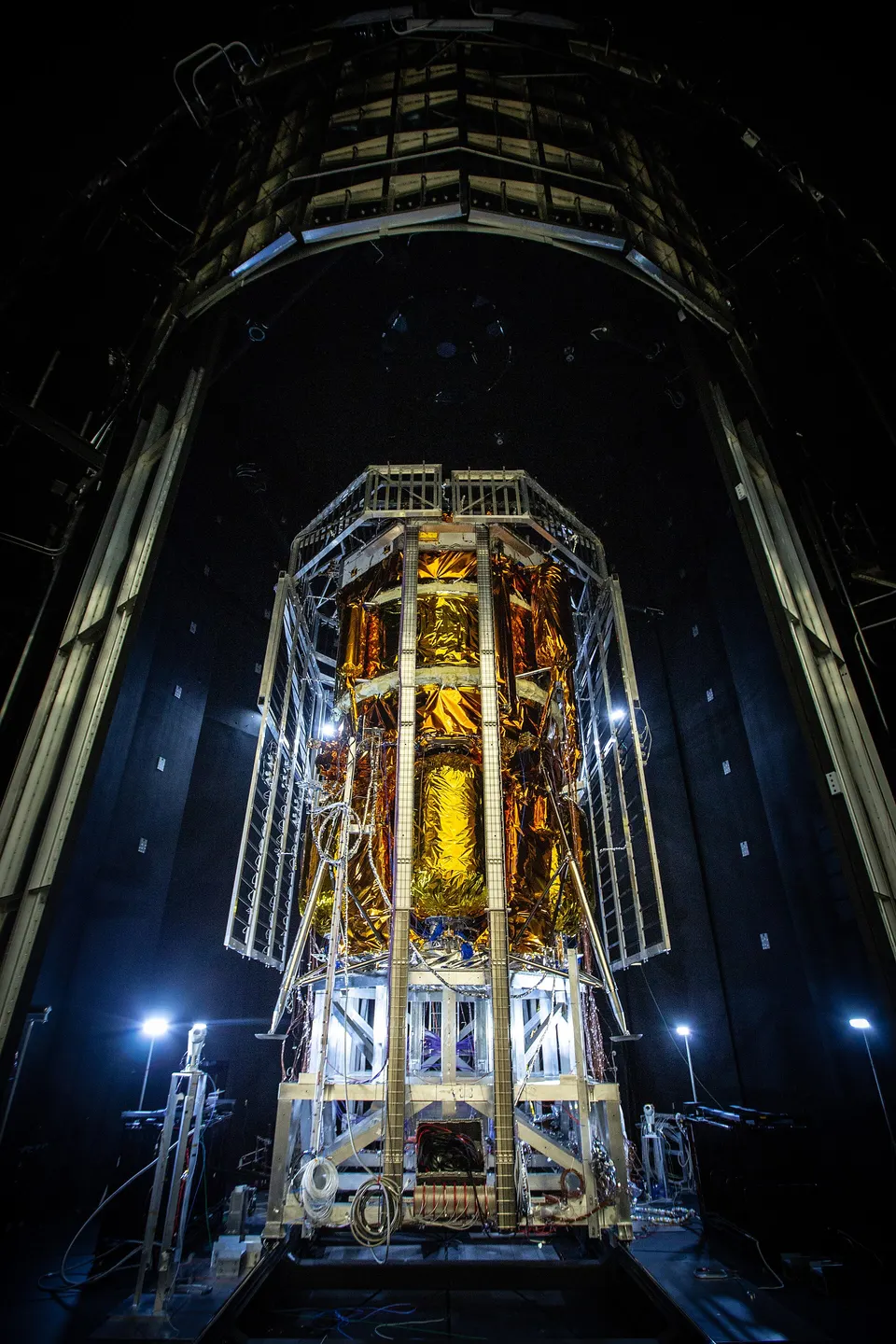
The BE-7 burns liquid hydrogen and oxygen, the most efficient chemical pair, and can throttle down for a gentle touchdown.
A one-way cargo lander
MK1 flies to the Moon on one New Glenn launch and lands about 3 tonnes of cargo; its first mission lands near the south pole.
A reusable crew lander
MK2 carries two astronauts and is designed to be refuelled in lunar orbit by a separate transporter, so it can fly again.
Keeping hydrogen liquid
Hydrogen boils at −253 °C. Sun shields and active cooling are meant to hold it liquid for weeks, which long lunar missions need.
Update log
Thu 6 Aug
- Minor: PressOther
Wed 15 Jul
- Minor: RegulatorPartnership
Mon 4 May
- Major: RegulatorTest
Tue 28 Oct 2025
- Minor: PressHardware
Thu 9 May 2019
- Major: PressHardware
About Blue Origin
Blue Origin
New Glenn, BE-4 engines, Blue Moon lander
Jeff Bezos's space company. It builds the New Glenn rocket, the BE-4 engine (also used by ULA), the Blue Moon landers and New Shepard. It has a NASA contract for a crewed Moon lander and paused New Shepard in 2026 to focus on the Moon.
- New Glenn landed its booster on only its second flight (Nov 2025), but NG-3 left a customer satellite in a useless orbit (Apr 2026).
- A May 2026 test-firing explosion destroyed a New Glenn and badly damaged LC-36, its only pad.
- New Shepard is paused for at least two years to focus on Blue Moon; Tory Bruno joined from ULA in early 2026.
- Founded
- 200026 yrs
- Headquarters
- United States
- Status
- Private
- Valuation
- private
- Works in
- SpaceflightLaunch
- Coverage
- 3 programs · 17 updateslatest 6 Aug 2026checked 25 Sep
- Partners
- Rocket Lab