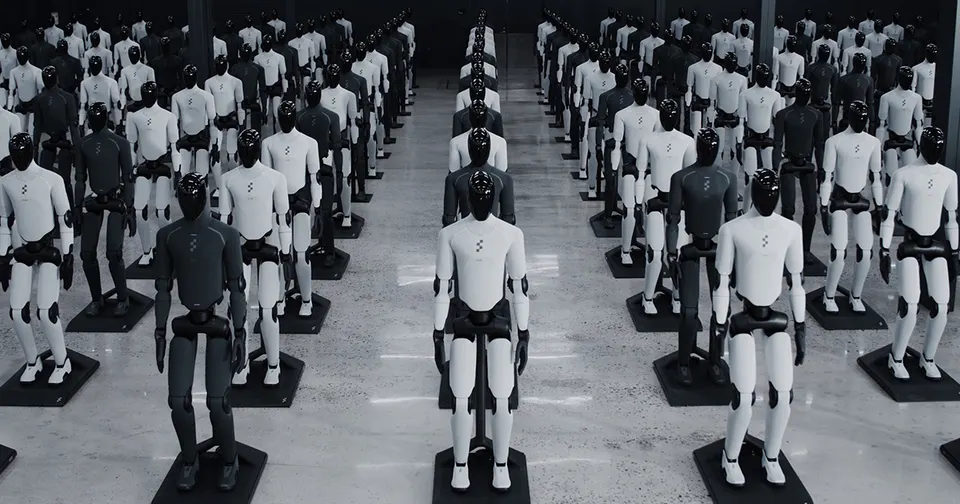

Milestones
- BotQ announced15 Mar 2025Complete.
- About one robot per dayJan 2026Complete.
- One robot per hour; 350+ units delivered29 Apr 2026Complete.
- First line at 12,000-robot annual capacityNowCurrent milestone.
- 100,000 robots cumulative (stated four-year goal)Target 2029Not yet reached.
Most important updates
- 29 Apr 2026
- 15 Mar 2025
Upcoming
- 2029100,000 robots cumulative (stated four-year goal) (next)
Current obstacles
- Supply of motors and gearsEach humanoid needs dozens of precise motors and gears. Supply for tens of thousands of robots a year doesn't exist yet.
Physics limits
- Precision gears are slow to makeJoint gearboxes and roller screws need surfaces ground to within a few microns. Grinding removes metal slowly and wears its wheels, so gear output grows only as fast as grinding capacity.
- Strong motors need rare-earth magnetsCompact motors use neodymium magnets, which lose strength when hot; heavy rare earths such as dysprosium are added to resist that. Their supply is small and concentrated in a few countries.
- Flexible parts resist automationCables, wire harnesses and fabric covers bend unpredictably, so robots handle them poorly. These steps stay manual far longer than bolting rigid parts together.
How it works
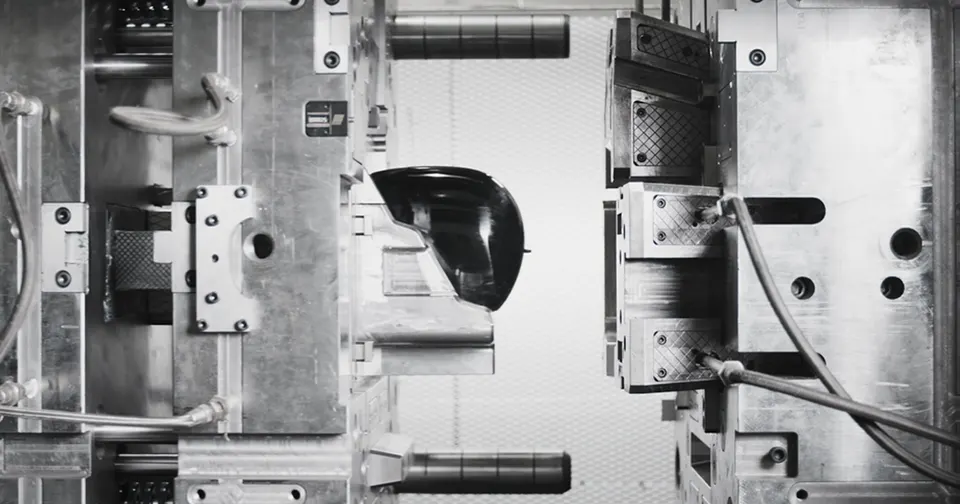
Modules
Module lines
Separate lines build actuators, hands and batteries before final assembly, so each can be tested on its own.
Software
Own factory software
Custom software tracks every robot across 150+ connected workstations and logs test data for each part.
Spec sheet
| Spec | BotQ |
|---|---|
| First-line capacity | Up to 12,000 robots/yearR (reported) |
| Production rate | ~1 robot per hour (Apr 2026)R (reported) |
| Networked workstations | 150+R (reported) |
R reported by the company
Update log
Wed 29 Apr
- Major: BlogManufacturing
Sat 15 Mar 2025
- Major: BlogManufacturing
About Figure
Figure
Humanoids, Helix AI, BotQ factory
Figure builds electric humanoid robots and Helix, the AI that controls them. Founded in 2022 by Brett Adcock, its robots work at BMW's Spartanburg plant, and in 2026 its BotQ factory built about 1 robot per hour.
- Figure 02 worked about 11 months at BMW Spartanburg. Figure 03 arrived there in June 2026.
- All its AI is in-house: Helix (Feb 2025), Helix 02 (Jan 2026) and Helix 2.5 (Sep 2026).
- BotQ went from 1 robot a day (Jan 2026) to 1 an hour (Apr 2026). First line: 12,000 robots a year.
- Founded
- 20224 yrs
- Headquarters
- United States
- Status
- Private
- Valuation
- $39BprivateSep 2025
- Staff
- ~600Jan 2025
- Raised
- $1.7B3 rounds
- Last round
- Series C · $1B16 Sep 2025$39B post
- Works in
- RoboticsHumanoidsAIManufacturing
- Coverage
- 3 programs · 15 updateslatest 23d agochecked 25 Sep
- Lead investors
- Parkway Venture Capital
- Investors
- NVIDIA
- Suppliers
- Nscale (opens nscale.com)
- People
- Brett Adcock (opens en.wikipedia.org)Founder & CEOCorey Lynch (opens coreylynch.github.io)Head of AI (Helix)