Regulatory certificationFAA is still developing rules for autonomous flight in shared airspace; formal certification needed for wider deployment.
Powertrain reliabilityIntegrating combustion and electric systems reliably at scale is an engineering challenge; field support must mature.
Physics limits
Fuel energy density vs battery weightEven with a range-extender, combustion fuel's energy density (about 43 MJ/kg) is 150x higher than lithium-ion batteries (250 Wh/kg), but engines add weight and complexity.
Rotorcraft efficiency is fundamentally limitedRotor hover uses more energy per kilogram-meter than fixed-wing flight; a heavy helicopter is inherently inefficient, so payload fractions are low.
How it works
3 parts
Hybrid powertrain
Range extender for long hauls
A combustion engine charges batteries in flight, allowing Chaparral to fly long distances without returning to a charging station, unlike pure-electric drones.
VTOL design
Vertical takeoff, forward flight
Eight vertical rotors lift the aircraft, four forward rotors propel it. This hybrid design combines hover capability with efficient forward flight.
Autonomous operation
No pilot onboard
Chaparral follows pre-programmed flight plans with autonomous navigation and safety systems, reducing operational crew and turnaround time.
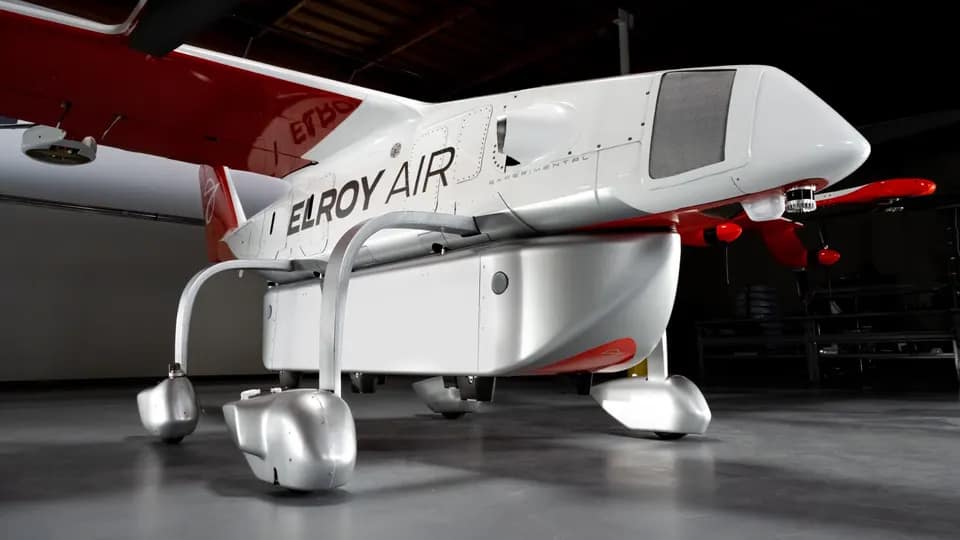
Elroy Air builds the Chaparral: a hybrid-electric VTOL cargo aircraft carrying 500+ pounds over 450 miles. SPAC merger at $1B valuation (June 2026). Army $46M contract for enhancement (August 2026).
Chaparral is the only heavy-payload cargo drone in FAA's eVTOL Integration Pilot Program.
Elroy going public at $1B valuation via SPAC merger (June 2026); Kratos makes aircraft in Sacramento.
US Army $46M contract for Chaparral multi-mission enhancement (August 2026).