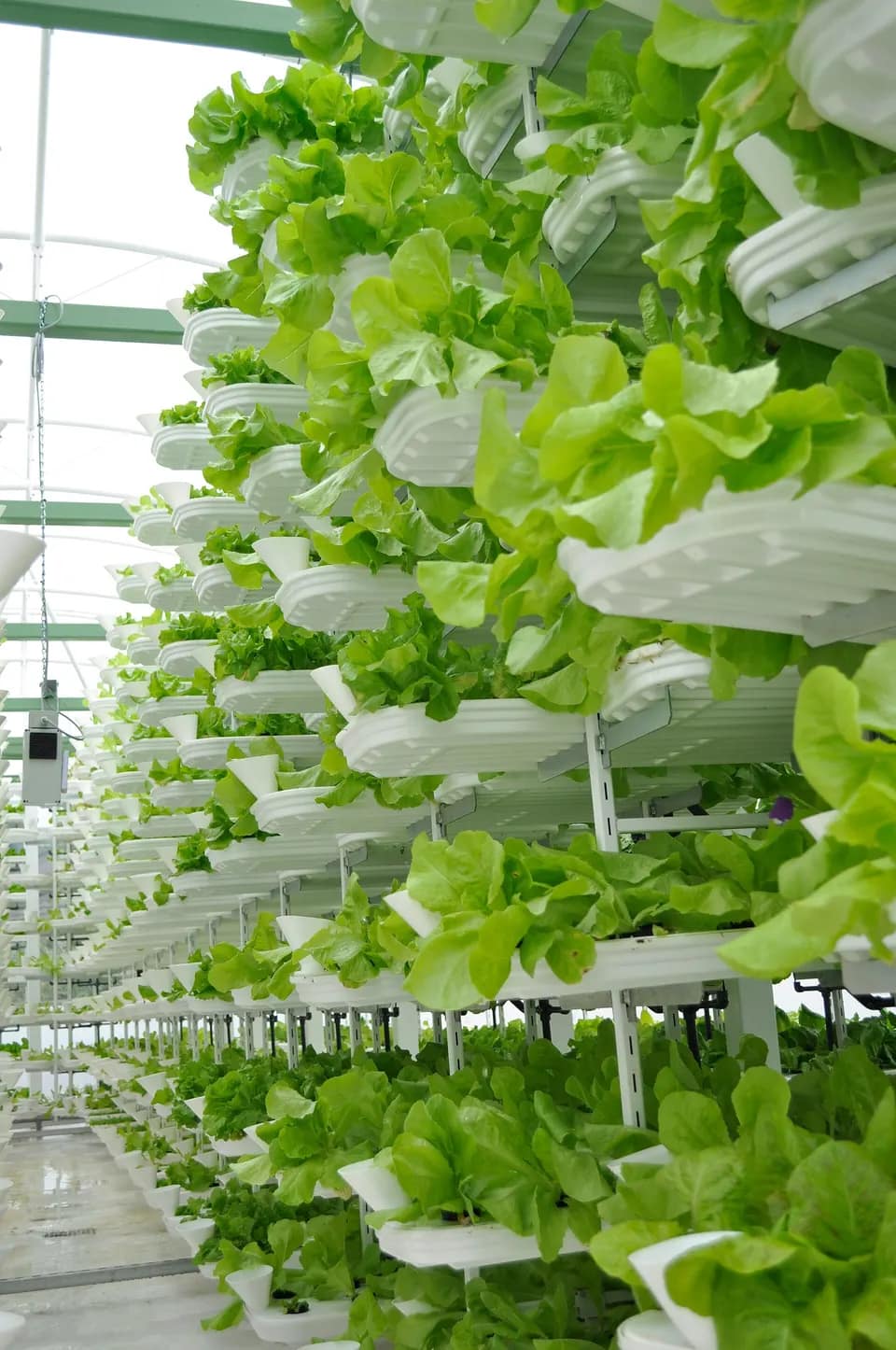
A network of urban hydroponic greenhouses growing lettuce, tomatoes and herbs with 95% less water and zero pesticides. Powered by 100% renewable energy.
ScalingStage 5 of 5
Eight facilities in seven US cities supplying 1,000+ stores. Expanded in 2024.
Updated Sep 2026·Checked 10 Oct·0 updates this week
Milestones
No announced next step
First greenhouse opens in Brooklyn, New York2011Complete.
Chicago facility opens2015Complete.
Second Chicago greenhouse (Pullman) opens at 100,000 sq ft2019Complete.
UC Davis greenhouse opens in Solano County, California2021Complete.
Series E funding round of $310M2022Complete.
Certified B Corp2021Complete.
Expansion to Colorado, Georgia, Texas; Providence and Chicago expandedJun 2024Complete.
High labor costs in dense urban marketsIndoor farming is more labor-intensive than field farming; wages in cities where Gotham operates are high, pressuring margins.
Equipment and infrastructure capitalEach greenhouse requires significant upfront investment in HVAC, lighting, climate control and hydroponic systems.
LED efficiency and power costsGrow lights are the largest energy cost. Even with renewables, power remains a material operating expense.
Physics limits
Crop suitabilityHydroponic greenhouses excel at leafy greens, herbs and vine crops but are less economical for root vegetables, grains or heavy fruits that require large soil volumes.
Urban real estate costsRooftops and warehouses in cities are expensive. Gotham's model only works in densely populated metro areas with high produce demand and high land values.
Scaling power infrastructureEach new greenhouse needs reliable renewable energy supply; grid constraints and interconnection delays can limit expansion speed.
How it works
4 parts
Hydroponic growing
Plants in water, not soil
Roots sit in nutrient-enriched water. Growers control pH, nutrients and water flow precisely, reducing waste and speeding growth.
Controlled environment
Indoor means no pests or weather
Sealed greenhouses exclude insects and weather; no pesticides needed. Growers manage light, temperature and humidity for each crop.
Local supply chain
Grown near customers
Urban greenhouses eliminate long-distance transport. Produce is harvested fresh and reaches stores and restaurants in hours, not weeks.
Renewable power
100% clean electricity
All facilities run on renewable energy—solar, wind or grid renewables—so the carbon footprint is near zero.
Spec sheet
Spec
Hydroponic greenhouse network
Operating greenhouses
Eight facilities across seven US citiesR (reported)
Urban greenhouses, hydroponic leafy greens, local produce
Gotham Greens operates a network of hydroponic greenhouses in US cities, growing pesticide-free lettuce, tomatoes and herbs for local markets. Its facilities use 95% less water and 97% less land than conventional farming while operating on renewable electricity.
Founded 2009; raised $440M across rounds, including $310M Series E in 2022.
Eight greenhouses across New York, Chicago, Colorado, Georgia, Texas, Rhode Island and California.
Davis, California facility (2021) partners with UC Davis on research; expanded to Colorado, Georgia and Texas in 2024.