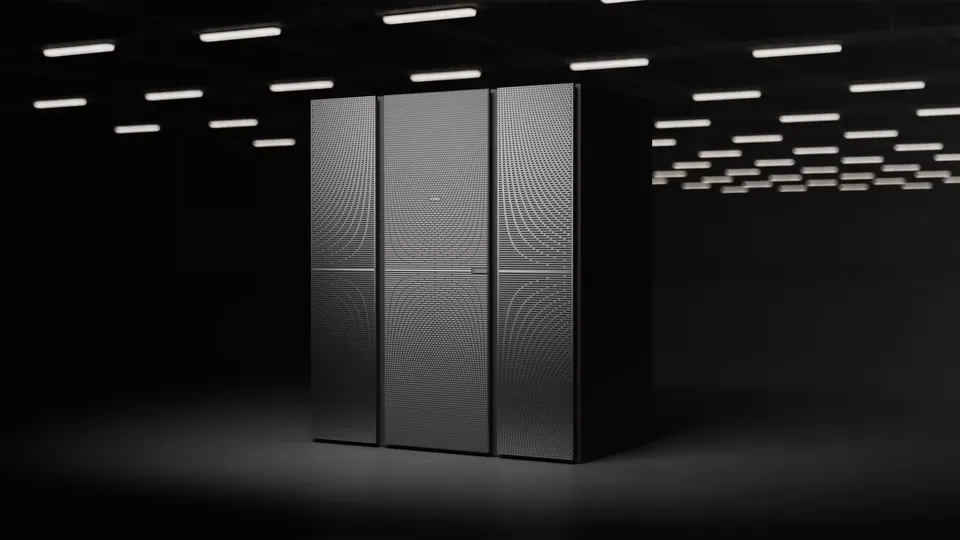

Milestones
- Forte Enterprise (#AQ 36)2024Complete.
- Tempo achieves #AQ 64Sep 2025Complete.
- 99.99% two-qubit fidelity reportedOct 2025Complete.
- First electronically controlled 2D chip systemTarget 2026Current milestone.
- ~10,000 physical qubits on a chipTarget 2027Not yet reached.
- 2 million physical, 80,000 logical qubitsTarget 2030Not yet reached.
Most important updates
- 18d ago
- 8 Sep 2026
- 31 Jul 2026
- 26 Jan 2026
- Oct 2025
Upcoming
- 2026First electronically controlled 2D chip system (next)
- 2027~10,000 physical qubits on a chip
- 2027First Superion 256 customer deliveries
- 20302 million physical, 80,000 logical qubits
Current obstacles
- Keeping fidelity at scaleAccuracy shown on small devices must survive wiring and crosstalk on chips with thousands of ions.
- Benchmark comparability#AQ is IonQ's own benchmark. Comparing it with other platforms is disputed.
Physics limits
- Long ion chains get crowdedIons in one trap share vibration modes. As a chain grows, the modes crowd together and gates get slower and noisier, so beyond a few dozen ions machines must shuttle ions or link traps.
- Electronic gates need steep fields close inMicrowave-driven gates need very strong magnetic-field gradients right at the ions. The currents that make them heat the chip, and that heat must be removed without disturbing the qubits.
- Ion gates are slowTwo-qubit gates on ions take tens to hundreds of microseconds, about a thousand times slower than superconducting gates, so long error-corrected programs run for hours.
How it works
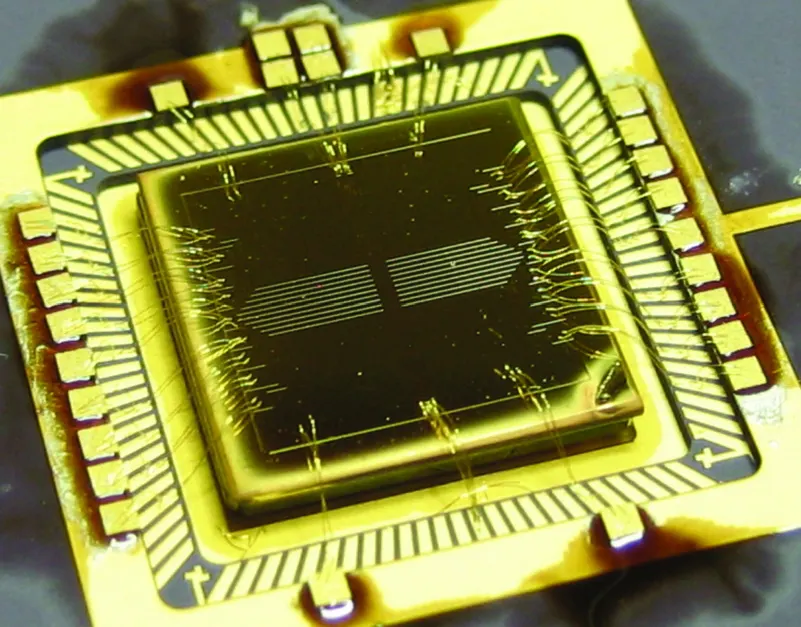
Ions
Atomic qubits on a chip
Single ions are trapped above a chip. Their energy levels store quantum information for a long time.
Microwaves
Electronic gates
Currents in on-chip electrodes make magnetic fields and microwaves that link ions, replacing most lasers.
Fab
Standard chip factories
Because control is built into the chip, traps can be made on normal chip lines like SkyWater's.
Spec sheet
| Spec | Tempo and 2D-chip roadmap | Forte Enterprise (#AQ 36) | Change |
|---|---|---|---|
| Algorithmic qubits | #AQ 64R (reported) | #AQ 36 | ▲ 28 |
| Best two-qubit fidelity | 99.99%R (reported) | — | —no comparable change |
| Physical qubits target (2030) | 2,000,000R (reported) | — | —no comparable change |
| Logical qubits target (2030) | 80,000R (reported) | — | —no comparable change |
| Gate control | Electronic (microwave on chip)R (reported) | Laser | —no comparable change |
R reported by the company
Papers & demos
- Oct 2025paper99.99% two-qubit gate fidelity with electronic qubit control (opens arxiv.org)First reported 'four nines' two-qubit gate, reducing the qubits needed for error correction.
- Sep 2025demoTempo reaches #AQ 64 (opens ionq.com)Hit IonQ's own benchmark target ahead of schedule.
Update log
Tue 22 Sep
- Minor: PressResearch
Tue 8 Sep
- Major: PressHardware
Fri 31 Jul
- Major: PressManufacturing
Mon 26 Jan
- Major: PressManufacturing
Oct 2025
- Major: PressResearch
Mon 9 Jun 2025
- Major: PressOther
About IonQ
IonQ
Trapped-ion computers, quantum networking, chip fab
IonQ builds trapped-ion quantum computers and was the first pure quantum company to go public (2021). Under CEO Niccolo de Masi it bought Oxford Ionics, networking firms and chip fab SkyWater. It aims for 2 million qubits by 2030.
- Closed its $1.8B purchase of chip maker SkyWater on 31 July 2026, gaining its own fab.
- Reported 99.99% two-qubit fidelity in October 2025 using Oxford Ionics' electronic control.
- Raised $2B in equity in October 2025, one of the sector's largest raises.
- Founded
- 201511 yrs
- Headquarters
- United States
- Status
- Public
- Listed
- IONQ (opens google.com)NYSE
- Valuation
- public
- Raised
- $3B2 rounds
- Last round
- Equity offering · $2BOct 2025
- Coverage
- 2 programs · 11 updateslatest 18d agochecked 25 Sep
- Lead investors
- Heights Capital Management
- Partners
- Oxford Ionics (opens oxionics.com)SkyWater Technology (opens skywatertechnology.com)ID Quantique (opens idquantique.com)
- People
- Niccolo de MasiChairman and CEOChris Monroe (opens en.wikipedia.org)Co-founder