
Milestones
- Aquila available on Amazon BraketNov 2022Complete.
- 48 logical qubits (with Harvard)6 Dec 2023Complete.
- Continuous operation of a 3,000-qubit array (Harvard/MIT)Sep 2025Complete.
- System delivered to AIST in Japan2025Complete.
Most important updates
- 9 Sep 2025
- Feb 2025
- 30 Apr 2024
- 7 Feb 2024
- 6 Dec 2023
Current obstacles
- Slow cycle timesMoving and imaging atoms takes milliseconds, so error-correction cycles are much slower than on superconducting chips.
Physics limits
- Moving atoms takes timeShuttling atoms between zones takes hundreds of microseconds per move, and moving faster heats them. Computations with many rearrangements run far slower than superconducting ones.
- Analog mode can't be error-correctedAquila runs continuous physics directly, with no discrete steps where errors could be checked. Noise accumulates over the run, and no known method corrects it in analog mode.
- Readout is slow and can lose atomsAtoms are read by imaging their fluorescence, which takes milliseconds and can push atoms out of their traps, slowing each error-correction round.
How it works
Analog
Aquila: programmable physics
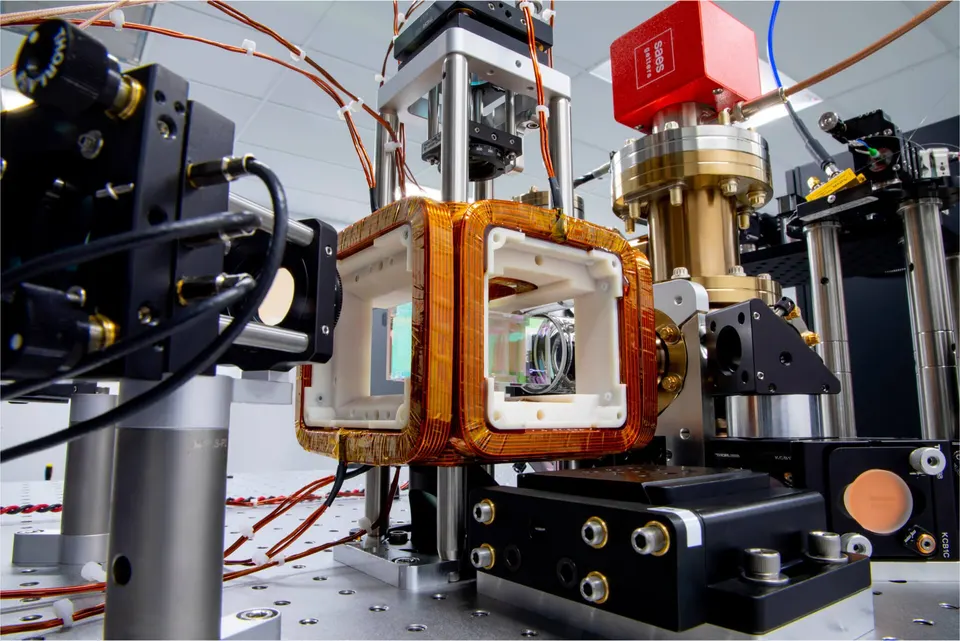
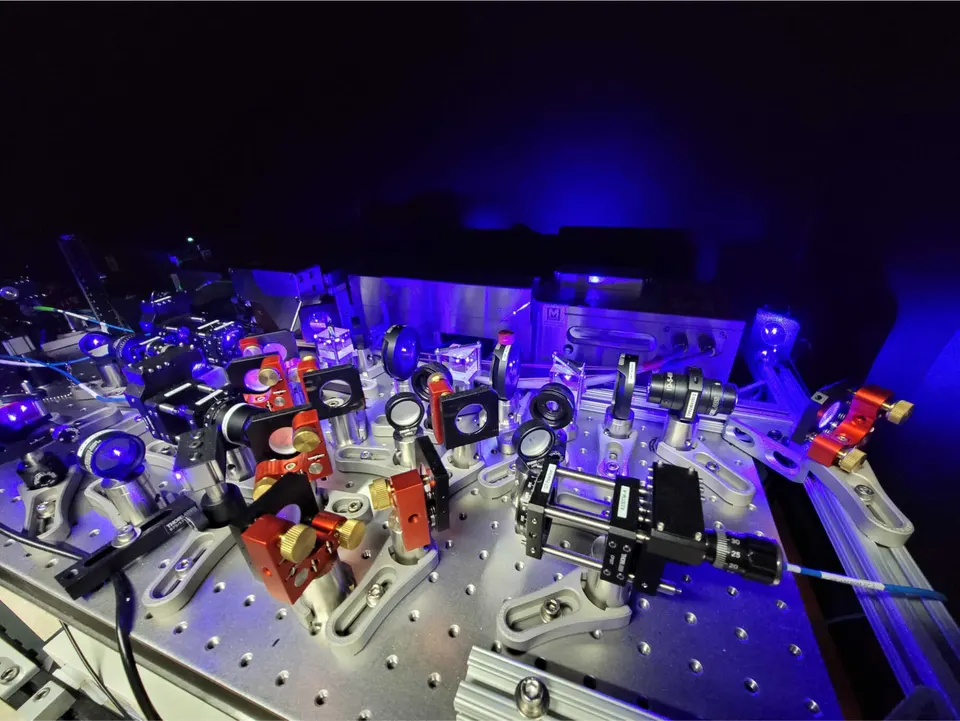
Up to 256 rubidium atoms are placed in any 2D pattern and driven so their interactions mimic a magnetic material or an optimisation problem.
Shuttling
Moving atoms mid-program
In digital mode, laser tweezers carry atoms between storage, gate and readout zones, so any qubit can be paired with any other.
Parallel
One pulse, many gates
A single laser pulse applies the same gate to hundreds of atom pairs at once, which suits error-correcting codes with repeated structure.
Update log
Tue 9 Sep 2025
- Minor: PressFunding
Feb 2025
- Major: PressFunding
Tue 30 Apr 2024
- Major: PressCommercial
Wed 7 Feb 2024
- Minor: PressCommercial
Wed 6 Dec 2023
- Major: PaperResearch
About QuEra Computing
QuEra Computing
Neutral-atom computers, Aquila, logical qubits
QuEra, founded in 2018 by Harvard and MIT physicists, builds neutral-atom computers from rubidium atoms in movable laser-tweezer grids. With Harvard it ran 48 logical qubits in 2023. Its Aquila machine is on AWS.
- Raised over $230M in February 2025 with Google and SoftBank Vision Fund 2. NVentures invested later in 2025.
- Harvard-led team with QuEra ran algorithms on 48 logical qubits (Nature, Dec 2023).
- Delivered a system to Japan's AIST.
- Founded
- 20188 yrs
- Headquarters
- United States
- Status
- Private
- Valuation
- private
- Raised
- $230M1 round
- Last round
- Venture round · $230MFeb 2025
- Works in
- QuantumNeutral atom
- Coverage
- 1 program · 5 updateslatest 9 Sep 2025checked 25 Sep
- Lead investors
- GoogleSoftBank Vision Fund 2
- People
- Andy OryCEOMikhail Lukin (opens en.wikipedia.org)Co-founder