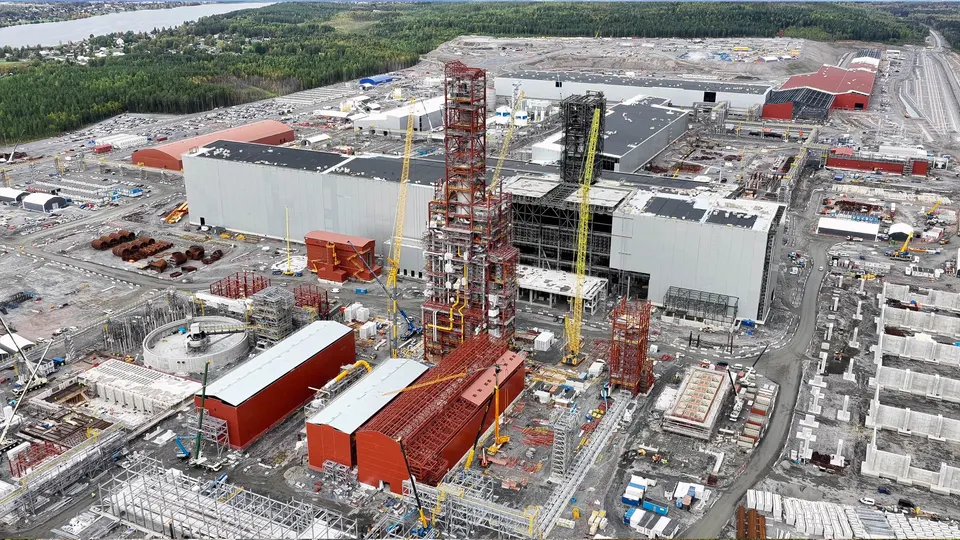

Milestones
- About €6.5B financing package securedJan 2024Complete.
- All 37 electrolyser modules installedApr 2026Complete.
- First production and phased start-upTarget Q4 2026+21 mo
originally 2025Current milestone. - Full-scale rampTarget 2027Not yet reached.
Most important updates
- 23d ago
- 24 Jun 2026
- 2 Apr 2026
- Apr 2026
- Jan 2024
Upcoming
- Q4 2026First production and phased start-up+21 mo
originally 2025(next) - Q4 2026First green steel produced at Boden
- 2027Full-scale ramp
Current obstacles
- Cost overrunsCosts rose beyond plan, forcing emergency funding in 2025-26; more overruns would hurt before any revenue arrives.
- Running it all togetherBalancing hydrogen supply, the furnace and the arc furnaces in real time is new at this scale.
Physics limits
- Hydrogen steel runs on huge amounts of powerEach tonne of iron needs ~54 kg of hydrogen by chemistry alone. Electrolysers use ~50 kWh per kg, so hydrogen takes ~2.7 MWh per tonne before melting and rolling.
- Hydrogen reduction absorbs heatUnlike coal, stripping oxygen from ore with hydrogen absorbs heat instead of releasing it, so the gas must be preheated to roughly 900 °C and fed in excess to keep the furnace hot.
- Only very pure ore worksOre stays solid in direct reduction, so rock impurities are not removed as slag. Pellets need about 67% iron or more, and only a few per cent of world ore is that clean.
How it works
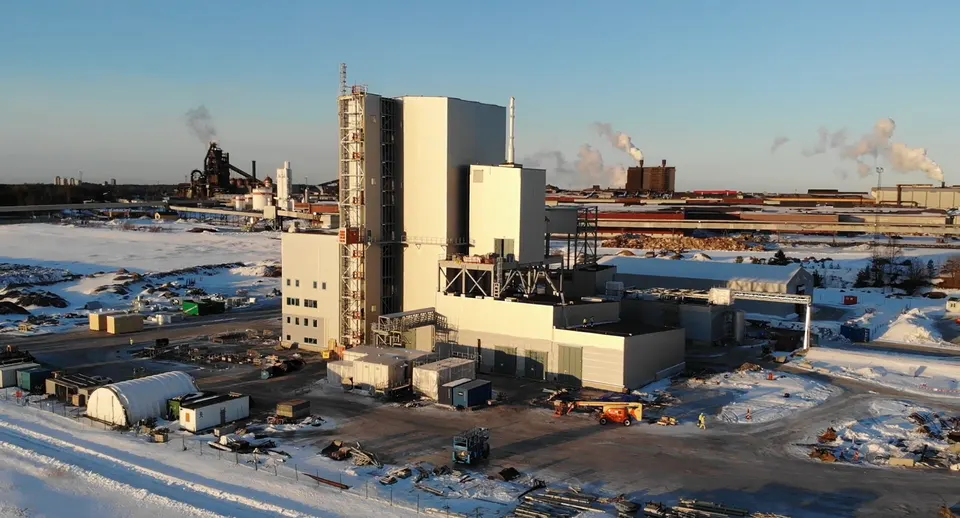
Power
Clean electricity
Making steel with hydrogen takes roughly 3–4 MWh of electricity per tonne; northern Sweden's cheap hydro and wind power make that affordable.
H2
Hydrogen plant
Electrolysers split water into hydrogen, which is stored and fed to the furnace.
DRI
Direct reduction
Hydrogen rises through falling iron ore pellets and pulls out the oxygen, leaving iron. The by-product is water.
Steel
Melt and roll
Electric arc furnaces melt the iron with scrap; the steel is rolled into coils for carmakers and industry.
Spec sheet
| Spec | Boden green steel plant |
|---|---|
| Phase 1 steel capacity | ~2.5 Mt/yearR (reported) |
| Electrolyser capacity | ~700 MW (37 modules)R (reported) |
| Emissions cut vs blast furnace | Up to 95%R (reported) |
| Electric arc furnaces | 2R (reported) |
| Total financing | ~€8BR (reported) |
R reported by the company
Update log
Thu 17 Sep
- Minor: PressCommercial
Wed 24 Jun
- Minor: PressFunding
Thu 2 Apr
- Minor: BlogManufacturing
Apr 2026
- Major: PressFunding
Jan 2024
- Major: PressFunding
About Stegra
Stegra
Hydrogen green steel, Boden plant
Stegra (formerly H2 Green Steel, founded 2020) is building a big green steel plant in Boden, Sweden. It makes its own hydrogen to turn iron ore into steel, aiming for about 2.5M tonnes a year and up to 95% less CO2.
- The furthest-along attempt at a commercial hydrogen steel mill; total financing is close to €8B.
- Cost overruns caused a 2025 cash crunch, fixed by a €1.4B equity round led by Wallenberg Investments (closed June 2026).
- Start-up slipped from 2025 to a phased 2026 start, full ramp 2027; all 37 electrolyser modules were in by April 2026.
- Founded
- 20206 yrs
- Headquarters
- Sweden
- Status
- Private
- Valuation
- private
- Raised
- $1.6B1 round
- Last round
- Equity round · $1.6B24 Jun 2026
- Coverage
- 1 program · 6 updateslatest 23d agochecked 25 Sep
- Lead investors
- Wallenberg Investments
- People
- Henrik HenrikssonCEOHarald MixCo-founder