

Milestones
- First person dosed15 Aug 2025Complete.
- Early interim data4 Dec 2025Complete.
- Trial data: inflammation marker down ~85%21 Apr 2026Complete.
- Dose-finding trial in heart riskTarget 2026Current milestone.
Most important updates
- 21 Aug 2026
- Jun 2026
- 21 Apr 2026
- 21 Jan 2026
- 20 Jan 2026
Upcoming
- 2026Dose-finding trial in heart risk (next)
- Q4 2026QUELL-CV Phase 2 topline data (hsCRP change over 12 weeks); company guides second half of 2026
- 2027QUELL-DME Phase 1b/2a data in diabetic macular edema
Current obstacles
- From lab marker to fewer heart attacksLower inflammation must mean fewer heart attacks and strokes, which needs large trials.
Physics limits
- Inflammation is also defenceNLRP3 senses infection and injury. Blocking this pathway long term can raise infection risk: in the CANTOS trial, the IL-1β antibody canakinumab caused more fatal infections.
- A marker drop isn't fewer heart attackshsCRP falls within days, but proving fewer heart attacks takes thousands of patients over years: CANTOS needed about 10,000 people and a median 3.7 years of follow-up.
- One pathway among manyAge-related inflammation also comes from IL-6, TNF and signals from senescent cells. Blocking NLRP3 shuts only one of several routes.
How it works
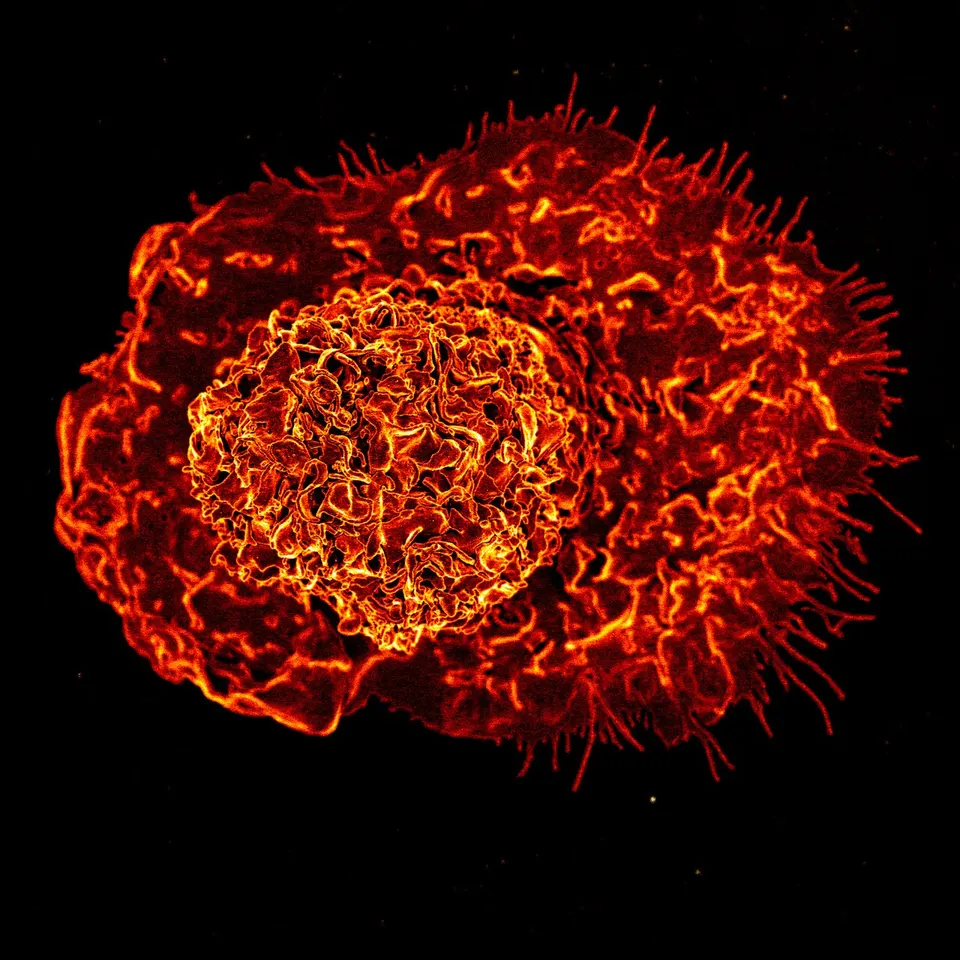
Switch
NLRP3 turns on inflammation
NLRP3 is a sensor in immune cells that assembles an 'inflammasome' and releases IL-1β. With age it fires more often, feeding low-grade inflammation.
Block
A daily pill jams the sensor
BGE-102 binds NLRP3 and stops it assembling; in Phase 1 it cut IL-1β release by up to 98% and the blood marker hsCRP by a median 86%.
Reach
Built to get into the brain and eye
It is made to cross into the brain and retina, so one pill could also calm inflammation behind brain and eye diseases.
Update log
Fri 21 Aug
- Minor: RegulatorTest
Jun 2026
- Major: FilingTest
Tue 21 Apr
- Minor: PressTest
Wed 21 Jan
- Minor: FilingFunding
Tue 20 Jan
- Minor: FilingResearch
Mon 12 Jan
- Minor: FilingTest
About BioAge Labs
BioAge Labs
Anti-inflammation pill, human aging data
California biotech that mines long-running human aging studies to find targets linked to healthy aging. After its obesity drug was stopped in 2024 over liver signals, it switched to BGE-102, a pill that blocks the NLRP3 inflammation switch.
- Apr 2026: BGE-102 cut a blood marker of inflammation (hsCRP) by about 85% in people with obesity, with no serious side effects.
- Its obesity drug trial was stopped in Dec 2024 over liver warning signs, three months after its IPO.
- Founded
- 201511 yrs
- Headquarters
- United States
- Status
- Public
- Listed
- BIOA (opens google.com)NASDAQ
- Valuation
- public
- Coverage
- 1 program · 8 updateslatest 21 Aug 2026checked 25 Sep
- Partners
- Novartis (opens novartis.com)
- People
- Kristen Fortney (opens bioagelabs.com)Co-founder and CEO