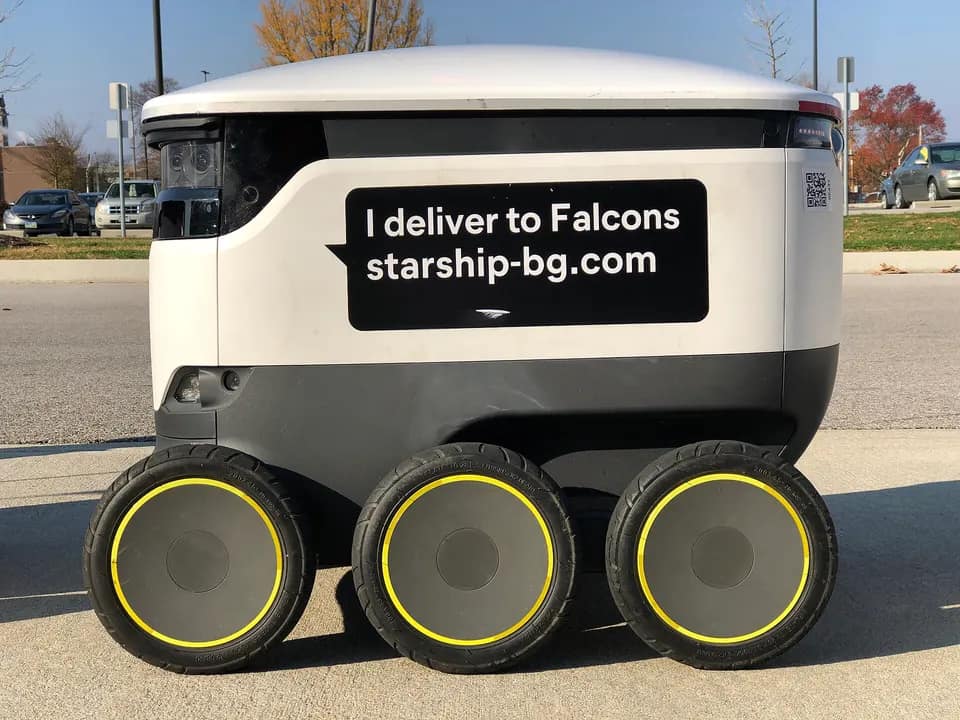
The brief
- 2,700+ robots, 99% autonomous across 300+ sites in eight countries; 10M+ deliveries.
- Pivot to grocery and hot food in Europe and US; wound down campus ops in 2026.
- Raised $50M Series C (Oct 2025); fleet scales to 12,000 by 2027 via Uber/Grubhub.
Technical approach
Sensors
Multi-sensor autonomy stack
Starship robots use cameras, LiDAR, ultrasonic and radar sensors for real-time environment mapping and obstacle detection at sidewalk level.
Navigation
Level 4 autonomous operation
Robots navigate 99% autonomously, handling most urban sidewalk scenarios without human intervention; remote operators handle edge cases or difficult weather.
Payload
10 kg payload for food and retail
22-inch-tall robots carry up to 10 kg, the equivalent of two grocery bags, sized for food and light retail deliveries on sidewalks and paths.
Speed
Pedestrian-safe pace
Robots travel at four miles per hour, similar to a brisk walk, slow enough to be safe around pedestrians and manageable in congested areas.