

Milestones
- First patient treated in the trialsJul 2019Complete.
- Early results published in NEJMJan 2021Complete.
- UK approval, first CRISPR medicine anywhere16 Nov 2023Complete.
- FDA approval for sickle cell disease8 Dec 2023Complete.
- FDA approval for beta thalassemia16 Jan 2024Complete.
- EU approval (conditional)Feb 2024Complete.
- Main trial results published in NEJMApr 2024Complete.
- More treatment centers, more patientsNowCurrent milestone.
Most important updates
- Feb 2024
- 16 Jan 2024
- 8 Dec 2023
- 2 Dec 2023
- 16 Nov 2023
Current obstacles
- Harsh chemoThe chemo causes most side effects and hospital time, and puts many patients off.
- Manufacturing throughputEach dose is made for one patient; failed collections and repeat rounds can stretch the wait to many months.
Physics limits
- Edited stem cells need room: chemo clears the marrowBlood stem cells live in limited niches in the bone marrow. For edited cells to take over, the patient's own must be wiped out with chemotherapy like busulfan, which risks infections and infertility.
- Only so many stem cells can be collected and editedA patient gives a limited number of blood stem cells, and some are lost in editing and freezing. If too few survive, collection must be repeated, which stretches treatment to months.
- Each dose is custom-made from one patient's cellsCells are collected, shipped, edited, tested and returned for one person only. That fixes a high cost per patient and limits treatment to a few specialised centres.
How it works
1. Collect
Collect stem cells
A drug pushes blood stem cells out of the bone marrow into the blood, where a machine collects them, often over several rounds.
2. Edit
Switch off the off-switch
CRISPR breaks a gene switch (BCL11A) that normally turns fetal hemoglobin off after birth.
3. Condition
Clear the marrow
Chemotherapy wipes out the old stem cells to make room for the edited ones.
4. Engraft
Fetal hemoglobin takes over
Edited cells refill the marrow and make red cells full of fetal hemoglobin, which stops the sickling.
Spec sheet
| Spec | Casgevy (exa-cel) |
|---|---|
| Edit target | BCL11A erythroid enhancerR (reported) |
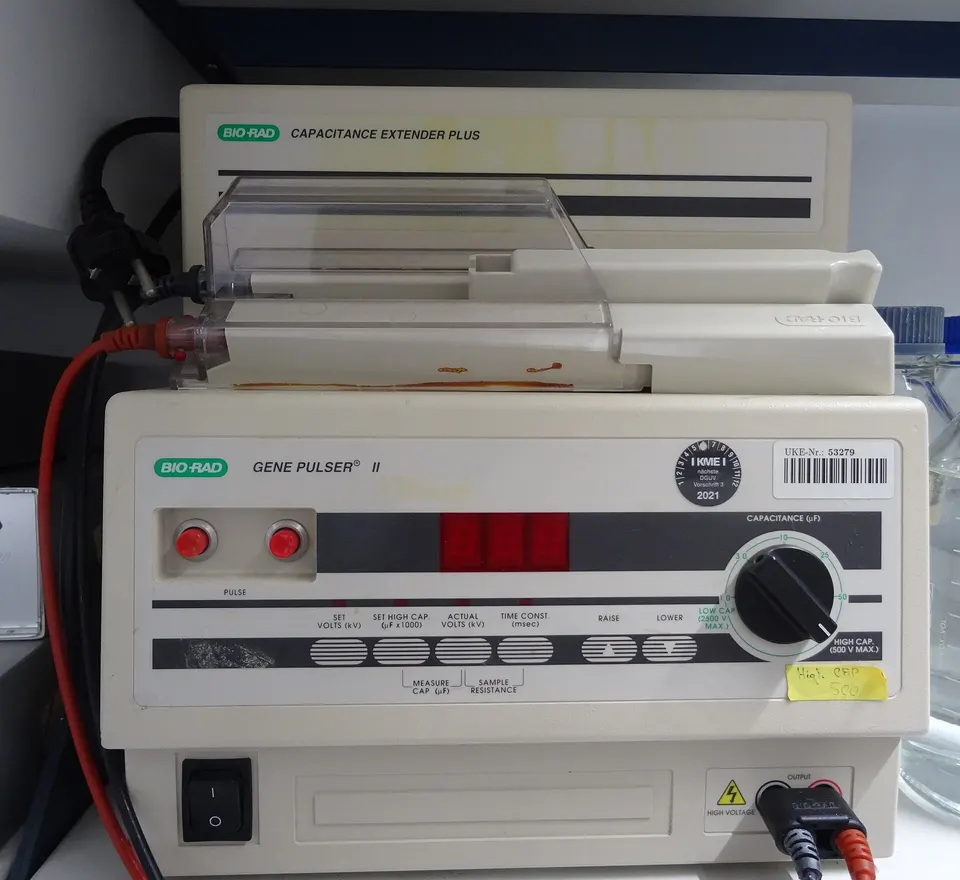
| Editor | SpCas9 + sgRNA (electroporated RNP)R (reported) |
| Delivery | Ex vivo, autologous CD34+ cellsR (reported) |
| Conditioning | Myeloablative busulfanR (reported) |
| SCD: VOC-free 12+ months | 29 of 30 evaluable patientsR (reported) |
| TDT: transfusion independent | 32 of 35 evaluable patientsR (reported) |
| US list price | ~$2.2MR (reported) |
R reported by the company
Papers & demos
- Apr 2024paperExagamglogene autotemcel for severe sickle cell disease (NEJM) (opens doi.org)The main trial results behind approval.
- Jan 2021paperCRISPR-Cas9 gene editing for sickle cell disease and beta-thalassemia (NEJM) (opens doi.org)First patient reports of the edit switching fetal hemoglobin back on.
Update log
Feb 2024
- Minor: PressRegulatory
Tue 16 Jan 2024
- Major: PressRegulatory
Fri 8 Dec 2023
- Major: RegulatorRegulatory
Sat 2 Dec 2023
- Minor: PressRegulatory
Thu 16 Nov 2023
- Major: RegulatorRegulatory
About CRISPR Therapeutics
CRISPR Therapeutics
CRISPR, Casgevy, in vivo liver editing
Swiss-American gene-editing company co-founded by Nobel winner Emmanuelle Charpentier. With Vertex it made Casgevy, the first approved CRISPR medicine, for sickle cell disease and beta thalassemia. Now it edits liver genes to treat heart disease.
- Casgevy became the world's first approved CRISPR therapy (UK Nov 2023, US Dec 2023), sold with Vertex, which leads it.
- CTX310, a one-time CRISPR edit in the liver, lowered blood fats and LDL cholesterol in an early trial (NEJM, Nov 2025).
- Casgevy uptake is slow: each patient needs stem-cell collection, a factory slot and harsh chemotherapy at a special center.
- Founded
- 201313 yrs
- Headquarters
- SwitzerlandUnited States
- Status
- Public
- Listed
- CRSP (opens google.com)NASDAQ
- Valuation
- public
- Works in
- BiotechGene editing
- Coverage
- 2 programs · 7 updateslatest 28 Aug 2026checked 25 Sep