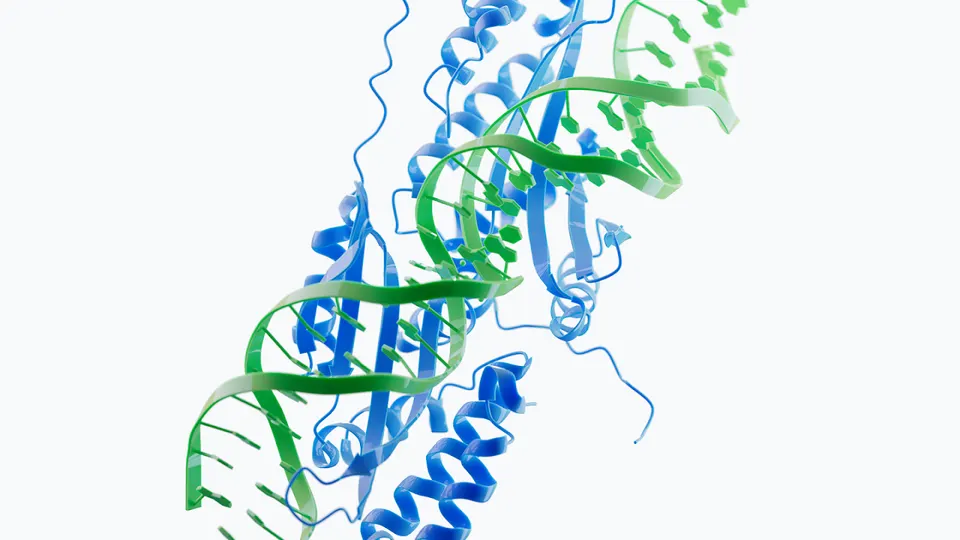

Milestones
- AlphaFold 1 wins CASP13Dec 2018Complete.
- AlphaFold 2 reaches near-experimental accuracy at CASP1430 Nov 2020Complete.
- AlphaFold 2 paper and open-source codeJul 2021Complete.
- Database expanded to over 200 million structures28 Jul 2022Complete.
- AlphaFold 3 announced8 May 2024Complete.
- Nobel Prize in Chemistry to Hassabis and Jumper9 Oct 2024Complete.
Most important updates
- 29 Jul 2026
- 9 Oct 2024
- 8 May 2024
- 28 Jul 2022
- 22 Jul 2021
Current obstacles
- Proteins that moveAlphaFold predicts one frozen shape. Many proteins are floppy, and what they do often depends on how they move.
Physics limits
- Learns only from shapes already solvedIt is trained on the roughly 200,000 experimentally solved structures in the Protein Data Bank. Shapes rare there (new folds, floppy regions, unusual complexes) come out poorly.
- Proteins move; predictions are snapshotsA protein flexes between shapes and its function often depends on that motion. AlphaFold outputs one likely static pose, not the range of shapes or how fast it switches.
- Drug strength needs tiny energy accuracyPotency depends on binding energy: an error of about 1.4 kcal/mol at body temperature means a 10x error in binding strength. A good shape doesn't give energies that precise.
How it works
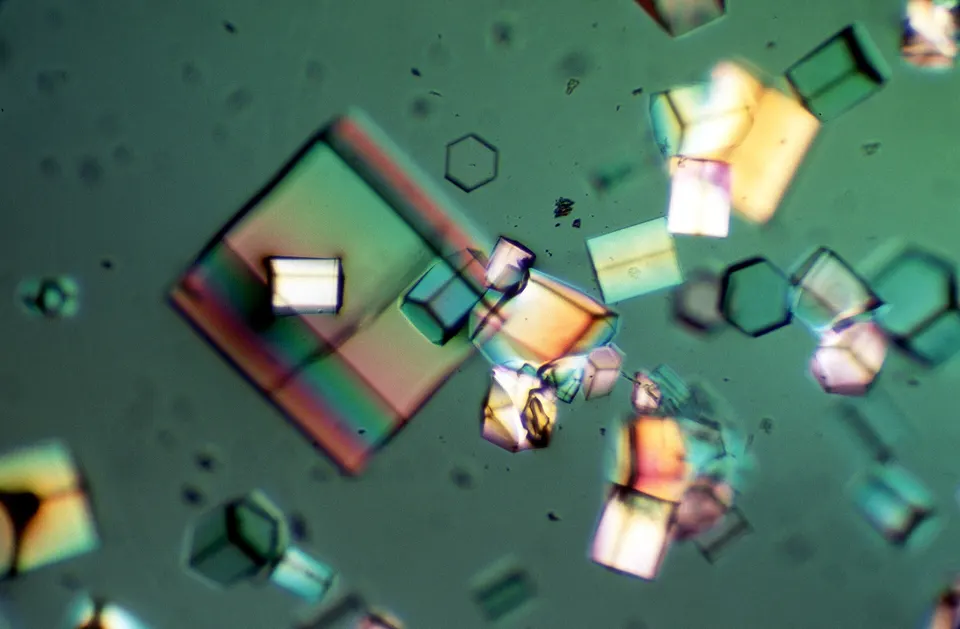
Clues from related proteins
It compares a protein's sequence with thousands of relatives. Amino acids that mutate together across species usually touch in the folded shape.
Reasoning about pairs
A network (the Evoformer) repeatedly refines a map of how every pair of amino acids relates, then a structure module places each atom in 3D.
Generating atoms from noise
AlphaFold 3 uses a diffusion model: it starts from random atom positions and denoises them into a structure, including DNA, RNA and drug-like molecules.
It says how sure it is
Each prediction carries a per-residue confidence score (pLDDT), so scientists know which parts to trust and which to check in the lab.
Papers & demos
- Jul 2021paperHighly accurate protein structure prediction with AlphaFoldPredicted protein shapes almost as well as lab experiments. One of the most cited papers of the decade.
Update log
Wed 29 Jul
- Major: PressPeople
Mon 11 Nov 2024
- Minor: OtherSoftware
Wed 9 Oct 2024
- Major: OtherPeople
Wed 8 May 2024
- Major: BlogResearch
Thu 28 Jul 2022
- Major: BlogResearch
Thu 22 Jul 2021
- Major: PaperResearch
Thu 15 Jul 2021
- Major: PaperResearch
Mon 30 Nov 2020
- Major: BlogResearch
About Google DeepMind
Google DeepMind
Gemini, AlphaFold, Genie, Veo, TPU chips
Google DeepMind is Alphabet's AI lab, formed in 2023 from DeepMind and Google Brain. It builds the Gemini models and leads in AI for science. AlphaFold won a share of the 2024 Nobel Prize in Chemistry.
- Gemini 3 (Nov 2025) led many benchmarks. Gemini 3.5 Pro, announced in May 2026, is delayed.
- AlphaFold predicted structures for over 200 million proteins and won a share of the 2024 Chemistry Nobel.
- Google's own Ironwood TPU chip is used in-house and sold to outside labs, including Anthropic.
- Founded
- 201016 yrs
- Headquarters
- United KingdomUnited States
- Status
- Subsidiaryof Alphabet
- Valuation
- Alphabet-owned
- Coverage
- 5 programs · 31 updateslatest 3d agochecked 25 Sep
- Customers
- Anthropic
- Partners
- Isomorphic LabsBroadcom
- Acquired by
- Alphabet
- People
- Demis HassabisCEO and co-founderShane LeggCo-founder and Chief AGI ScientistJohn JumperAlphaFold lead; 2024 Nobel laureate