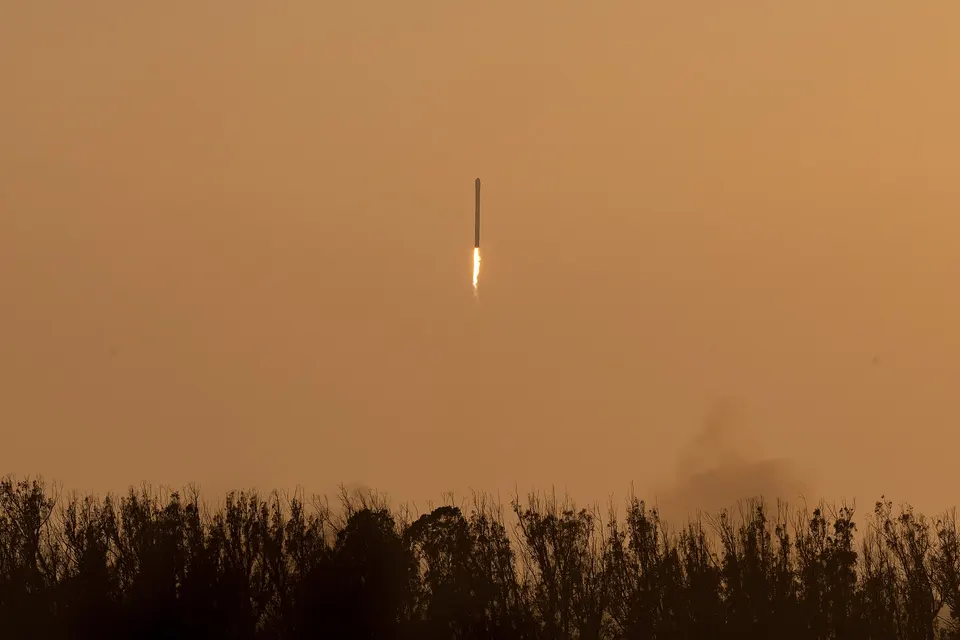

Milestones
- First orbital success1 Oct 2022Complete.
- FLTA006 fails in flight29 Apr 2025Complete.
- First stage explodes during ground test29 Sep 2025Complete.
- Return to flight (FLTA007)11 Mar 2026Complete.
- Alpha Block II debutTarget Q4 2026+3 mo
originally Q3 2026Not yet reached.
Most important updates
- 9 Sep 2026
- 11 Aug 2026
- 11 Mar 2026
- 15 Sep 2023
- 3 Sep 2021
Upcoming
- Q4 2026Alpha Block II debut+3 mo
originally Q3 2026(next)
Physics limits
- Small rockets are less efficient by geometryAvionics, engines, valves and tank walls don't shrink in step with the rocket, and drag and gravity losses weigh more on a small vehicle. So payload as a share of liftoff mass falls as rockets get smaller.
- The rocket equation makes payload a sliver of launch massOrbit needs about 9.4 km/s of speed change including losses. Fuel needed grows exponentially with that, so even the best rockets put only 2 to 5% of their liftoff mass into low orbit.
- Chemical propellants have a hard energy ceilingExhaust speed is set by the energy in the chemical bonds. Methane-oxygen tops out near 3.7 km/s and hydrogen-oxygen near 4.5 km/s; no engine design can beat the chemistry.
How it works
Structure
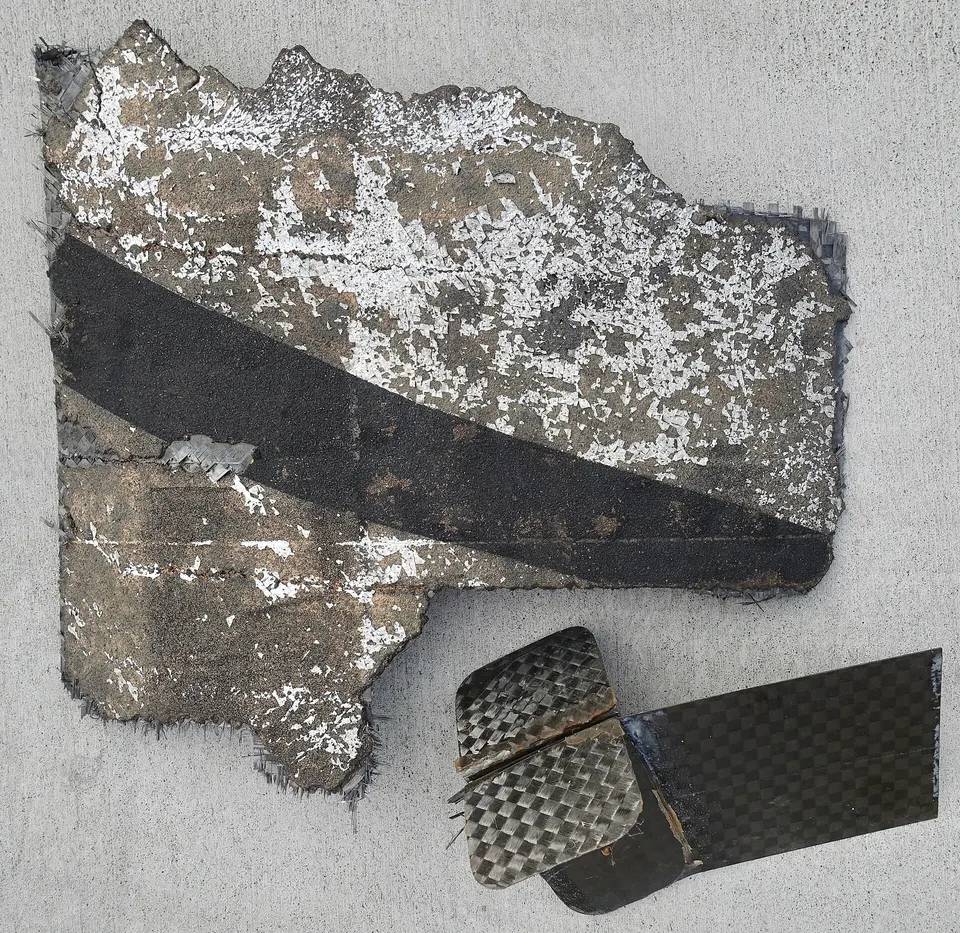
Carbon-fibre tanks
Both stages are built from carbon composite, making the rocket light for its size.
Engines
Four Reaver engines
Four kerosene-oxygen Reaver engines lift the first stage; one Lightning engine drives the second stage to orbit.
Mission
About a tonne, fast
Alpha carries roughly a tonne to low orbit. In 2023 it launched a Space Force satellite 27 hours after the order to go.
Update log
Wed 9 Sep
- Minor: PressCommercial
Tue 11 Aug
- Minor: PressCommercial
Wed 11 Mar
- Minor: PressTest
Mon 29 Sep 2025
- Minor: BlogTest
Tue 29 Apr 2025
- Minor: BlogTest
Fri 22 Dec 2023
- Minor: PressTest
Fri 15 Sep 2023
- Major: PressTest
Fri 3 Sep 2021
- Major: PressTest
About Firefly Aerospace
Firefly Aerospace
Blue Ghost Moon lander, Alpha rocket
Firefly builds the Alpha small rocket, the Blue Ghost Moon lander and, with Northrop Grumman, the Eclipse rocket. Blue Ghost made the first fully successful private Moon landing in March 2025. Listed on Nasdaq in Aug 2025.
- Blue Ghost landed upright on 2 March 2025 and ran NASA experiments for a full lunar day.
- Alpha failed in flight (Apr 2025) and exploded in a ground test (Sep 2025) before flying again in March 2026.
- Blue Ghost Mission 2 to the lunar far side is targeted for late 2026.
- Founded
- 20179 yrs
- Headquarters
- United States
- Status
- Public
- Listed
- FLY (opens google.com)NASDAQ
- Valuation
- public
- Last round
- IPO (Nasdaq) · $868M7 Aug 2025
- Works in
- SpaceflightMoon & deep space
- Coverage
- 3 programs · 15 updateslatest 9 Sep 2026checked 25 Sep
- Customers
- NASA (opens nasa.gov)
- People
- Jason Kim (opens fireflyspace.com)CEO