
Milestones
- First human implant (Australia)2019Complete.
- FDA approves US trialJul 2021Complete.
- First US implant at Mount SinaiJul 2022Complete.
- US study meets safety goalSep 2024Complete.
- Works with Apple devicesMay 2025Complete.
- Start main trialTarget 2026Current milestone.
- Apply for FDA approvalNot yet reached.
Most important updates
- Apr 2026
- 6 Nov 2025
- 30 Sep 2024
- Jul 2022
- Jul 2021
Upcoming
- 2026Start main trial (next)
Current obstacles
- Proving it helpsRegulators need a clear, measurable benefit for brain interfaces, and there is little precedent.
- Too few channelsA next-generation device with more channels is needed to get close to the speed of in-brain systems.
Physics limits
- The vessel wall blurs the signalFrom inside a vein, electrodes sit about a millimetre or more from neurons and pick up blended activity of many cells, carrying far fewer bits per second than electrodes inside tissue.
- Only a few electrodes fit in a veinThe target vein is only about a centimetre wide, so the device carries 16 electrodes and can only reach brain areas that lie next to large veins.
- Metal in blood invites clotsAny device in a blood vessel can seed clots, so patients need blood thinners for a period, and the design must keep blood flowing freely past it.
How it works
1. Deliver
Tube to the brain's vein
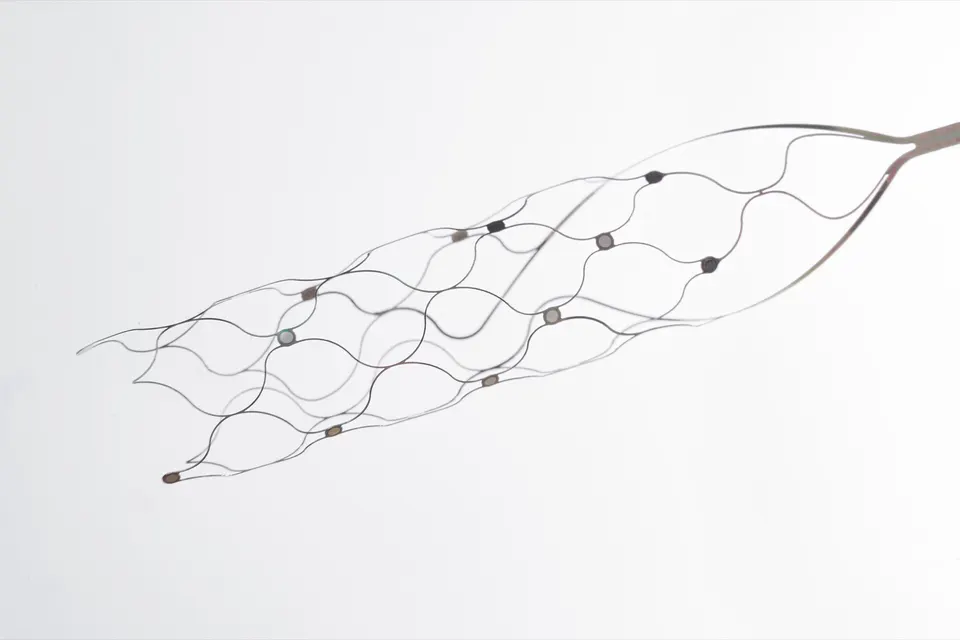
Guided by X-ray, the device is steered from the neck to a vein on top of the brain and opened like a stent.
2. Settle
Vessel grows over it
Over weeks the vein lining grows over the stent, holding the electrodes against the wall facing the brain.
3. Transmit
Chest unit relays data
A wire carries signals to a unit under the collarbone, which sends them wirelessly to a decoder.
4. Control
Clicks by thought
Decoded intent makes selections using the phone or computer's built-in accessibility features.
Spec sheet
| Spec | Stentrode BCI |
|---|---|
| Electrodes | 16R (reported) |
| Placement | Superior sagittal sinus, beside motor cortexR (reported) |
| Access route | Jugular vein catheter, no craniotomyR (reported) |
| Telemetry | Chest-implanted unit, wirelessR (reported) |
| Scaffold | Self-expanding nitinol stentR (reported) |
| Patients implanted (EFS) | 10 (4 SWITCH, 6 COMMAND)R (reported) |
R reported by the company
Papers & demos
- Sep 2024talkCOMMAND early feasibility study results (opens businesswire.com)Met its main goal: no serious device-related harm causing death or lasting disability.
- Oct 2020paperMotor neuroprosthesis implanted with neurointerventional surgery in severe paralysis (JNIS) (opens doi.org)First human results for the Stentrode, from its Australian study.
Update log
Apr 2026
- Minor: RegulatorTest
Wed 18 Mar
- Minor: RegulatorTest
Thu 6 Nov 2025
- Major: PressFunding
Mon 4 Aug 2025
- Minor: PressSoftware
Wed 19 Mar 2025
- Minor: PressSoftware
Mon 30 Sep 2024
- Major: PressTest
Tue 30 Jul 2024
- Minor: PressSoftware
Thu 11 Jul 2024
- Minor: PressSoftware
Mon 8 Apr 2024
- Minor: PressCommercial
Fri 6 Jan 2023
- Minor: PressResearch
Dec 2022
- Minor: PressFunding
Jul 2022
- Major: PressTest
Jul 2021
- Major: PressRegulatory
About Synchron
Synchron
Stentrode, brain interface through a vein
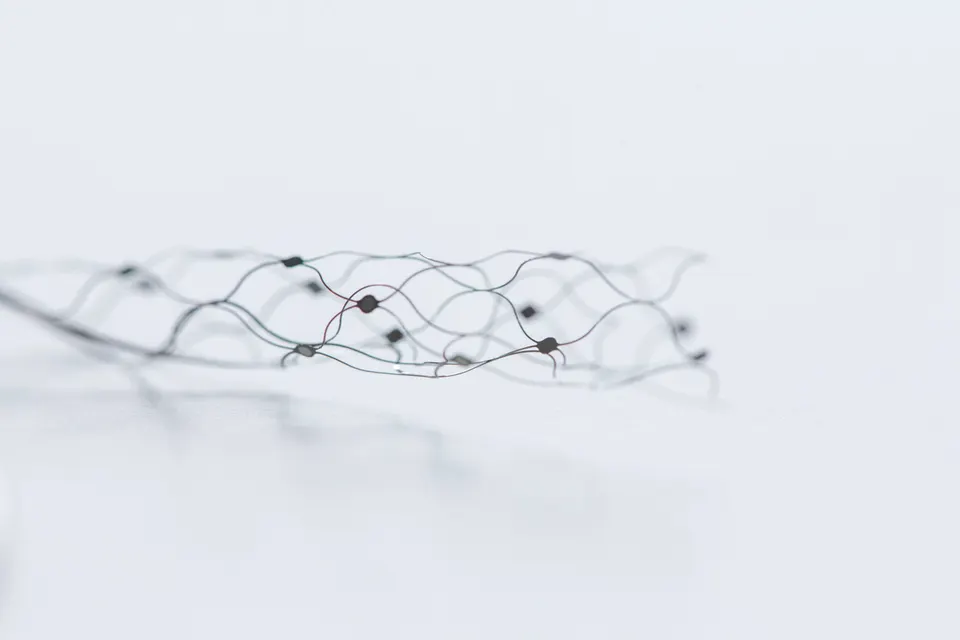
New York company founded in Australia by neurologist Tom Oxley and engineer Nicholas Opie. Its Stentrode goes up a neck vein to sit next to the brain, with no open brain surgery, and lets paralyzed people control phones and tablets.
- First company FDA-cleared to trial a permanent brain implant (2021); its US study met its safety goal in six patients (2024).
- Raised $200M in Nov 2025 for a main trial, launch prep and a next-generation device with more channels.
- Works with Apple's brain-interface standard since 2025, for direct control of iPhone and iPad.
- Founded
- 201214 yrs
- Headquarters
- United States
- Status
- Private
- Valuation
- private
- Raised
- $275M2 rounds
- Last round
- Series D · $200M6 Nov 2025
- Works in
- NeurotechMinimally invasive BCIs
- Coverage
- 1 program · 13 updateslatest 1 Apr 2026checked 25 Sep
- People
- Tom Oxley (opens en.wikipedia.org)Co-founder and CEONicholas Opie (opens en.wikipedia.org)Co-founder