
Milestones
- PowerCo licensing agreementJul 2024Complete.
- First B-sample shipmentsOct 2024Complete.
- Cobra separator process in baseline productionJun 2025Complete.
- Vehicle demonstration with Ducati at IAASep 2025Complete.
- Higher-volume production readinessNowCurrent milestone.
Most important updates
- 22 Oct 2025
- Sep 2025
- Jun 2025
- 11 Jul 2024
- Jan 2024
Current obstacles
- Lithium spikes (dendrites)Lithium can grow spikes through tiny flaws in the ceramic; cells need steady pressure and flawless separators at scale.
Physics limits
- Lithium metal wants to grow spikesLithium plates unevenly, piling up at defects and grain boundaries; above a critical current it pushes metal filaments into the ceramic, capping charge speed.
- Solids don't flow into gapsA ceramic can't wet the electrode like a liquid. As lithium plates and strips, the cell's thickness changes and contact is lost unless the cell is held under pressure.
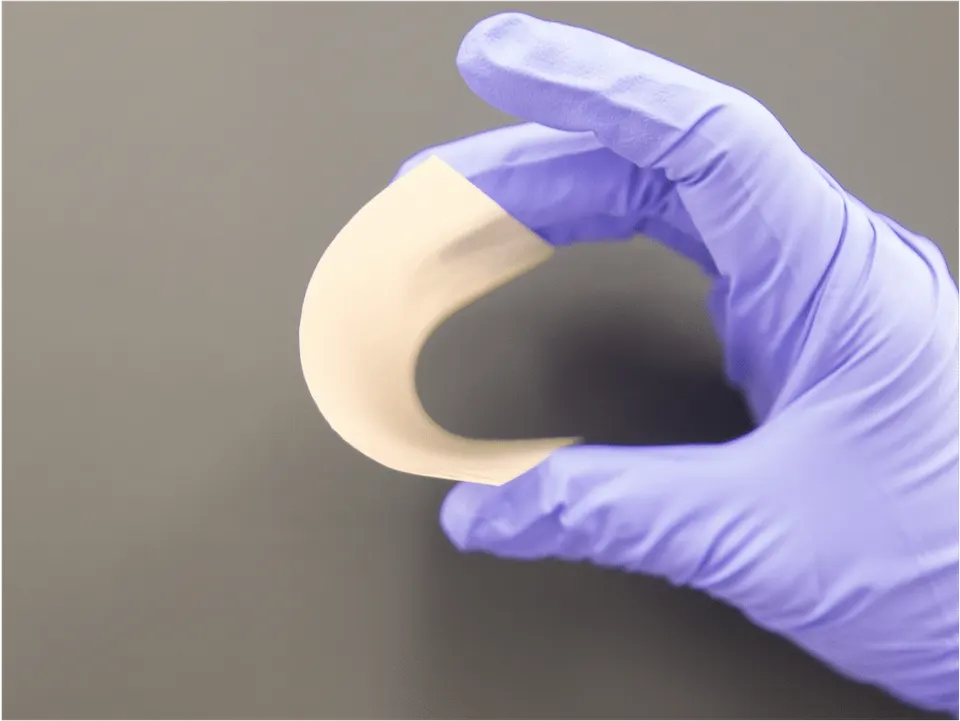
- Thin ceramics are brittleSeparators tens of micrometres thick crack under stress or at tiny flaws, so making large, defect-free films at high yield is inherently hard.
How it works
The anode forms on first charge
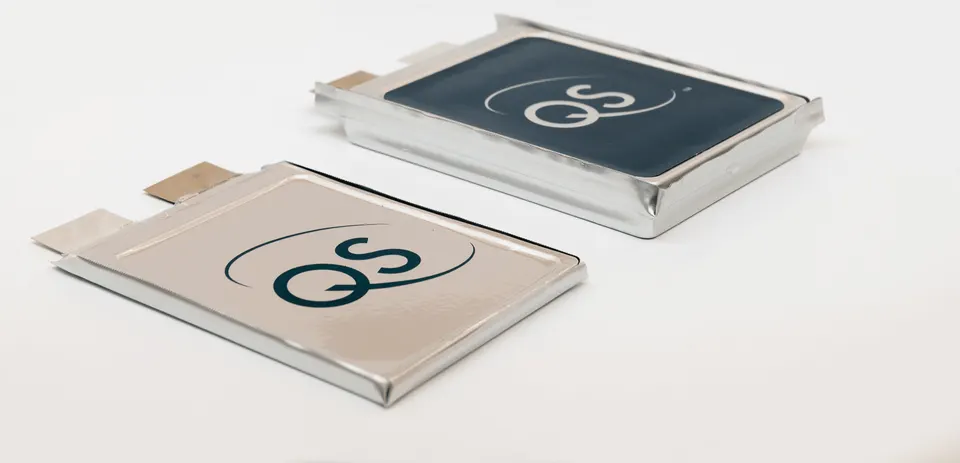
Cells are built without an anode; on charging, lithium plates as pure metal against the current collector, saving graphite's weight and volume.
A ceramic wall
A thin solid ceramic separator lets lithium ions pass but blocks the metal spikes (dendrites) that would short a cell with liquid electrolyte.
More energy per litre
QuantumScape reports the B-sample QSE-5 at about 5 Ah, 844 Wh/L and 301 Wh/kg, and 10–80% charging in about 12 minutes.
Faster separator production
Cobra, a new heat-treatment process for the ceramic film, is much faster than the earlier method and is key to making separators in volume.
Spec sheet
| Spec | QSE-5 |
|---|---|
| Energy density (reported) | ~844 Wh/LR (reported) |
| Fast charge 10-80% | ~12 minR (reported) |
R reported by the company
Update log
Wed 22 Oct 2025
- Major: PressHardware
Sep 2025
- Minor: PressHardware
Jun 2025
- Minor: PressManufacturing
Oct 2024
- Minor: PressManufacturing
Thu 11 Jul 2024
- Major: PressPartnership
Jan 2024
- Major: PressTest
About QuantumScape
QuantumScape
Anode-free solid-state lithium-metal batteries
San Jose company making anode-free, solid-state lithium-metal cells with a ceramic separator, promising more range and faster charging than today's lithium-ion. Volkswagen's PowerCo has a licence to mass-produce them.
- Cells are built with no anode: lithium forms a layer against the ceramic on the first charge.
- Its faster Cobra separator process, added in 2025, raises output.
- QSE-5 cells powered a Ducati motorcycle demo at IAA Mobility in September 2025.
- Founded
- 201016 yrs
- Headquarters
- United States
- Status
- Public
- Listed
- QS (opens google.com)NASDAQ
- Valuation
- public
- Coverage
- 1 program · 6 updateslatest 22 Oct 2025checked 25 Sep