

Milestones
- Lab demonstrations of rock vaporisation at MIT2021Complete.
- Field drilling system tests in Texas2024Complete.
- Drill to kilometre-scale depth with mm-wavesNowCurrent milestone.
Most important updates
- 18d ago
- 27 Aug 2026
- 13 Apr 2026
- Feb 2025
Upcoming
- 2030Project Obsidian in central Oregon targets first superhot geothermal power (next)
Current obstacles
- Clearing vaporised rockRock vapour cools into glassy bits that must be cleared from a deep, hot hole without blocking the beam.
Physics limits
- Vaporising rock costs a lot of energyMelting and boiling rock takes far more energy than crushing it, so drilling speed is set by beam power: going twice as fast needs roughly twice the megawatts.
- Rock vapour blocks the beamVaporised rock condenses into fine particles that absorb and scatter the beam; it must be flushed out continuously, harder as the hole gets deeper.
- Supercritical water attacks equipmentAbove 374 °C and 22 MPa, water dissolves silica and corrodes steel far faster, so well casings, pipes and turbines face harsh chemistry.
How it works
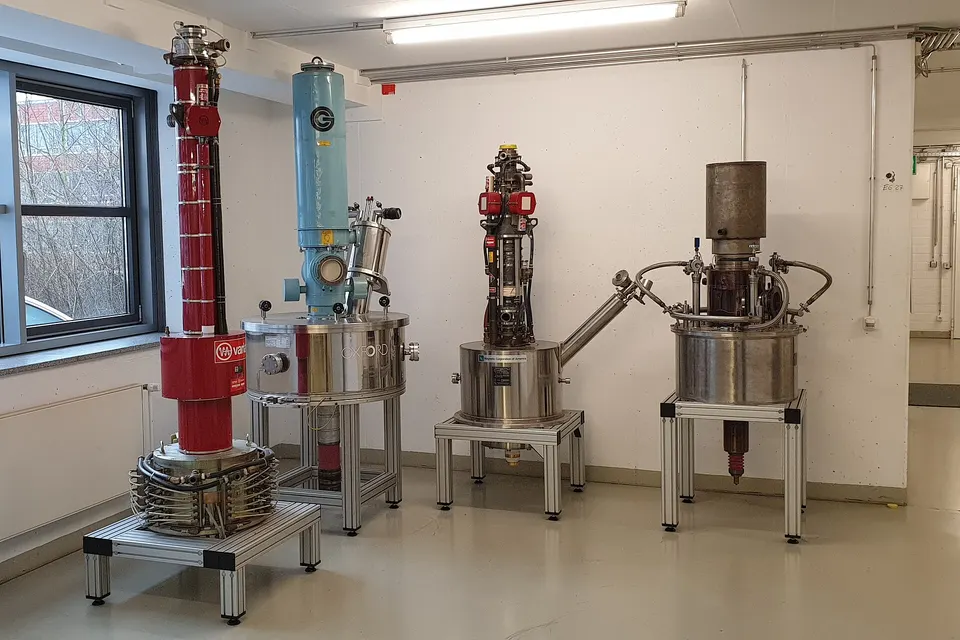
A fusion-lab microwave source
A gyrotron, built to heat fusion plasmas, makes a powerful beam of millimetre-wavelength microwaves.
Piped down the hole
The beam travels down a hollow metal tube to the rock face with little loss, so no bit, motor or electronics sit at the bottom.
Melting and boiling rock
The beam heats rock past 3,000 °C until it melts and vaporises; gas flushes the vapour out and the melt leaves a glassy lining on the wall.
Superhot rock
The aim is rock above 374 °C, where water turns supercritical and each well carries several times more energy than today's geothermal wells.
Update log
Tue 22 Sep
- Minor: PressFunding
Thu 27 Aug
- Major: PressFunding
Mon 13 Apr
- Major: BlogCommercial
Feb 2025
- Minor: BlogTest
About Quaise Energy
Quaise Energy
Millimetre-wave drilling, superhot geothermal
MIT spinout that drills by vaporising rock with millimetre-wave beams from gyrotrons, a fusion technology. The aim is 'superhot' rock above 374 °C, where water carries far more energy per well.
- Builds on MIT Plasma Science and Fusion Center research by Paul Woskov.
- Uses normal drilling through the softer top layers, then beams to vaporise deep, hard rock.
- Tests moved from the lab to outdoor rigs in Texas in 2024-2025.
- Founded
- 20188 yrs
- Headquarters
- United States
- Status
- Private
- Valuation
- private
- Works in
- EnergyGeothermal
- Coverage
- 1 program · 4 updateslatest 18d agochecked 25 Sep
- People
- Carlos Araque (opens quaise.com)Co-founder & CEO