
The brief
- Main trial (NEJM, Oct 2025): about 80% of patients saw meaningfully better after 12 months; many could read letters and words.
- EU approval (CE mark) in Jul 2026 allows sales in 30 European countries; first paid implants expected in Germany.
- Raised $230M in Mar 2026 to launch PRIMA and fund its brain-interface research.
Technical approach
A solar-cell chip
A 2 x 2 mm chip, thinner than a hair, with 378 pixels turns flashes of infrared light into electrical current; no battery or wires.
Camera glasses
Glasses film the scene and beam it onto the chip as infrared light, which the remaining eye can't see, so natural side vision is kept.
Using the eye's own wiring
In this disease the light-sensing cells die but the next layer survives; the chip stimulates it and the eye passes the signal to the brain.
Science Corporation, one program
Updated 22 Jul 2026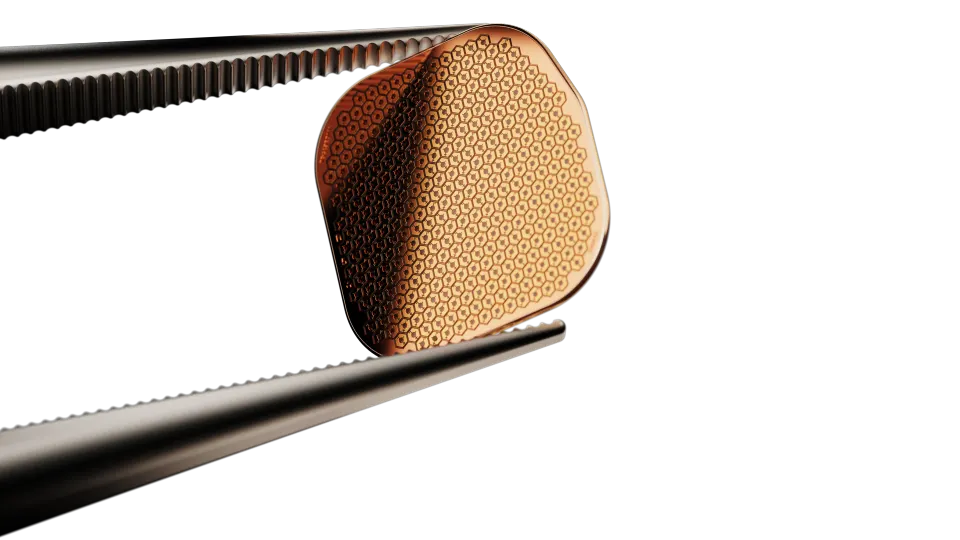
Research & demos
- Oct 2025paperSubretinal photovoltaic implant to restore vision in geographic atrophy due to AMD (NEJM) (opens doi.org)PRIMA retinal implant
Main trial results behind its regulatory filings.
Open technical problems
- Blurry pictureActive research
Its 100-micron pixels limit sharpness to well below normal vision; smaller pixels need new designs.
- Surgery and trainingPartially solved
Placing the chip under the retina is delicate, and patients need months of training to use the new vision.
Company & funding
- Raised
- $230Mdisclosed private rounds
- Last round
- Series CMar 2026
- HQ
- US
- Founded
- 2021
| Date | Round | Amount | Post-money | Lead |
|---|---|---|---|---|
| Mar 2026 | Series C | $230M | — | — |
Partners & customers
- Supplier
Science acquired the PRIMA assets from Pixium in 2024.
- Partner
PRIMA's photovoltaic design originated in Daniel Palanker's lab.
People
- Max Hodak (opens en.wikipedia.org)Founder and CEO