
Milestones
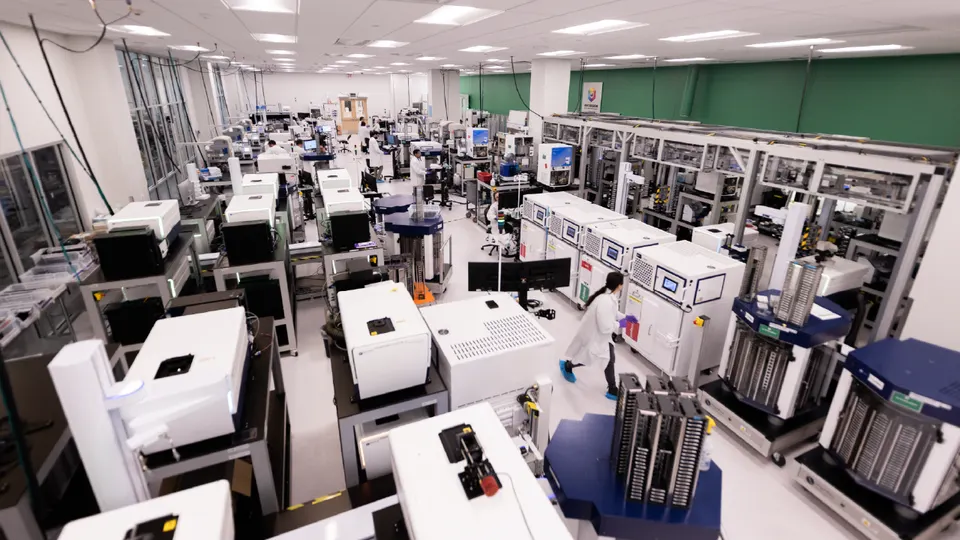
- BioHive-2 AI supercomputer built with NVIDIA2024Complete.
- Drug list cut to prioritiesMay 2025Complete.
- Show trial results from AI-found drugsNowCurrent milestone.
Most important updates
- 5 Aug 2026
- 6 May 2026
- May 2025
Current obstacles
- Proving it in patientsSeveral earlier drugs were dropped, and no Recursion drug has been approved yet.
Physics limits
- Cells in a dish are not a patientLab cells lack the tissues, immune system, blood flow and decades of disease history of a real body. Signals found in dishes often vanish in people, so trials remain the real test.
- Looking alike is not acting alikeTwo changes can make cells look similar for different reasons. Image similarity suggests a link, but each one still needs direct experiments to confirm.
- Binding a target is not the same as a safe, working drugWhether a molecule is absorbed, reaches the right tissue, avoids toxicity and actually changes the disease depends on whole-body biology that no current model predicts. About 90% of drugs entering trials fail.
How it works
Perturb
Change one thing per well
Robots knock out genes with CRISPR or add compounds to human cells in millions of tiny wells each week.
Picture
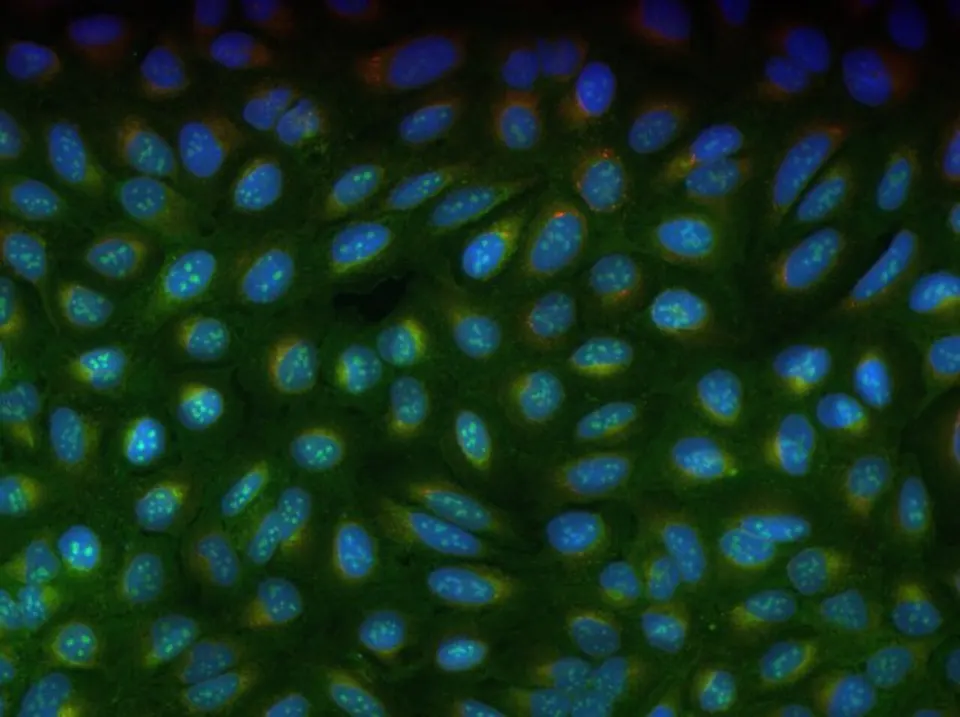
Stain and photograph
Dyes light up parts of each cell (nucleus, mitochondria and more), and microscopes capture images of how the cell looks.
Map
AI groups similar effects
Models turn each image into numbers. A drug that makes cells look like a gene knockout hints that it acts on that gene's pathway.
Update log
Wed 5 Aug
- Minor: PressPartnership
Wed 6 May
- Minor: PressTest
May 2025
- Minor: FilingOther
About Recursion
Recursion
AI drug discovery from cell images
Salt Lake City company that photographs millions of cell experiments, then uses AI to spot patterns and find drug candidates. It merged with Exscientia in Nov 2024 and, after cuts in 2025, has a new CEO focused on proving results in trials.
- Najat Khan succeeded co-founder Chris Gibson as CEO on 1 Jan 2026.
- Merged with Exscientia in Nov 2024, adding AI-driven chemistry to its cell-imaging platform.
- Partners include Roche/Genentech and Sanofi; its own drug list was cut in 2025.
- Founded
- 201313 yrs
- Headquarters
- United States
- Status
- Public
- Listed
- RXRX (opens google.com)NASDAQ
- Valuation
- public
- Coverage
- 1 program · 5 updateslatest 5 Aug 2026checked 25 Sep
- People
- Najat Khan (opens recursion.com)CEOChris GibsonCo-founder