

Milestones
- New Zealand trial approval18 Jun 2026Complete.
- FDA trial approval23 Jul 2026Complete.
- First patient dosedTarget 2026Current milestone.
- First patient dataTarget 2027Not yet reached.
Most important, last 3 months
- 23 Jul 2026
Upcoming
- 2026First patient dosed (next)
- 2027First patient data
- 2027First clinical data from the PM577a Phase 1/2 trial (company guidance)
Current obstacles
- Editing enough liver cellsPrime editors are big, multi-part tools; fixing enough liver cells is less proven than simple CRISPR cuts.
Physics limits
- Prime editors are big and edit less efficientlyThe editor joins a DNA-cutting enzyme with a reverse transcriptase, making a long mRNA (over 6,000 letters) plus a long guide. Efficiency varies by site and is often lower than simpler editors.
- Fat-bubble delivery mostly reaches the liverIn the blood, lipid nanoparticles pick up a protein (ApoE) that liver cells absorb. That makes the liver easy to edit, but most other organs (brain, muscle, lungs) remain hard to reach with enough dose.
- Edits in the body are permanent and can't be recalledOnce liver cells are edited, the change lasts for life and is copied as cells renew. Any off-target cut or unexpected long-term effect can't be undone, so safety must be proven over years.
How it works
Deliver
Fat bubbles to the liver
Lipid nanoparticles carry the prime editor's mRNA and a special guide into liver cells, which handle the body's copper.
Write
Search and replace in DNA
The editor nicks one DNA strand and uses a template in its guide to write the correct sequence, fixing the H1069Q typo in the ATP7B gene.
Effect
Copper pumped out again
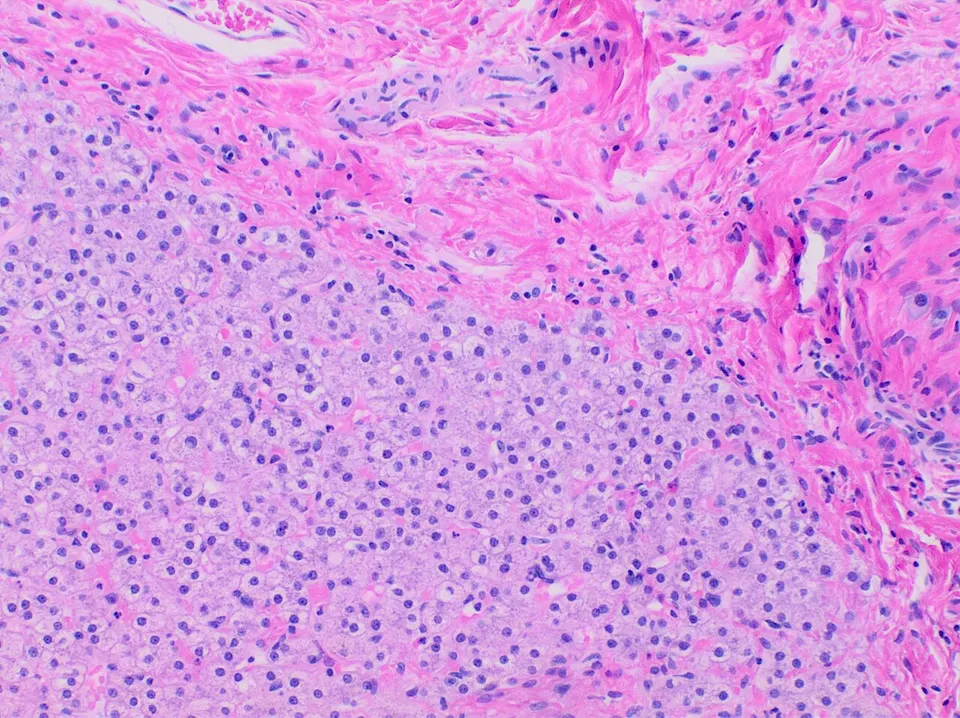
Repaired ATP7B moves excess copper into bile. Copper stops building up in liver and brain, which causes Wilson disease.
Update log
Thu 23 Jul
- Minor: PressRegulatory
About Prime Medicine
Prime Medicine
Prime editing, Wilson disease
Company built on prime editing, invented in David Liu's lab. A prime editor nicks one DNA strand and writes in a new sequence, like find-and-replace, without fully cutting DNA. After first patient data in 2025 it refocused on liver diseases.
- May 2025: first-ever prime-editing patient data (PM359) restored immune-cell function; the drug was then shelved for business reasons.
- FDA cleared a trial of PM577a for Wilson disease in Jul 2026; dosing expected in H2 2026.
primemedicine.com (opens primemedicine.com)Company profile →
- Founded
- 20197 yrs
- Headquarters
- United States
- Status
- Public
- Listed
- PRME (opens google.com)NASDAQ
- Valuation
- public
- Works in
- BiotechGene editing
- Coverage
- 2 programs · 6 updateslatest 23 Jul 2026checked 25 Sep
- People
- Allan Reine (opens primemedicine.com)CEOAndrew Anzalone (opens primemedicine.com)Co-founderDavid Liu (opens en.wikipedia.org)Co-founder