

Milestones
- Commercial seed introductionNowCurrent milestone.
Most important updates
- Jan 2025
- 4 Oct 2022
- 21 May 2021
Current obstacles
- Yield gains across environmentsEdits that raise yield in some places may not hold across different fields and seasons.
Physics limits
- Yield is spread across thousands of small-effect genesNo single gene controls yield; thousands each nudge it slightly and interact with weather and soil. Even several well-chosen edits typically move yield by single-digit percentages.
- Soybean genes come in duplicate copiesSoybean's genome was doubled in its evolutionary past, so most genes have a backup copy. Changing a trait often means editing both copies, or the spare simply covers for the edited one.
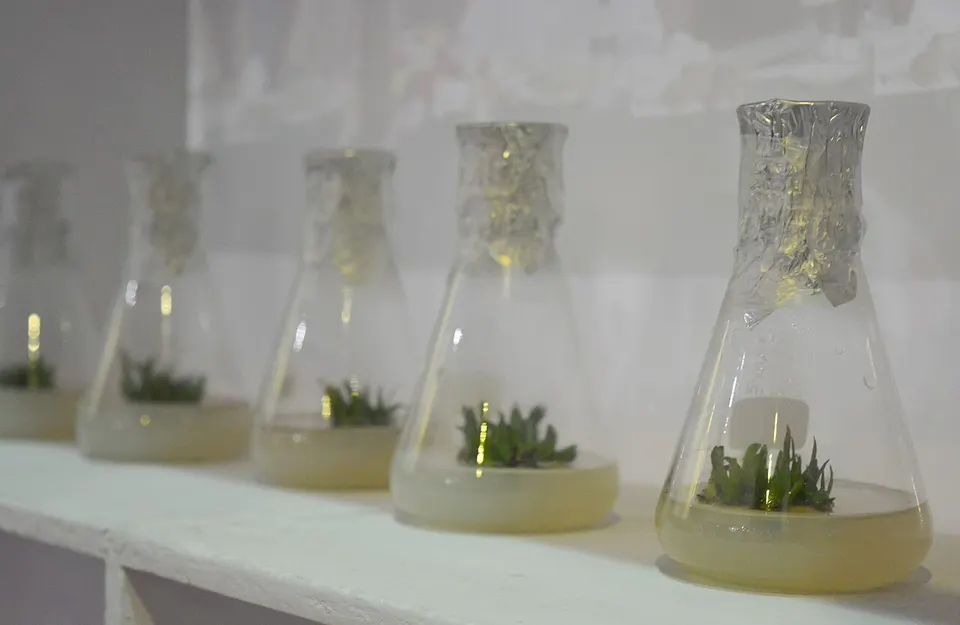
- Getting whole plants back from edited cells is slowEdits are made in cells that must regrow into plants, and soybean regenerates poorly in many varieties. That step, not the editing itself, often sets the pace of each cycle.
How it works
Predict
Models pick the genes to change
Software trained on plant genetic and field data suggests which genes, and which versions, are likely to raise yield.
Edit
Many edits at once
Gene editing makes several small changes in one go in elite soybean varieties that are already top performers.
Test
Prove it in the field
Edited lines are grown in field trials across regions to check that the yield gain holds up before seed is sold.
Update log
Jan 2025
- Minor: PressFunding
Tue 4 Oct 2022
- Minor: BlogFunding
Fri 21 May 2021
- Minor: BlogPartnership
About Inari
Inari
Multiplex gene editing, SEEDesign, soy and corn
Cambridge, Massachusetts company started by Flagship Pioneering. Its SEEDesign platform makes several gene edits at once in top seed varieties, aiming for higher yields with less water, land and fertiliser in soy, corn and wheat.
- Raised about $771M in total, including $144M in early 2025.
- Edits several genes in commercial varieties at once, not one trait at a time.
- First commercial soybean varieties are rolling out through seed partners.
- Founded
- 201610 yrs
- Headquarters
- United States
- Status
- Private
- Valuation
- $2.2BprivateJan 2025
- Works in
- AgricultureGene-edited cropsBiotech
- Coverage
- 1 program · 4 updateslatest 2 Jun 2025checked 25 Sep
- People
- Ponsi TrivisvavetCEO