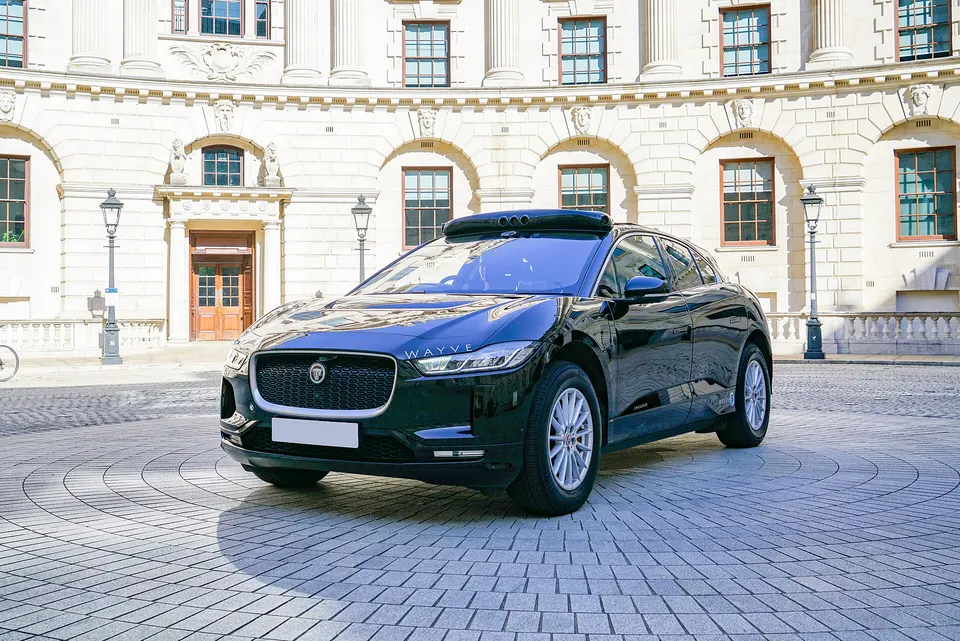

Milestones
- Production partnership with Nissan2025Complete.
- Robotaxi service with Uber in LondonSep 2026Complete.
- Nissan ProPILOT with Wayve in production carsTarget 2027Not yet reached.
Most important updates
- 3 Sep 2026
- 21 May 2026
- Feb 2026
- 10 Jun 2025
- 9 Apr 2025
Upcoming
- Q4 2026Robotaxi pilot in Tokyo with Nissan and Uber, aimed for late 2026 (next)
- 2027Nissan ProPILOT with Wayve in production cars
- 2028Stellantis to ship Wayve-based driver assistance in US vehicles
Current obstacles
- Proving a black-box driver safeOne big AI model is hard to inspect, so proving it safe needs lots of testing, including AI-generated simulations.
Physics limits
- Learned drivers can't be fully verifiedA neural network's behaviour in situations it never saw can't be proven in advance. Safety must be shown with testing and statistics, not formal guarantees.
- Each new city is new dataDriving models generalise imperfectly: road rules, signs and local habits differ, so each city needs fresh data and validation before cars can drive alone.
- Proving safety takes vast mileageUS drivers average about one fatal crash per 100 million miles. Showing a robot driver is safer with statistical confidence takes hundreds of millions of driverless miles (RAND estimated ~275M).
How it works
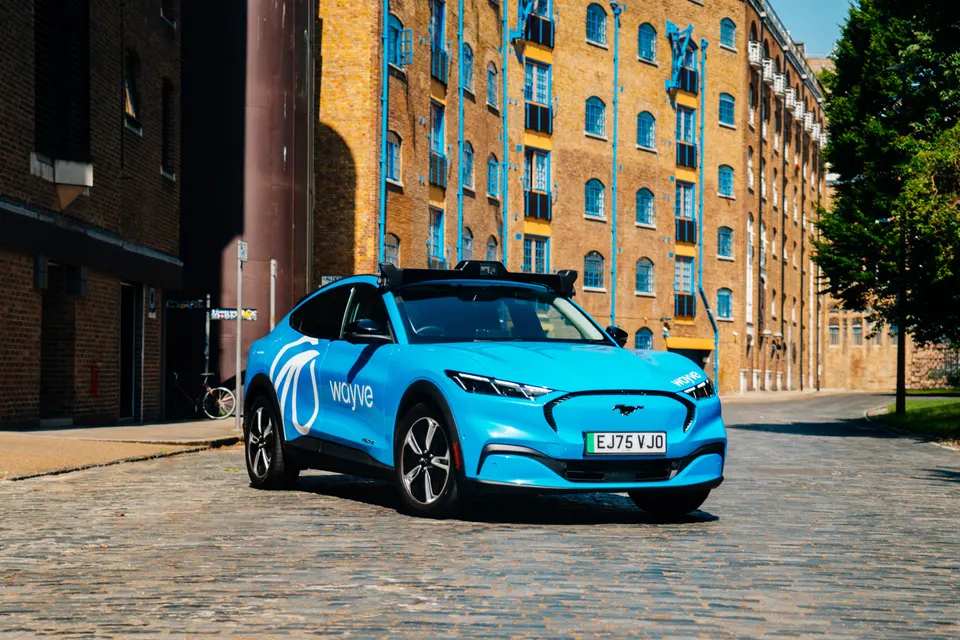
End-to-end
One model drives
A single neural network learns to turn camera (and optional radar) input directly into driving, without hand-coded rules.
Mapless
No HD maps
It drives with ordinary navigation maps, so a new city doesn't have to be surveyed in detail first.
Portable
Same driver, many cars
The model is adapted to different carmakers' sensors and computers, so one driver can ship in Nissans and in robotaxis.
Simulation
Generated test worlds
Wayve's GAIA generative models create realistic driving video to test rare situations the fleet hasn't recorded.
Update log
Thu 3 Sep
- Major: BlogCommercial
Thu 21 May
- Major: BlogPartnership
Feb 2026
- Minor: PressPartnership
Tue 10 Jun 2025
- Minor: PressPartnership
Wed 9 Apr 2025
- Major: PressPartnership
About Wayve
Wayve
End-to-end AI driver, Nissan, Uber
London-based Wayve builds an 'AI Driver' that learns to drive from data and works across car models and cities without HD maps. It licenses it to carmakers for driver assist and to Uber for robotaxis.
- Raised $1.2B (up to $1.5B) Series D at $8.6B in February 2026.
- AI Driver to ship in Nissan ProPILOT from fiscal 2027.
- Robotaxi service with Uber launched in London in September 2026; Tokyo with Nissan planned.
- Founded
- 20179 yrs
- Headquarters
- United Kingdom
- Status
- Private
- Valuation
- $8.6BprivateFeb 2026
- Raised
- $2.3B2 rounds
- Last round
- Series D · $1.2BFeb 2026$8.6B post
- Coverage
- 1 program · 7 updateslatest 3 Sep 2026checked 25 Sep
- Lead investors
- EclipseBaldertonSoftBank Vision Fund 2SoftBank
- Customers
- Nissan (opens nissan-global.com)
- Partners
- Uber (opens uber.com)
- People
- Alex KendallCo-founder and CEO