
Milestones
- Fully driverless commercial rides in WuhanAug 2022Complete.
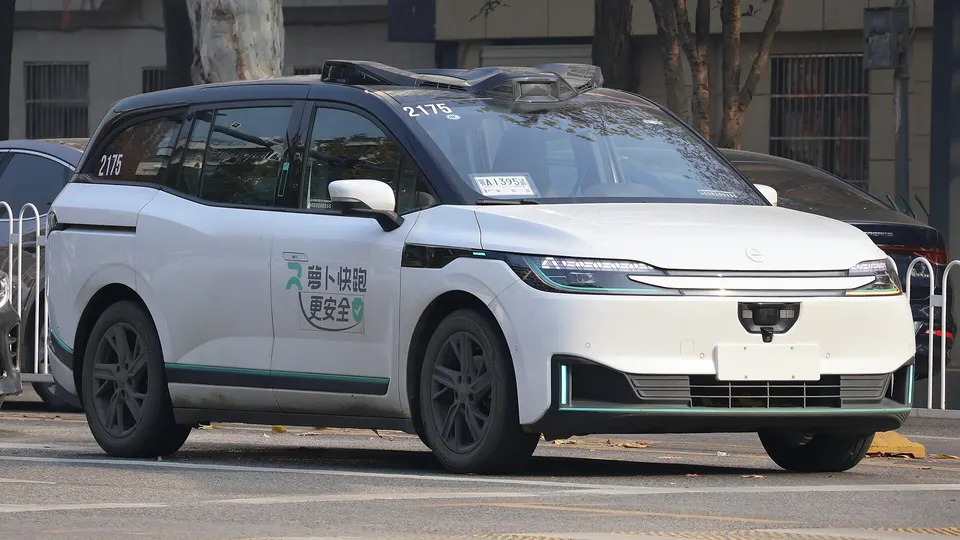
- RT6 sixth-generation vehicle unveiledMay 2024Complete.
- Partnerships with Uber and Lyft for international marketsAug 2025Complete.
- App launched in Dubai; fully driverless rides beginMar 2026Complete.
- European pilots (London, Switzerland)Target 2026Current milestone.
Most important updates
- Mar 2026
- 27 Feb 2026
- 4 Aug 2025
- 29 Nov 2024
- 15 May 2024
Upcoming
- 2026European pilots (London, Switzerland) (next)
- 2026Apollo Go cars on Lyft in Germany and the UK, per the August 2025 deal
Current obstacles
- GeopoliticsChinese self-driving firms face limits in the US and scrutiny in Europe over data and connected-car security.
Physics limits
- People are not fully predictableA car must guess what pedestrians, cyclists and drivers will do next. That future is uncertain, so planners must keep safety margins that cost speed in dense traffic.
- Proving safety takes vast mileageUS drivers average about one fatal crash per 100 million miles. Showing a robot driver is safer with statistical confidence takes hundreds of millions of driverless miles (RAND estimated ~275M).
- Each new city is new dataDriving models generalise imperfectly: road rules, signs and local habits differ, so each city needs fresh data and validation before cars can drive alone.
How it works
Vehicle
Built as a robotaxi
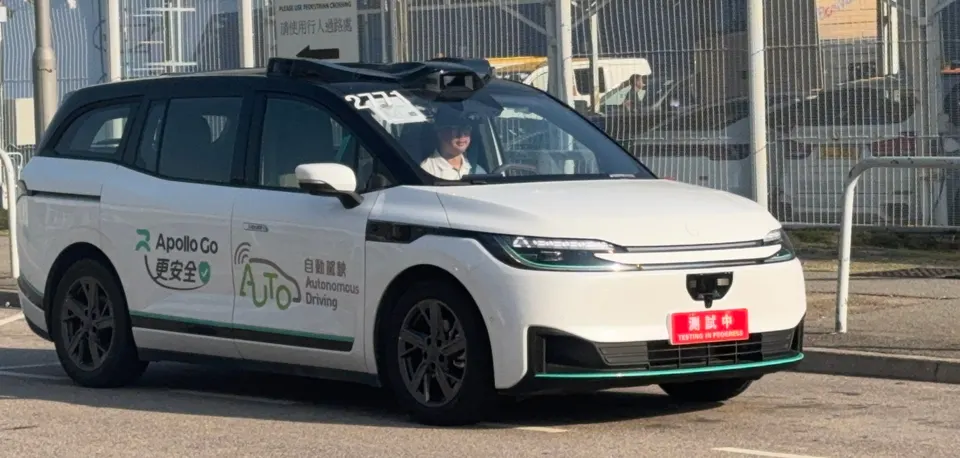
The RT6 is an electric car designed around its sensors, with a removable steering wheel; Baidu put its cost under 200,000 yuan (about $28,000).
Sensors
Overlapping 360° view
Several lidars, cameras and radars give overlapping all-round coverage, so one blocked sensor doesn't blind the car.
Remote
Remote assistance
Remote staff can guide a stuck car, with one person watching several cars at once.
Update log
Mar 2026
- Minor: PressCommercial
Fri 27 Feb
- Major: FilingCommercial
Mon 4 Aug 2025
- Major: PressPartnership
Fri 29 Nov 2024
- Minor: PressRegulatory
Wed 15 May 2024
- Minor: PressHardware
About Baidu Apollo Go
Baidu Apollo Go
Driverless ride-hailing in China and abroad
Baidu's Apollo Go is China's largest robotaxi service, running fully driverless cars in Wuhan and many other cities, and expanding to the Middle East and Europe with Uber and Lyft.
- Gave about 3.2 million fully driverless rides in Q1 2026, peaking above 350,000 a week in March.
- Operates in 27 cities worldwide, including Dubai and Abu Dhabi.
- The low-cost RT6 car has its self-driving kit built in, at a fraction of earlier costs.
- Founded
- 20206 yrs
- Headquarters
- China
- Status
- Subsidiaryof Baidu
- Valuation
- Baidu-owned
- Coverage
- 1 program · 5 updateslatest 1 Mar 2026checked 25 Sep
- Customers
- Dubai RTA (opens rta.ae)
- People
- Robin Li (opens en.wikipedia.org)Baidu Co-founder and CEO