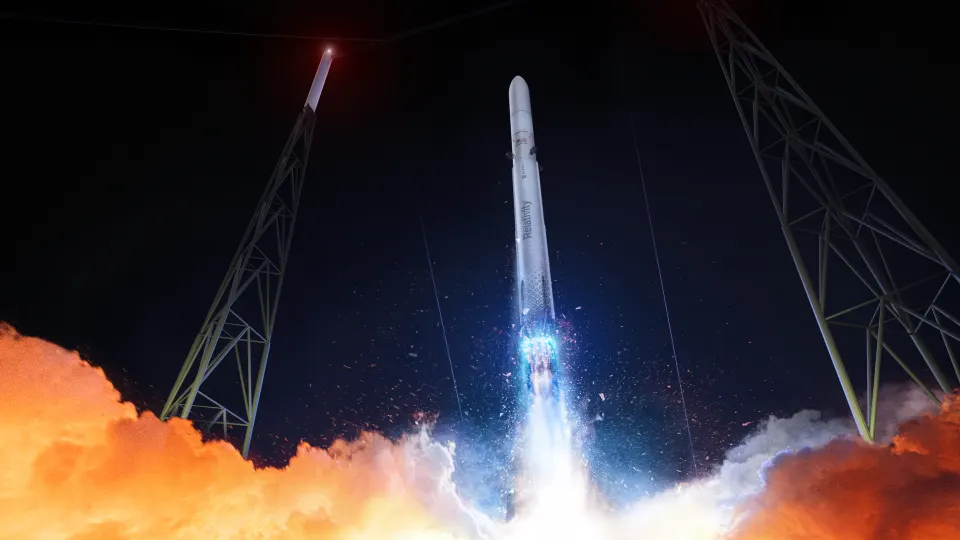

Milestones
- Terran 1 flight reaches space but not orbit22 Mar 2023Complete.
- Terran 1 retired to focus on Terran RApr 2023Complete.
- Terran R first launchTarget Q4 2026+33 mo
originally 2024Current milestone.
Most important updates
- 6 Nov 2025
- Oct 2023
- 22 Mar 2023
- Jun 2022
- 8 Jun 2021
Upcoming
- Q4 2026Terran R first launch+33 mo
originally 2024(next)
Current obstacles
- From 3D printing to normal factoriesRelativity dropped fully 3D-printed tanks for normal aluminium ones, which meant rebuilding its factory and suppliers.
Physics limits
- The rocket equation makes payload a sliver of launch massOrbit needs about 9.4 km/s of speed change including losses. Fuel needed grows exponentially with that, so even the best rockets put only 2 to 5% of their liftoff mass into low orbit.
- Every kilogram used to come home is a kilogram not carriedA returning booster keeps fuel for boostback and landing, plus legs or fins; this costs roughly 25 to 40% of payload versus throwing it away. Upper stages pay even more, since they are going at orbital speed.
- Engines run at the edge of what metals surviveBig engines burn at 3,000+ °C and hundreds of bar; hot, oxygen-rich gas in the pumps can set metal on fire. Chamber pressure and reuse are capped by cooling and alloys, not by design effort.
How it works
Booster
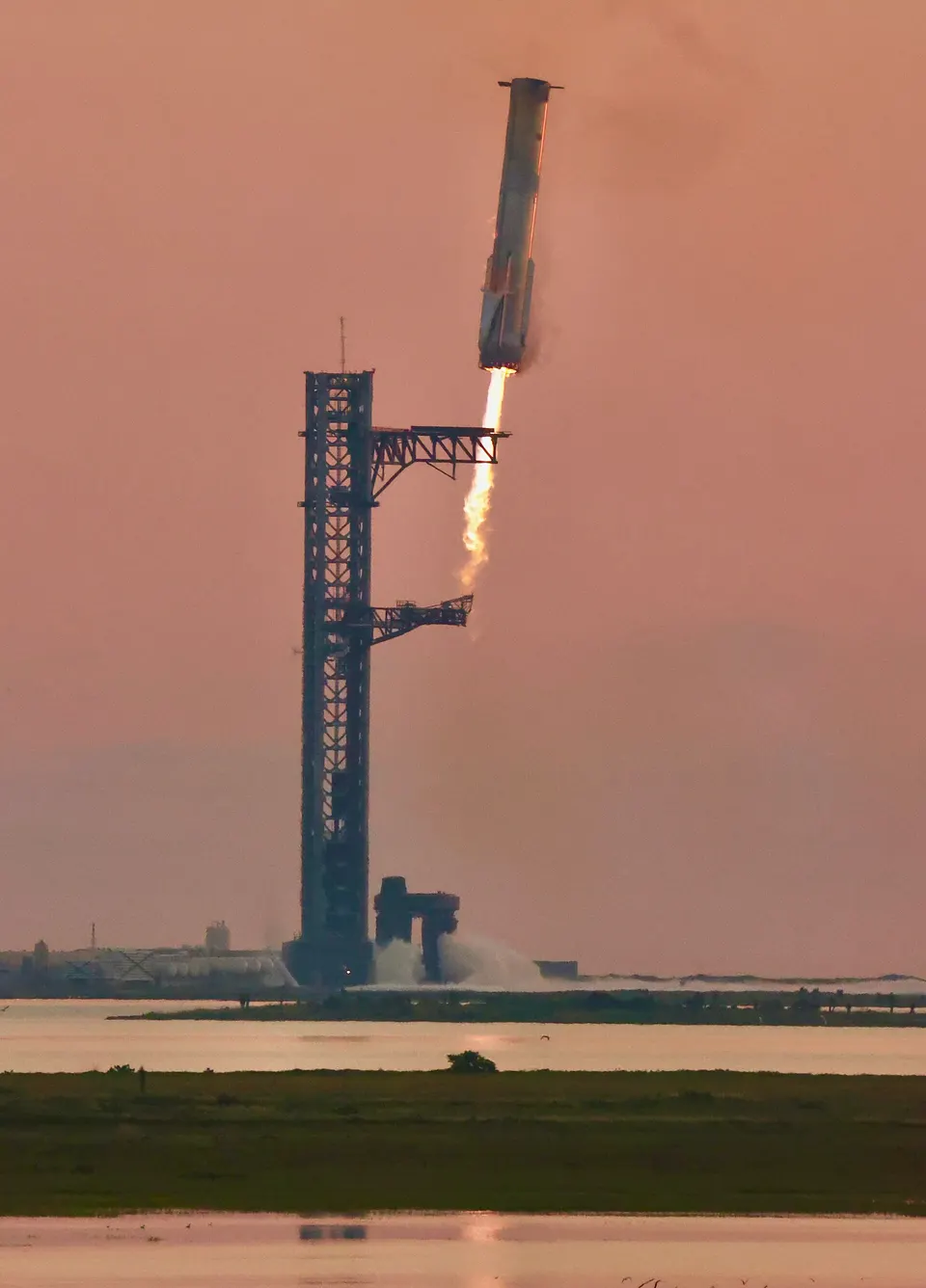
13 methane engines, flies back
The first stage has 13 Aeon R methane-oxygen engines and is designed to land on a ship at sea for reuse.
Upper stage
Thrown away, kept simple
A single vacuum engine drives the expendable upper stage; making it cheap matters more than reusing it for this size of rocket.
Build
Big, wide stages
At about 5.4 m wide, the stages fit large satellite batches. Relativity moved from 3D-printing structures to conventional aluminium.
Update log
Thu 6 Nov 2025
- Minor: PressCommercial
Oct 2023
- Minor: OtherCommercial
Wed 22 Mar 2023
- Minor: PressTest
Jun 2022
- Minor: PressCommercial
Tue 8 Jun 2021
- Major: PressFunding
About Relativity Space
Relativity Space
Terran R reusable rocket
Relativity is building Terran R, a reusable medium-to-heavy rocket, after retiring its mostly 3D-printed Terran 1 after one flight in 2023. Former Google CEO Eric Schmidt took control and became CEO in 2025.
- Terran 1 reached space in March 2023 but its upper stage failed to reach orbit.
- Eric Schmidt became CEO in March 2025 and funds the company.
- Terran R's first launch from Cape Canaveral is targeted for late 2026.
relativityspace.com (opens relativityspace.com)Company profile →
- Founded
- 201511 yrs
- Headquarters
- United States
- Status
- Private
- Valuation
- private
- Works in
- SpaceflightLaunch
- Coverage
- 1 program · 6 updateslatest 6 Nov 2025checked 25 Sep
- Customers
- SES (opens ses.com)
- People
- Eric Schmidt (opens en.wikipedia.org)CEOTim Ellis (opens en.wikipedia.org)Co-founder