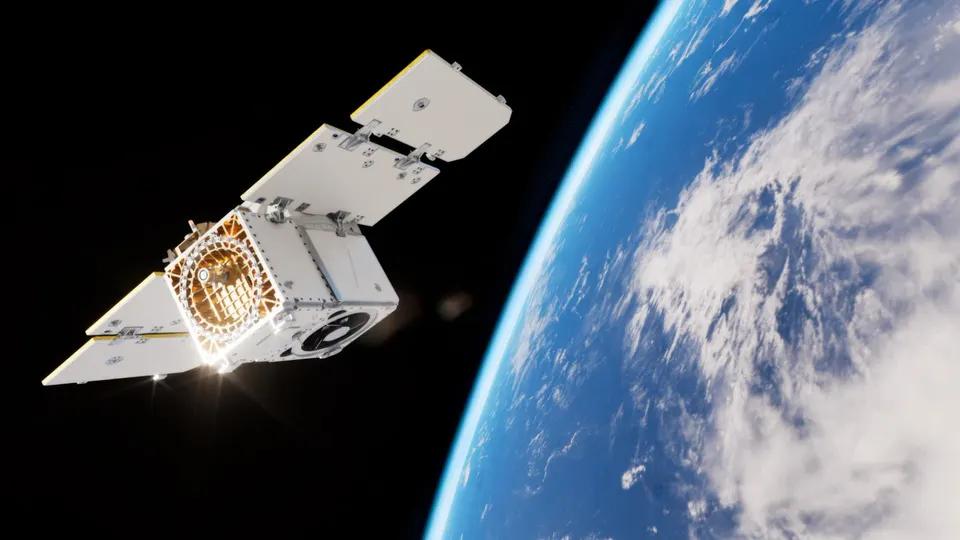

Milestones
- Pelican-1 technology demonstrator launched11 Nov 2023Complete.
- Tanager-1 gas-spotting satellite launched16 Aug 2024Complete.
- First operational Pelicans launchedJan 2025Complete.
- Build out Pelican constellationNowCurrent milestone.
Most important updates
- 25 Sep 2025
- 26 Aug 2025
- Jul 2025
- Jan 2025
- 16 Aug 2024
Current obstacles
- Turning pixels into revenueSatellite photos are getting cheap; the money is in analysis and government contracts.
Physics limits
- Diffraction ties detail to telescope sizeLight spreads as it passes an aperture. From 500 km up, seeing 30 cm detail in visible light needs a mirror about 1 m wide, which sets satellite size and cost.
- Clouds hide about two-thirds of EarthAt any moment roughly two-thirds of the planet is under cloud. Optical satellites can't see through it, so revisits, not just resolution, decide what gets seen.
- Downlink bandwidth caps how much can be sentA satellite can only talk to ground stations for minutes per pass, and radio bandwidth is limited. High-resolution imaging produces far more data than can be sent down.
How it works
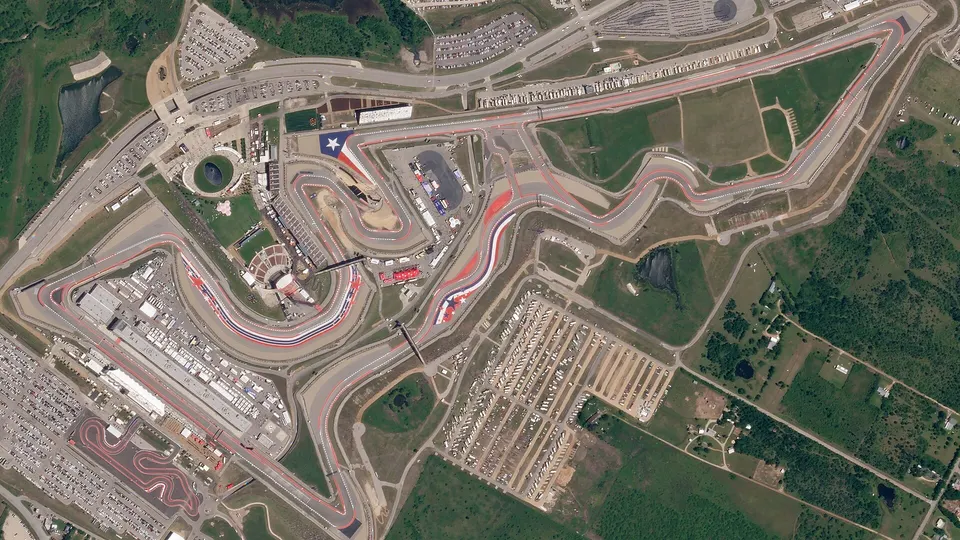
Optics
Sharper telescope
A larger telescope than Planet's Doves resolves details tens of centimetres across.
Agility
Turns quickly to a target
The satellite slews to point at requested spots, taking many targets per pass instead of a fixed strip.
Onboard
Processing in orbit
An onboard computer can process images in orbit, so users get answers sooner and less raw data has to be downlinked.
Update log
Thu 25 Sep 2025
- Minor: PressManufacturing
Tue 26 Aug 2025
- Minor: PressHardware
Jul 2025
- Major: PressCommercial
Jan 2025
- Major: PressCommercial
Fri 16 Aug 2024
- Minor: PressHardware
Sat 11 Nov 2023
- Minor: PressHardware
About Planet Labs
Planet Labs
Earth-photo satellites, daily images
Planet runs the biggest fleet of Earth-photo satellites, photographing all land on Earth about once a day with small SuperDoves, plus sharper Pelican and SkySat satellites and Tanager, which spots gases.
- Pioneered mass-produced tiny satellites for daily photos of Earth.
- Pelican is its next satellite: sharper photos, taken more often.
- Its Tanager-1 satellite spots methane and CO2 leaks, with Carbon Mapper.
- Founded
- 201016 yrs
- Headquarters
- United States
- Status
- Public
- Listed
- PL (opens google.com)NYSE
- Valuation
- public
- Works in
- SpaceflightSatellites
- Coverage
- 1 program · 6 updateslatest 25 Sep 2025checked 25 Sep
- People
- Will MarshallCo-founder and CEORobbie SchinglerCo-founder