
Milestones
- Hopper2 upper-stage test hop17 Sep 2023Complete.
- First stage passes qualification testsJun 2026Complete.
- Nova Block 2 unveiled (15 t to LEO)Sep 2026Complete.
- First launch from LC-14Target Q1 2027+12 mo
originally 2026Current milestone.
Most important updates
- Sep 2026
- Jun 2026
- 8 Oct 2025
- 5 Jun 2024
- 5 Oct 2023
Upcoming
- Q1 2027First launch from LC-14+12 mo
originally 2026(next)
Current obstacles
- Bringing the top stage homeCooling the heat shield with fuel adds pipes and weight; making it work flight after flight is unproven.
Physics limits
- The rocket equation makes payload a sliver of launch massOrbit needs about 9.4 km/s of speed change including losses. Fuel needed grows exponentially with that, so even the best rockets put only 2 to 5% of their liftoff mass into low orbit.
- Coming back from orbit means shedding enormous heatAt 7.8 km/s every kilogram carries about 30 MJ, the energy of 7 kg of TNT. Air turns it into heat at over 1,500 °C on the shield, so every returning vehicle carries heavy protection that wears.
- Reusing the upper stage costs payload one-for-oneEvery kilogram of heat shield, landing fuel and legs on the upper stage is carried all the way to orbit, so it comes directly off the payload. That makes a fully reusable small rocket very hard.
How it works
First stage
Seven methane engines
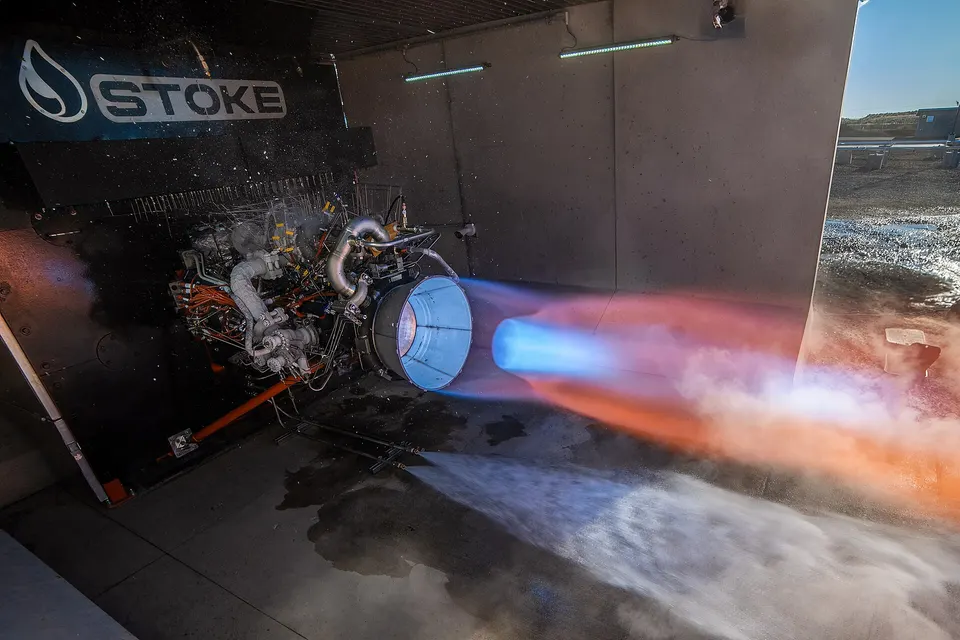
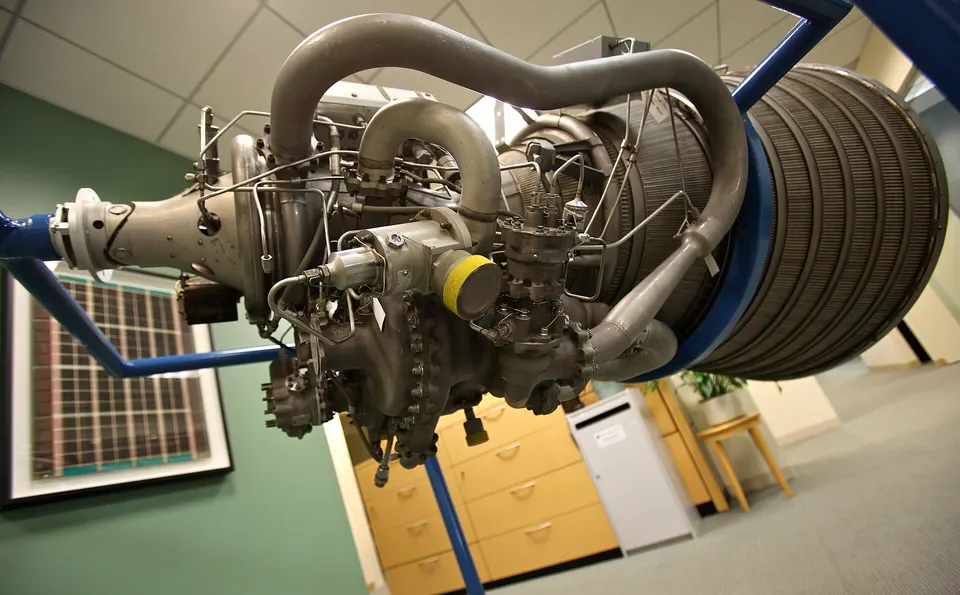
Seven Zenith engines burn methane and oxygen in a full-flow cycle, where all propellant passes through the turbines for efficiency and cooler running.
Upper stage
A ring of small thrusters
The upper stage burns hydrogen through many small thrusters arranged around its base, instead of one big bell nozzle.
Heat shield
Cooled by its own fuel
Reentering base-first, the metal base is cooled by liquid hydrogen flowing behind it, so no tiles wear out.
Landing
Both stages land
The same thrusters that pushed it to orbit slow the upper stage to land; the aim is full reuse with little refurbishment.
Update log
Sep 2026
- Major: PressFunding
Jun 2026
- Minor: BlogTest
Wed 8 Oct 2025
- Minor: PressFunding
Wed 15 Jan 2025
- Minor: PressFunding
Wed 5 Jun 2024
- Major: PressTest
Thu 5 Oct 2023
- Major: PressFunding
Sun 17 Sep 2023
- Minor: BlogTest
About Stoke Space
Stoke Space
Fully reusable Nova rocket
Stoke is building Nova, a rocket where both stages are reused. The upper stage comes back behind a metal heat shield cooled by its own fuel and lands on its engines.
- Flew its Hopper2 upper-stage test vehicle in September 2023.
- Raised a $1B Series E in Sep 2026 and unveiled a bigger Nova Block 2 (15 t to orbit).
- Nova's first launch from Cape Canaveral has slipped to early 2027.
- Founded
- 20197 yrs
- Headquarters
- United States
- Status
- Private
- Valuation
- private
- Raised
- $1.5B2 rounds
- Last round
- Series E · $1BSep 2026
- Works in
- SpaceflightLaunch
- Coverage
- 1 program · 7 updateslatest 1 Sep 2026checked 25 Sep
- People
- Andy Lapsa (opens stokespace.com)Co-founder and CEOTom Feldman (opens stokespace.com)Co-founder