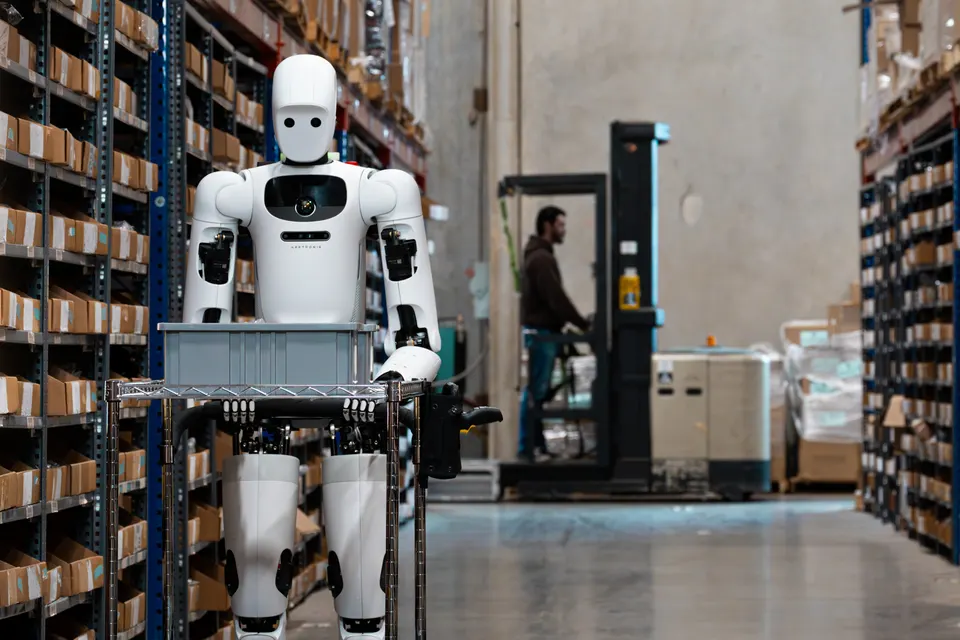

Milestones
- Apollo unveiledAug 2023Complete.
- Mercedes-Benz pilot agreementMar 2024Complete.
- Jabil manufacturing partnershipFeb 2025Complete.
- Apollo 2 unveiled; Robot Park training site opens30 Jun 2026Complete.
- Scale production and deploymentsNowCurrent milestone.
Most important updates
- 30 Jun 2026
- 25 Feb 2025
- 19 Dec 2024
- Mar 2024
- 23 Aug 2023
Current obstacles
- Moving from pilots to fleetsPilots must prove uptime and speed before customers buy whole fleets.
Physics limits
- A heavy robot is hard to make safeAt about 73 kg, Apollo carries real momentum when walking or swinging an arm. Stopping it takes time and distance, so speeds near people must stay low.
- Battery energy caps runtimeLithium-ion stores about 250 Wh per kg. Swapping packs avoids charging downtime but not the limit: each pack lasts hours, and heavier packs make the robot slower and less efficient.
- Motor heat limits sustained liftingWinding losses grow with the square of current, so a joint can lift near its 25 kg rating only for short spells before it must cool.
How it works
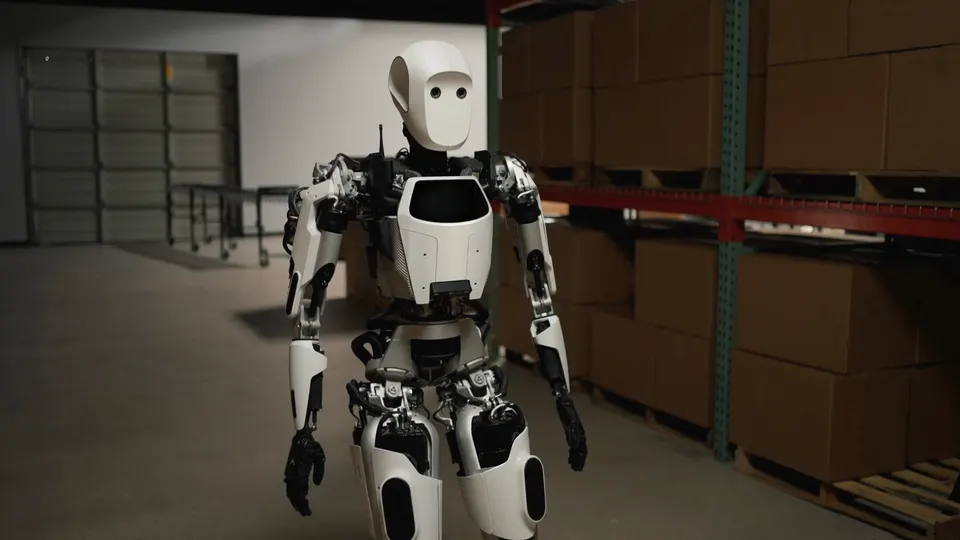
Joints
Force-controlled electric actuators
Apptronik designs its own electric actuators with force control, so a joint yields when it meets something, like a collaborative robot arm.
Power
Swappable battery
Each pack runs about four hours. Swapping in a fresh one lets Apollo work up to a 22-hour day.
Body
Legs or wheels
Apollo 2 comes with legs or with a wheeled base, so the same upper body can suit the job.
Brain
Gemini Robotics models
Data from Apollo fleets at Apptronik's Robot Park helps train Google DeepMind's Gemini Robotics models that run the robot.
Update log
Tue 30 Jun
- Major: PressHardware
Tue 25 Feb 2025
- Major: PressManufacturing
Thu 19 Dec 2024
- Major: PressPartnership
Mar 2024
- Minor: PressCommercial
Wed 23 Aug 2023
- Major: PressHardware
About Apptronik
Apptronik
Apollo humanoid
Apptronik, a University of Texas at Austin spinout, builds the Apollo humanoid for factories and warehouses. It works with Mercedes-Benz, GXO and Jabil, and with Google DeepMind on robot AI.
- Raised over $935M in its Series A, including $520M in February 2026 at a $5B valuation.
- Apollo is in pilots with Mercedes-Benz, GXO and Jabil. Jabil also manufactures it.
- Google DeepMind's Gemini Robotics models run on Apollo.
- Founded
- 201610 yrs
- Headquarters
- United States
- Status
- Private
- Valuation
- $5BprivateFeb 2026
- Raised
- $870M2 rounds
- Last round
- Series A extension · $520M11 Feb 2026$5B post
- Works in
- RoboticsHumanoids
- Coverage
- 1 program · 6 updateslatest 30 Jun 2026checked 25 Sep
- Lead investors
- B CapitalGoogleMercedes-BenzPEAK6Capital Factory
- Customers
- Mercedes-Benz (opens apptronik.com)
- People
- Jeff Cardenas (opens apptronik.com)Co-founder & CEO