
Milestones
- Fusion-based architecture publishedJan 2021Complete.
- GlobalFoundries manufacturing partnership announcedMay 2021Complete.
- Brisbane agreement with Australian governments30 Apr 2024Complete.
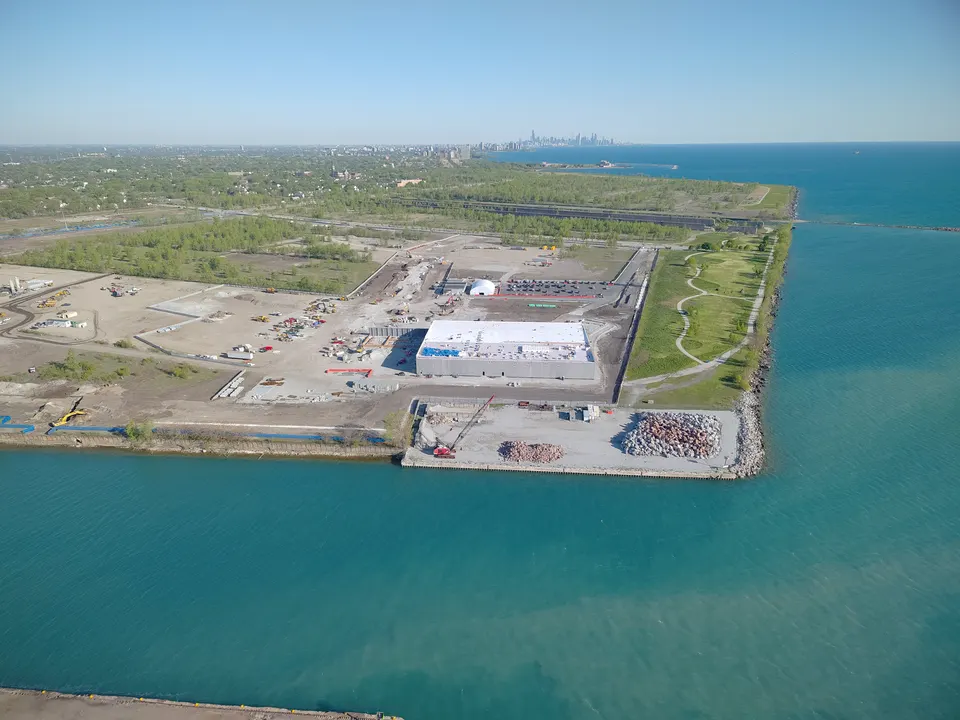
- Chicago quantum park anchor announced25 Jul 2024Complete.
- Omega chipset unveiled26 Feb 2025Complete.
- Brisbane site moved to Moreton Bay, early works begunTarget 2026Current milestone.
- Commercially useful machine in BrisbaneTarget Dec 2027Not yet reached.
Most important updates
- 2026
- 10 Sep 2025
- 26 Feb 2025
- 25 Jul 2024
- 30 Apr 2024
Upcoming
- 2026Brisbane site moved to Moreton Bay, early works begun (next)
- Dec 2027Commercially useful machine in Brisbane
Current obstacles
- Loss budget end to endSources, switches, channels, fibre and detectors must together lose very little light for error correction to work.
- Site deliveryThe Brisbane site moved and slipped, showing how hard first-of-a-kind quantum buildings are.
Physics limits
- Photons don't interactTwo photons pass through each other, so gates are done by measurement and succeed only by chance: a basic fusion works 50% of the time, about 75% with extra photons. Many attempts must run in parallel.
- Every lost photon is an errorA photon absorbed or scattered is gone for good. The error-correcting scheme tolerates only a few percent loss per photon in total, yet every waveguide, switch and fibre joint takes a slice.
- Detectors need a few kelvinSuperconducting nanowire detectors work only at a few kelvin, so photonic cabinets must still be cryogenically cooled, and millions of detectors need cooling power and readout wiring.
How it works
Sources
Heralded single photons
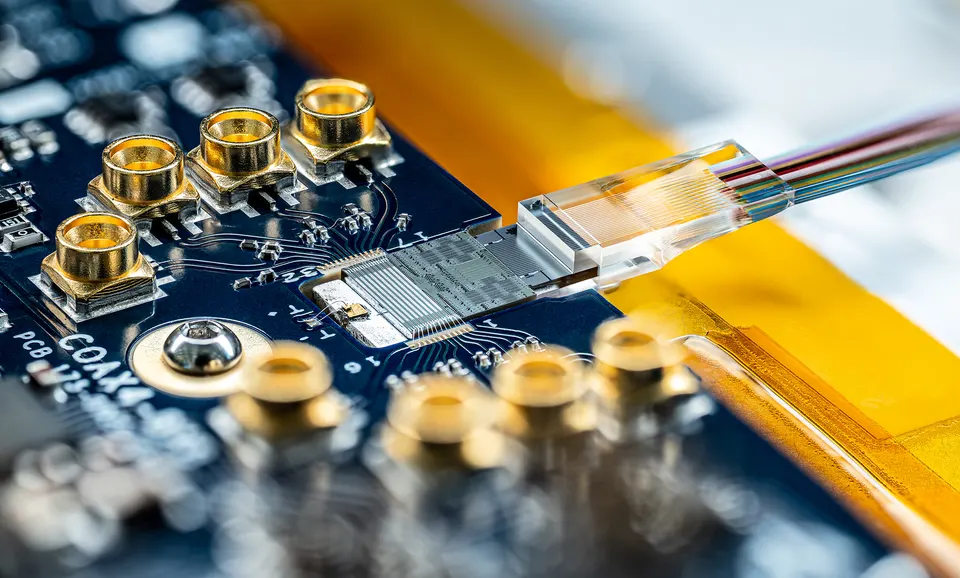
Photon pairs are made in silicon channels. Detecting one photon confirms its partner exists, and that partner becomes a qubit.
Resource states
Small entangled clusters
Photons are combined into small linked groups. This works by chance, so many attempts run in parallel.
Fusions
Measurements build the computation
Fusion measurements stitch the groups into a large error-correcting structure. Which fusions run defines the program.
Network
Fibre between cabinets
Photons travel between chips and cabinets by fibre, so the machine can fill a building.
Spec sheet
| Spec | Utility-scale photonic quantum computer |
|---|---|
| Single-qubit SPAM fidelity | 99.98%R (reported) |
| Two-qubit fusion fidelity | 99.22%R (reported) |
| Photon indistinguishability (HOM) | 99.50%R (reported) |
| Chip-to-chip interconnect fidelity | 99.72%R (reported) |
| Wafer size | 300 mm (GlobalFoundries)R (reported) |
| Target physical qubits | ~1,000,000R (reported) |
R reported by the company
Papers & demos
- Feb 2025paperA manufacturable platform for photonic quantum computing (opens nature.com)Nature paper benchmarking Omega components built in a commercial fab.
- Nov 2022paperActive volume: an architecture for efficient fault-tolerant quantum computers with limited non-local connections (opens arxiv.org)Showed how long-range photon links can cut the cost of error-corrected programs.
- Jan 2021paperFusion-based quantum computation (opens arxiv.org)Defined PsiQuantum's design: build the computer from small photon groups joined by measurements.
Update log
2026
- Minor: PressManufacturing
Wed 10 Sep 2025
- Major: PressFunding
Wed 26 Feb 2025
- Major: PaperHardware
Thu 25 Jul 2024
- Major: PressPartnership
Tue 30 Apr 2024
- Major: PressFunding
About PsiQuantum
PsiQuantum
Photonic quantum computers, Omega chips
PsiQuantum wants to build a million-qubit, error-corrected quantum computer from photons, on chips made at GlobalFoundries. It is building sites in Brisbane and Chicago, backed by government money.
- Raised a $1B Series E at a $7B valuation in September 2025, led by BlackRock, Temasek and Baillie Gifford.
- Omega chips (Feb 2025, Nature): 99.98% single-qubit and 99.22% two-qubit fusion fidelity.
- Brisbane project, backed by about A$940M from Australian governments, is behind schedule and moved site.
- Founded
- 201610 yrs
- Headquarters
- United States
- Status
- Private
- Valuation
- $7BprivateSep 2025
- Raised
- $1.4B2 rounds
- Last round
- Series E · $1BSep 2025$7B post
- Works in
- QuantumPhotonic
- Coverage
- 1 program · 7 updateslatest 2d agochecked 25 Sep
- Lead investors
- BlackRockTemasekBaillie GiffordAustralian GovernmentQueensland Government
- Customers
- DARPA (opens darpa.mil)
- Investors
- NVIDIA
- People
- Jeremy O'Brien (opens en.wikipedia.org)Co-founder and CEOPete ShadboltCo-founder and Chief Scientific OfficerTerry Rudolph (opens en.wikipedia.org)Co-founder and Chief Architect