
Milestones
- Borealis quantum advantage (Nature)1 Jun 2022Complete.
- Aurora modular system (Nature)22 Jan 2025Complete.
- GKP qubit generated on chip (Nature)Jun 2025Complete.
Most important updates
- 22 Jan 2025
- 1 Jun 2022
Current obstacles
- Optical lossLoss in chips and fibre degrades the light states. Error correction needs far lower loss than today.
Physics limits
- Loss destroys squeezingSqueezed light is fragile: every bit of loss adds noise back. Fault-tolerant GKP qubits need roughly 10 dB of squeezing and very low loss, beyond what chips reliably deliver today.
- Photon-counting detectors need 0.1 KTransition-edge sensors resolve photon numbers only near 0.1 K and recover in microseconds, which limits clock rates and means every module still needs a cryostat.
- Photons don't interactPhotons pass through each other, so operations rely on measurement and succeed only with some probability. The machine must make many attempts and route the successes.
How it works
Light
Squeezed light
On-chip resonators make squeezed light: pulses with less noise in one property than normal light, the raw material for qubits.
Network
35 chips linked by fibre
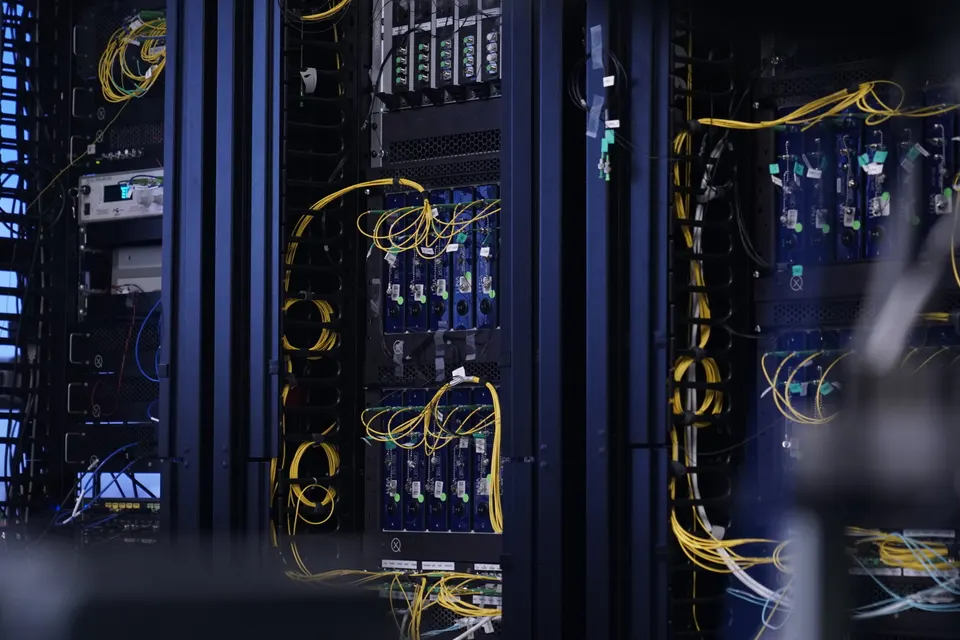
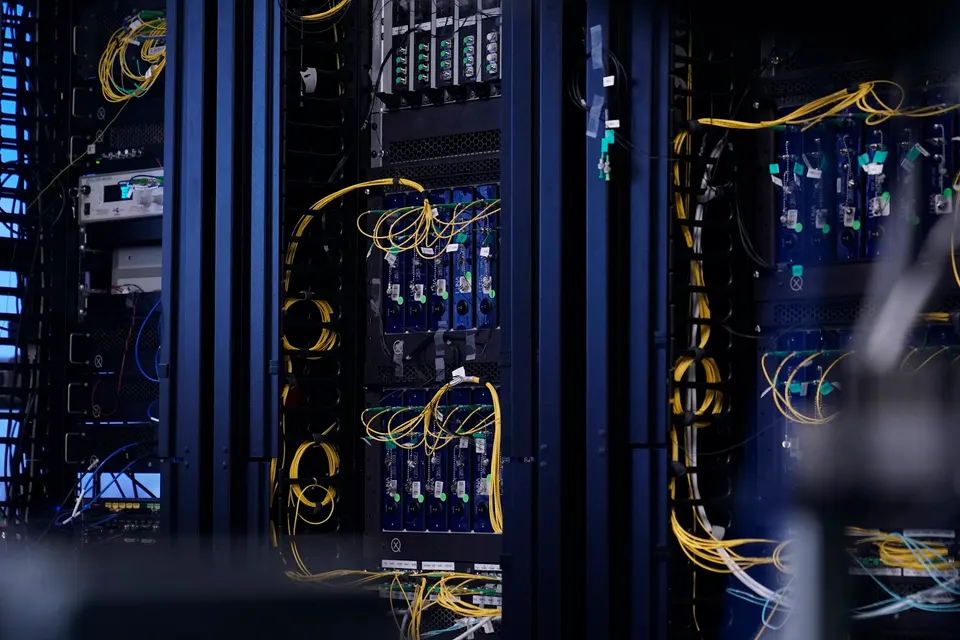
Aurora links 35 photonic chips with about 13 km of fibre; everything runs at room temperature except the detectors.
Detect
Counting photons
Transition-edge sensors near 0.1 K count exact photon numbers; those counts shape the light into error-resistant GKP qubit states.
Update log
Wed 22 Jan 2025
- Major: PaperHardware
Wed 1 Jun 2022
- Major: PaperResearch
About Xanadu
Xanadu
Photonic computers, Aurora, PennyLane
Toronto company building photonic quantum computers from 'squeezed' light, and maker of the PennyLane software library. Aurora (2025) was the first modular, networked photonic machine. It listed on Nasdaq and TSX in March 2026 via a SPAC.
- Borealis showed quantum advantage on a sampling task (Gaussian boson sampling) in 2022.
- Aurora (Jan 2025) linked 35 photonic chips into a modular 12-qubit system.
- Began trading as XNDU on 27 March 2026 after merging with Crane Harbor Acquisition Corp.
- Founded
- 201610 yrs
- Headquarters
- Canada
- Status
- Public
- Listed
- XNDU (opens google.com)NASDAQ
- Valuation
- public
- Last round
- SPAC merger and PIPE · $500MMar 2026
- Works in
- QuantumPhotonic
- Coverage
- 1 program · 3 updateslatest 27 Mar 2026checked 25 Sep
- People
- Christian WeedbrookFounder and CEO