
Milestones
- First human implant (BrainGate)2004Complete.
- Robot arm reach-and-grab by thought (Nature)May 2012Complete.
- Commercial fully implanted systemNowCurrent milestone.
Most important updates
- 12 Jun 2025
- 14 Aug 2024
- 29 Apr 2024
- 23 Aug 2023
- 12 May 2021
Current obstacles
- A plug through the skinThe skull connector passes through the skin, risking infection and limiting home use.
Physics limits
- Stiff needles in soft brainSilicon is about a hundred million times stiffer than brain tissue. As the brain moves with each heartbeat, rigid needles cause micro-injury and scarring, and recordings decline over years.
- 96 channels cover a tiny patchOne array samples a 4 x 4 mm square of cortex. Richer control needs several arrays, and each adds surgery and wiring.
- A wire through the skin is an open doorA connector through the scalp is a permanent wound with lasting infection risk. Going fully wireless removes it but runs into implant heating limits.
How it works
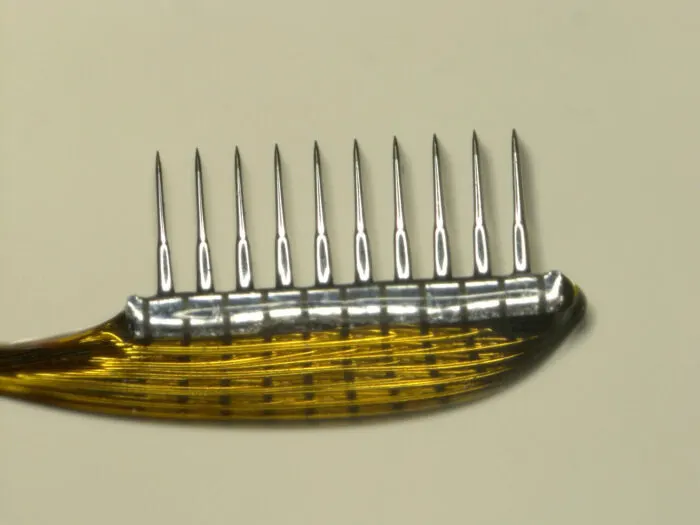
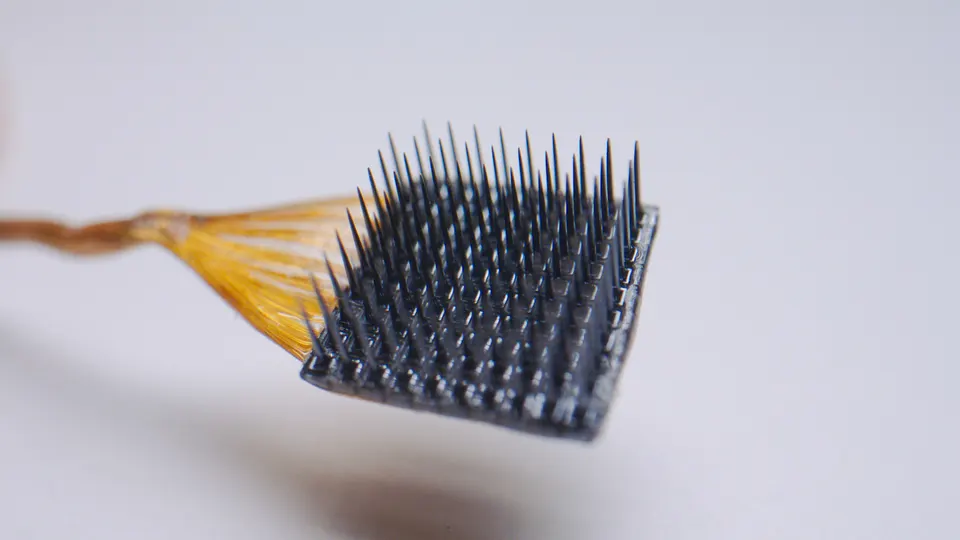
A bed of 100 needles
A 4 x 4 mm grid of silicon needles, each tipped with a metal electrode, is pressed about 1-1.5 mm into the cortex.
A plug through the scalp
Fine wires run to a connector fixed to the skull that pokes through the skin; a cable links it to computers.
Firing patterns to actions
Software learns how the recorded neurons fire when a person tries to move or speak, and turns that into cursor moves, robot-arm motion, text or speech.
Update log
Thu 12 Jun 2025
- Major: PaperResearch
Wed 14 Aug 2024
- Major: PaperResearch
Mon 29 Apr 2024
- Major: PressFunding
Wed 23 Aug 2023
- Minor: PaperResearch
Wed 12 May 2021
- Major: PaperResearch
About Blackrock Neurotech
Blackrock Neurotech
Utah array, research brain implants
Salt Lake City maker of the Utah array, the electrode grid used in most human brain-implant research since 2004, including studies where paralyzed people moved robot arms, 'handwrote' and spoke by thought. Tether bought a majority stake for $200M in 2024.
- Utah arrays have been implanted in dozens of people, more than any other in-brain implant.
- University teams using its arrays turned imagined handwriting into 90 characters/min (2021) and speech into 62 words/min (2023).
blackrockneurotech.com (opens blackrockneurotech.com)Company profile →
- Founded
- 200818 yrs
- Headquarters
- United States
- Status
- Private
- Valuation
- private
- Works in
- NeurotechBrain implants
- Coverage
- 1 program · 5 updateslatest 12 Jun 2025checked 25 Sep
- Investors
- Tether (opens tether.io)
- People
- Marcus GerhardtCo-founder and CEO