
Milestones
- First human test (temporary)Sep 2023Complete.
- FDA approves first trial27 Apr 2026Complete.
- First patients implantedNowCurrent milestone.
Most important updates
- 30 Apr 2026
- 27 Apr 2026
- 20 Jan 2025
- Sep 2023
Current obstacles
- Stimulating through boneSince it doesn't touch the brain, it must stimulate through bone, with less precise aim than deep electrodes.
Physics limits
- Current spreads before reaching the brainFrom above the membrane, current spreads through fluid and tissue, so only the brain surface under the device is reached, not deeper mood hubs.
- Wireless power fades with distancePower sent through tissue drops steeply as the gap or misalignment grows, so the wearable must sit close and aligned for the implant to work.
- Depression has no single circuitDifferent patients' depression involves different brain networks, and there's no reliable physical readout of mood yet, so one fixed target won't help everyone.
How it works
Place
Set into the skull, not the brain
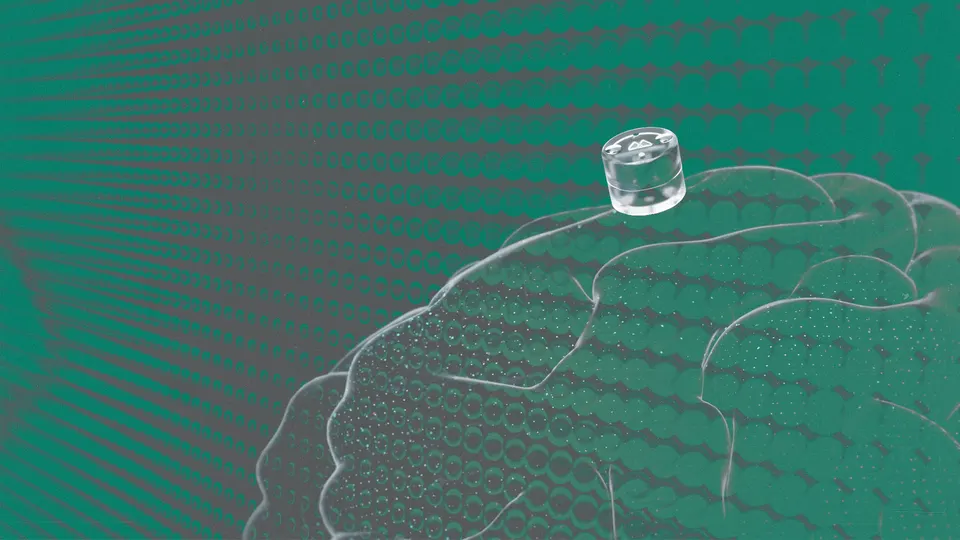
The blueberry-sized DOT sits in a small hole in the skull above the brain's tough outer membrane, over a mood-related area of the front of the brain.
Power
Wireless power from a wearable
A cap or headband sends energy through the scalp; a material in the implant turns the magnetic field into electrical current.
Treat
Short sessions at home
Gentle pulses stimulate the circuit below, aiming to reproduce the effect of clinic-based brain stimulation for depression without daily clinic visits.
Update log
Thu 30 Apr
- Minor: PressPartnership
Mon 27 Apr
- Major: PressRegulatory
Mon 20 Jan 2025
- Minor: PressFunding
Sep 2023
- Minor: PressTest
About Motif Neurotech
Motif Neurotech
Tiny wireless stimulator for depression
Houston company spun out of Rice University, led by Jacob Robinson. It makes a blueberry-sized, wirelessly powered stimulator set into the skull, not touching the brain, to treat depression that drugs don't help. FDA approved its first trial in Apr 2026.
- Founded
- 20224 yrs
- Headquarters
- United States
- Status
- Private
- Valuation
- private
- Works in
- NeurotechStimulation therapies
- Coverage
- 1 program · 4 updateslatest 30 Apr 2026checked 25 Sep
- People
- Jacob RobinsonCo-founder and CEO