

Milestones
- Composite supply for A350 and 787 programmesDoneComplete.
- Faster-curing materials that skip the autoclaveNowCurrent milestone.
Current obstacles
- Slow oven curingMost aircraft composites bake slowly in pressure ovens (autoclaves); building more planes needs faster, oven-free processes.
Physics limits
- Flaws, not bonds, set fibre strengthThe best carbon fibres reach about 7 GPa, a small fraction of the carbon-carbon bond's theoretical strength, because microscopic flaws start breaks.
- Weak across the fibresAlong the fibres a laminate carries thousands of MPa, but across them only the resin holds, tens of MPa, so layers can delaminate under impact.
- Thermoset resins cure slowlyEpoxy curing is a chemical reaction that releases heat; thick parts must be heated slowly to avoid overheating inside, which caps cycle times.
How it works
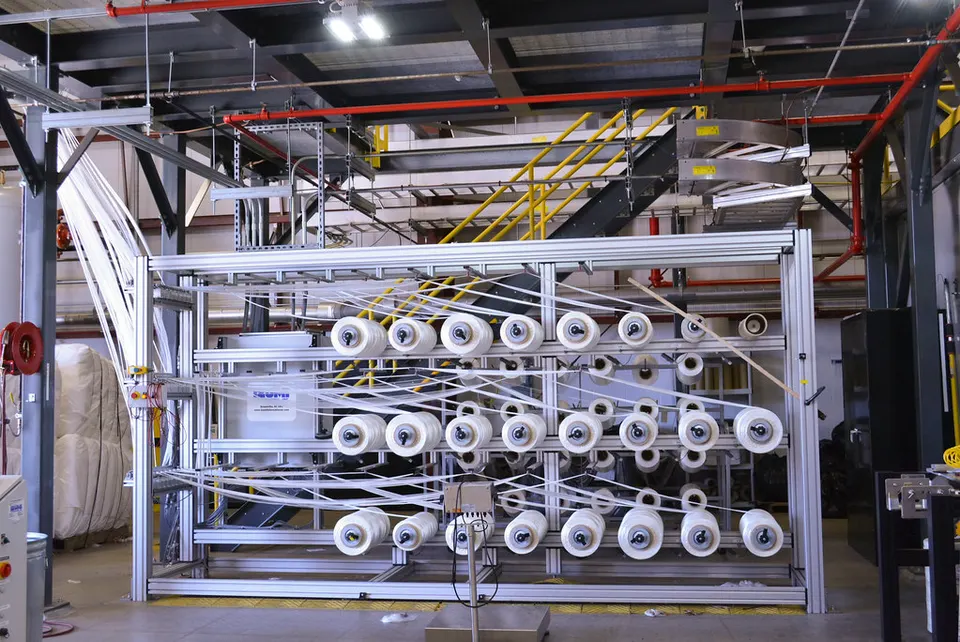
Fibre
Carbon from acrylic thread
Acrylic (PAN) fibres are stretched and baked in stages above 1,000 °C without oxygen, leaving strands of nearly pure, aligned carbon.
Prepreg
Pre-soaked in resin
Fibre sheets are impregnated with a measured amount of epoxy (HexPly prepreg) and kept frozen until use so they don't cure early.
Layup
Layers at chosen angles
Plies are stacked at different angles to carry loads in each direction, then cured under heat and pressure, often in an autoclave.
About Hexcel
Hexcel
Carbon fibre, prepregs, honeycomb composites
Hexcel is a US maker of lightweight composites (HexTow carbon fibre, HexPly prepregs and honeycomb cores) used in aircraft like the Airbus A350 and Boeing 787 and in defense.
- A leading carbon fibre supplier to Airbus and Boeing; demand tracks widebody production rates.
- Makes everything from the fibre's raw material to prepreg and finished parts.
- Tom Gentile became CEO in 2024.
- Founded
- 194680 yrs
- Headquarters
- United States
- Status
- Public
- Listed
- HXL (opens google.com)NYSE
- Valuation
- public
- Coverage
- 1 program · 0 updateschecked 25 Sep
- People
- Tom Gentile (opens hexcel.com)CEO