
Milestones
- Shipbuilding agreements including HIINowCurrent milestone.
Most important updates
- 6 Aug 2026
- 16 Apr 2026
- 17 Feb 2026
- 30 Apr 2025
Current obstacles
- Certified weld qualityShip and structural welds need certified procedures; the robot must prove it welds the same every time.
Physics limits
- Welding heat moves the metalHeat expands the metal around each weld and it shrinks as it cools, pulling parts out of shape. Later seams shift, so the robot must rescan and adapt as it works.
- Shiny metal and arc glare blind sensorsBright steel reflects scanner light unpredictably, and the arc is far brighter than anything else in view. Cameras need filters and careful timing to see the seam.
- What's inside a weld can't be seenPores and poor fusion inside a weld are invisible from the surface. Proving quality needs X-ray, ultrasound or destructive tests, not just cameras.
How it works
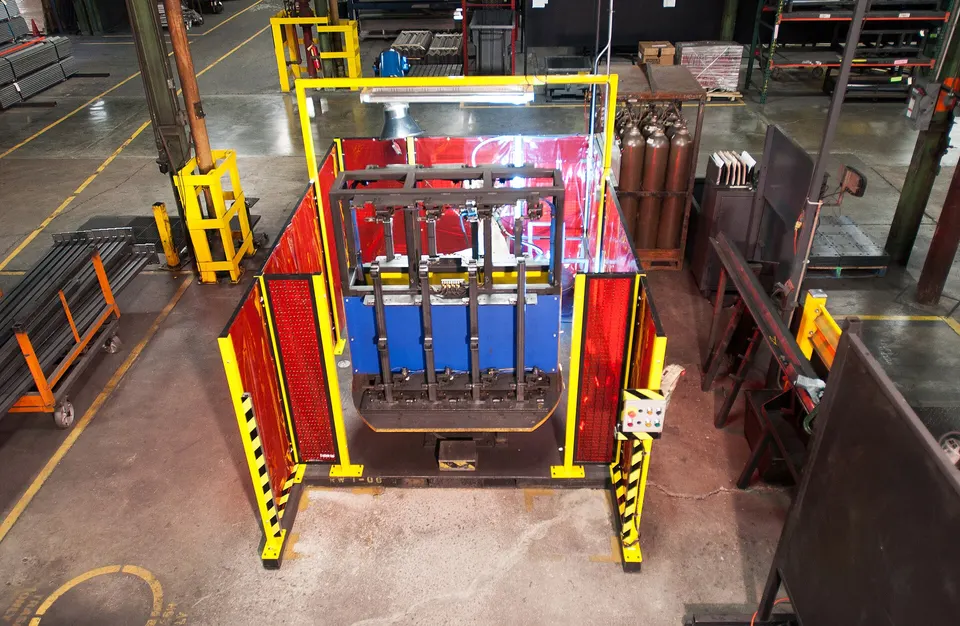
Scan
3D-scan every part
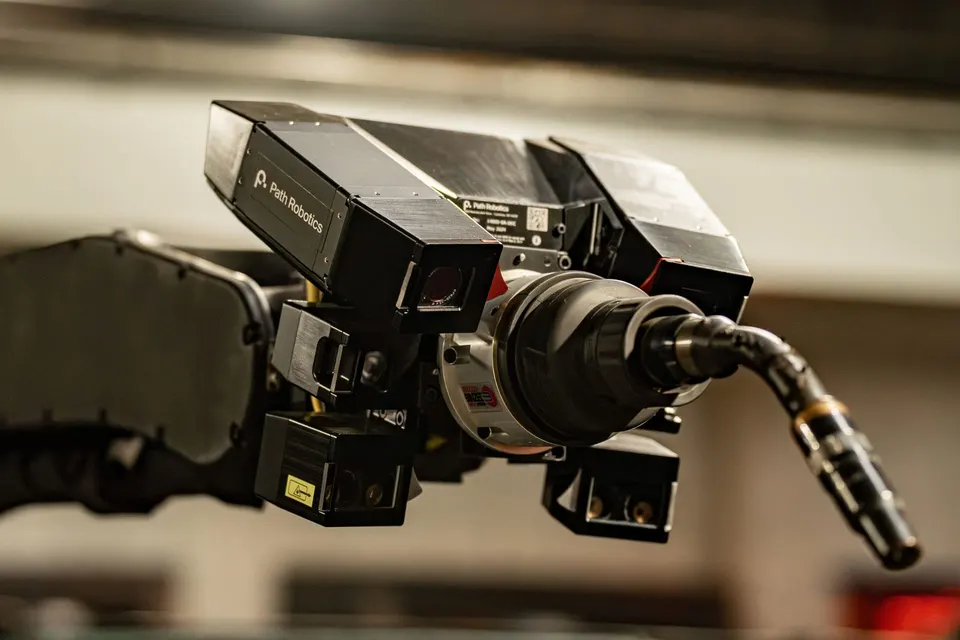
Cameras scan each part in the cell to build a 3D model, then find the seams that need welding.
Plan
Plans its own weld paths
Software picks torch angle, speed and order for each seam, so no one has to program the robot by hand.
Watch
AI watches the weld
An AI model called Obsidian watches the weld pool with cameras and adjusts as it goes.
Mobile
Rove goes to the part
Rove (2026) is a mobile version that brings the welder to large workpieces instead of fitting them into a cell.
Update log
Thu 6 Aug
- Major: BlogCommercial
Thu 16 Apr
- Major: PressHardware
Tue 17 Feb
- Major: BlogPartnership
Wed 30 Apr 2025
- Minor: PressPartnership
About Path Robotics
Path Robotics
AI welding robots
Path Robotics, based in Columbus, Ohio, builds AI welding robots that scan parts, plan their own welds and adjust to gaps and misfits without hand programming. It has raised over $300M and signed deals with US shipbuilders.
- Targets the shortage of skilled welders in fabrication shops and shipyards.
- Cameras plus AI let the robot weld parts without taught paths or tight clamping.
- Signed an agreement with Huntington Ingalls Industries to bring robot welding to Navy shipyards.
path-robotics.com (opens path-robotics.com)Company profile →
- Founded
- 201412 yrs
- Headquarters
- United States
- Status
- Private
- Valuation
- private
- Raised
- $100M1 round
- Last round
- Series D · $100M2024
- Works in
- ManufacturingRobotic forming & weldingRobotics
- Coverage
- 1 program · 4 updateslatest 6 Aug 2026checked 25 Sep
- Lead investors
- Matter Venture PartnersDrive Capital
- People
- Andy LonsberryCo-founder & CEO