

Milestones
- UCIe optical chiplet demonstratedMar 2025Complete.
- Volume productionNot yet reached.
Most important updates
- 30d ago
- 2 Jun 2026
- 11 Mar 2026
- 3 Mar 2026
- 16 Nov 2025
Current obstacles
- Thermal control of microringsThe tiny ring-shaped light modulators are very sensitive to heat and need constant tuning, costing power.
Physics limits
- Lasers are the weak linkSilicon can't emit light efficiently, so light comes from a separate laser module. Lasers fail more often than chips and dislike heat, so they are kept outside the hottest part of the system.
- Ring modulators drift with temperatureEach ring is tuned to one colour, but silicon's refractive index changes with heat, shifting the ring by about 0.1 nm per °C. Every ring needs active heating control to stay locked.
- Fibres must be aligned to a micrometreSingle-mode fibre cores are about 9 µm wide. Attaching dozens of fibres to a chip with sub-micrometre accuracy is slow, and small misalignments lose much of the light.
How it works
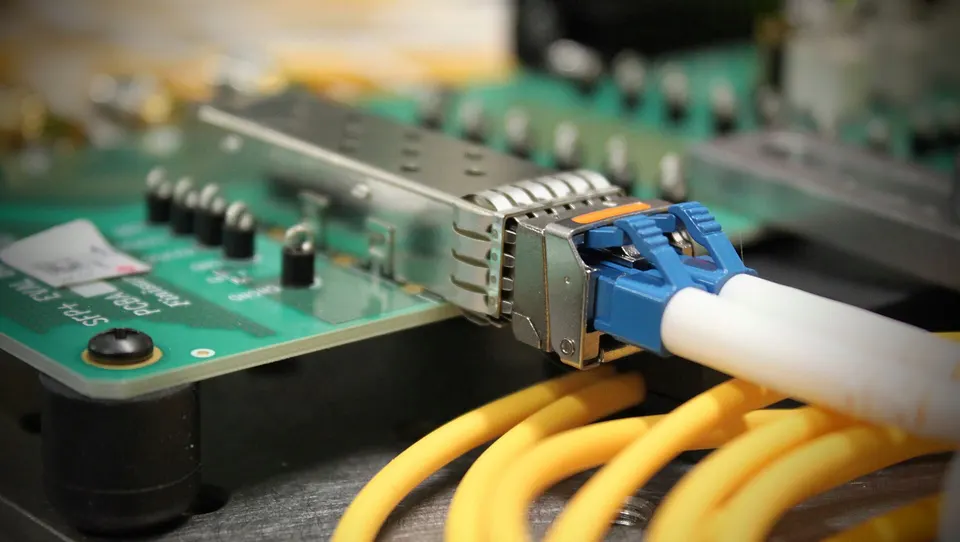
Chiplet
Optical I/O in the package
TeraPHY sits next to the processor inside its package and turns electrical signals into light with tiny ring-shaped modulators.
Light
An external laser
The SuperNova laser feeds up to 16 colours of light over fibre; each ring writes data onto one colour.
Standard
UCIe interface
The 2025 chiplet speaks UCIe, a standard chip-to-chip interface, so other companies' processors can attach it.
Update log
Thu 10 Sep
- Minor: PressFunding
Tue 2 Jun
- Minor: PressPartnership
Wed 11 Mar
- Minor: PressPartnership
Tue 3 Mar
- Major: PressFunding
Sun 16 Nov 2025
- Minor: PressPartnership
Mon 31 Mar 2025
- Minor: PressHardware
Dec 2024
- Minor: BlogFunding
About Ayar Labs
Ayar Labs
Optical I/O chiplets, TeraPHY
Ayar Labs, spun out of MIT and UC Berkeley research, makes small optical chips that sit next to a processor and send data by light instead of copper. This saves power and reaches farther. NVIDIA, AMD and Intel Capital are investors.
- Raised a $155M Series D in December 2024, valuing it above $1B.
- TeraPHY chiplets encode data on light supplied by a separate SuperNova laser.
- Showed an optical chiplet using the UCIe chip-to-chip standard in 2025.
- Founded
- 201511 yrs
- Headquarters
- United States
- Status
- Private
- Valuation
- private
- Raised
- $155M1 round
- Last round
- Series D · $155MDec 2024
- Works in
- ComputingPhotonics & interconnect
- Coverage
- 1 program · 7 updateslatest 30d agochecked 25 Sep
- Lead investors
- Advent Global OpportunitiesLight Street Capital
- People
- Mark WadeCEO and co-founder