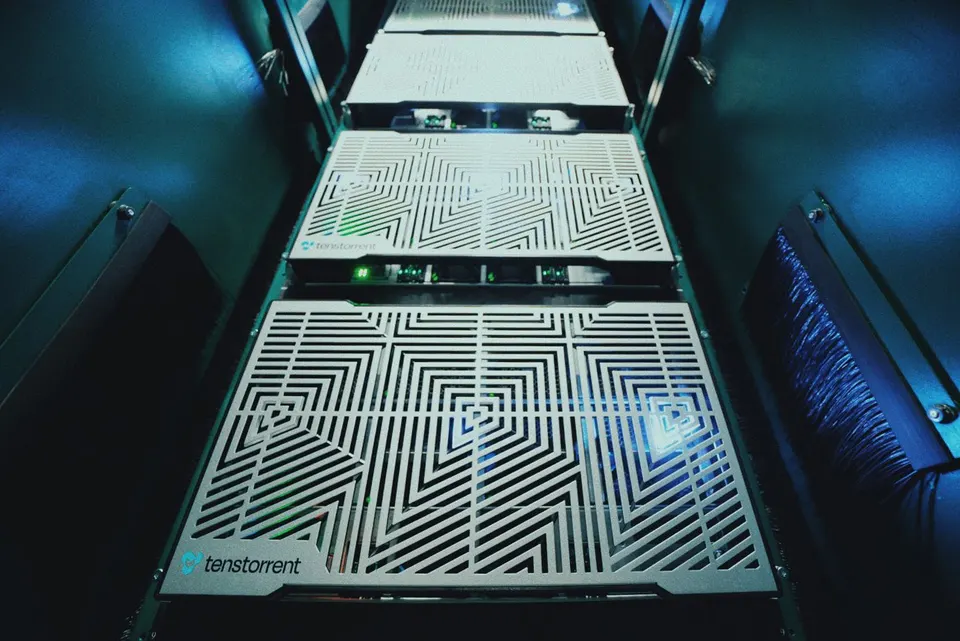

Milestones
- Grayskull developer cards2023Complete.
- Wormhole cards on saleJul 2024Complete.
- Blackhole cards shipping2025Complete.
Most important updates
- 30 Jun 2026
- 1 May 2026
- Aug 2024
Current obstacles
- Software maturityA new chip design needs software good enough that developers get top speed without hand-tuning.
Physics limits
- Mesh paths grow with system sizeWithout switches, data hops chip to chip. In a 2D mesh the number of hops grows with the square root of chip count, adding delay and congestion for traffic that must reach every chip.
- GDDR is far slower than HBMGDDR6 gives about 0.5 TB/s per chip against several TB/s for HBM stacks. For large models memory speed, not arithmetic, sets how fast tokens come out.
- Electrical links are short and costlyHigh-speed copper links cost several picojoules per bit and reach only metres, so as systems grow, a rising share of power goes into moving data between chips.
How it works
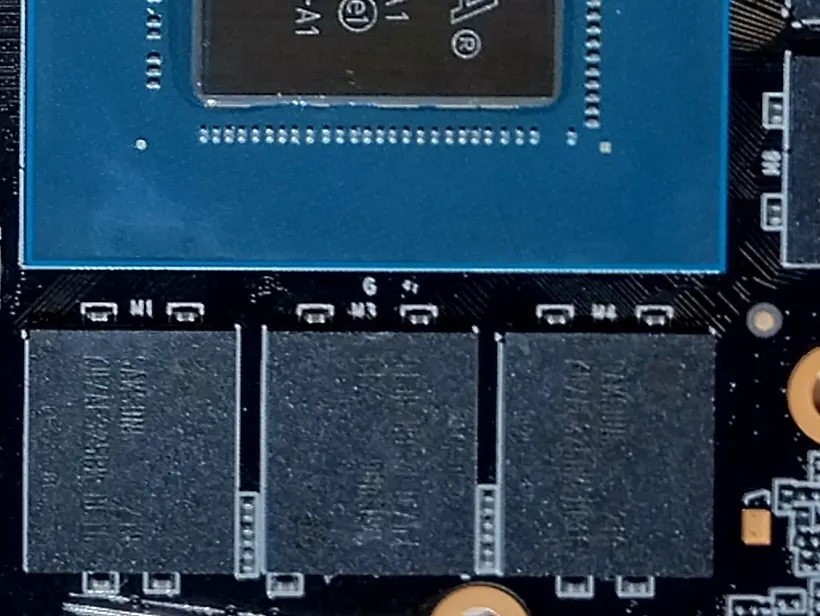
Cores
Tensix cores plus RISC-V
140 Tensix cores do the matrix maths, each steered by small RISC-V CPUs. 16 larger RISC-V cores on the chip can run Linux.
Network
Ethernet on the chip
Built-in Ethernet ports let chips connect straight into a mesh, so large systems need no separate network switches.
Memory
GDDR6 instead of HBM
32 GB of GDDR6 per chip keeps cost down. The low-level software (TT-Metalium) is open source.
Update log
Tue 30 Jun
- Minor: BlogTest
Fri 1 May
- Major: BlogHardware
Aug 2024
- Minor: PressHardware
About Tenstorrent
Tenstorrent
RISC-V AI chips, chip designs for licence
Tenstorrent designs AI chips and licenses its chip designs to partners building their own, including in Japan and Korea. It is led by famed chip architect Jim Keller and open-sources much of its software.
- Raised a $693M Series D in December 2024 led by Samsung Securities and AFW Partners.
- Releases its software and some hardware designs as open source.
- Partner of Rapidus and Japan's LSTC on 2 nm-class AI chips.
- Founded
- 201610 yrs
- Headquarters
- CanadaUnited States
- Status
- Private
- Valuation
- $2.6BprivateDec 2024
- Raised
- $693M1 round
- Last round
- Series D · $693MDec 2024$2.6B post
- Works in
- ComputingAI chips
- Coverage
- 1 program · 5 updateslatest 30 Jun 2026checked 25 Sep
- Lead investors
- Samsung SecuritiesAFW Partners
- People
- Jim KellerCEOLjubisa BajicFounder (former CEO)