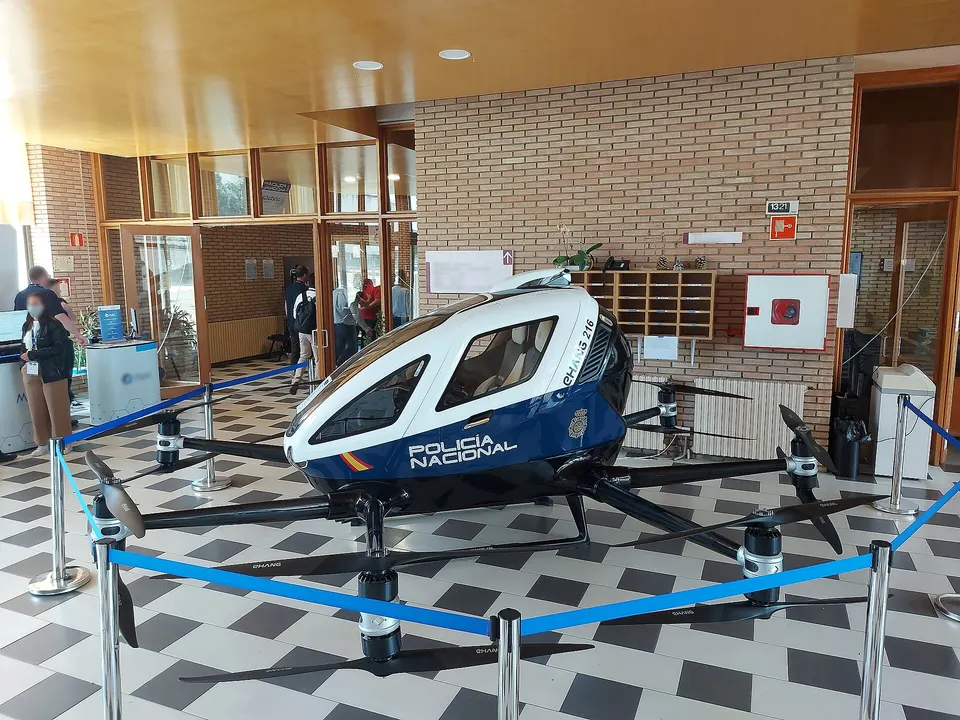

Milestones
- China type certificate (safety approval)13 Oct 2023Complete.
- China production approvalApr 2024Complete.
- First operator licences for passenger flightsMar 2025Complete.
- Paid passenger flightsTarget 2026Current milestone.
Most important updates
- 28 Aug 2026
- 17 Nov 2025
- 30 Jun 2025
- Mar 2025
- 13 Oct 2023
Upcoming
- 2026Paid passenger flights (next)
Current obstacles
- Range and payloadWith no wing it wastes energy flying forward, so trips are short; the winged VT35 fixes this.
Physics limits
- No wing means paying hover power the whole tripRotors must hold the full weight at all times, so it never gets the cheap lift of a wing. Range stays around 30 km, suited to short loops rather than city-to-city trips.
- Batteries hold about 40 times less energy per kilo than jet fuelThe best lithium-ion cells store roughly 0.25–0.3 kWh per kg; kerosene holds about 12 kWh per kg. Even after motors' higher efficiency, that caps range at tens of miles, and a battery weighs the same when empty.
- Many small rotors trade efficiency for redundancySmall rotors need more power for the same lift than one big rotor, and can't glide or autorotate. Safety comes from having spares, which adds weight and drag.
How it works
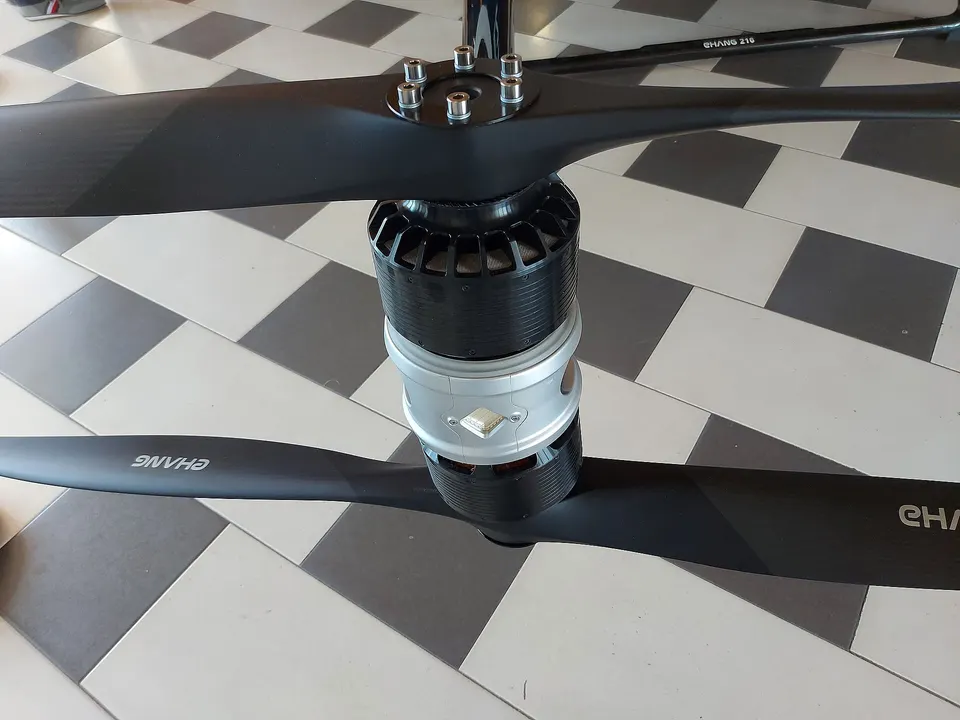
Lift
Sixteen rotors, no wing
Sixteen propellers on eight arms do all the lifting in every phase; changing their speeds steers it, like a large drone.
Fly
Self-flying on set routes
It follows pre-approved routes on its own, with no pilot aboard; passengers just ride.
Watch
Supervised from a command centre
Staff on the ground monitor each flight and can order it to hold or land; many rotors mean it can keep flying if one fails.
Update log
Fri 28 Aug
- Minor: BlogTest
Mon 17 Nov 2025
- Minor: BlogTest
Mon 30 Jun 2025
- Minor: BlogCommercial
Mar 2025
- Major: FilingRegulatory
Thu 16 Jan 2025
- Minor: BlogTest
Fri 13 Oct 2023
- Major: RegulatorRegulatory
About EHang
EHang
Pilotless 2-seat air taxi, China
China's EHang builds the EH216-S, a two-seat pilotless drone-style aircraft. In 2023 it became the first passenger air taxi to get a safety approval, from China's regulator (CAAC). It's building the longer-range VT35.
- The EH216-S has design, production and airworthiness approvals from China's CAAC.
- First operators got licences for paid sightseeing flights in 2025.
- Seeking approval in Thailand and flying demos in Hong Kong and Europe.
- Founded
- 201412 yrs
- Headquarters
- China
- Status
- Public
- Listed
- EH (opens google.com)NASDAQ
- Valuation
- public
- Works in
- AviationAir taxis
- Coverage
- 1 program · 6 updateslatest 28 Aug 2026checked 25 Sep
- People
- Huazhi HuFounder, Chairman and CEO